
Exploring the Little Bear River: Richmond’s Scenic Natural Escape
About the Area
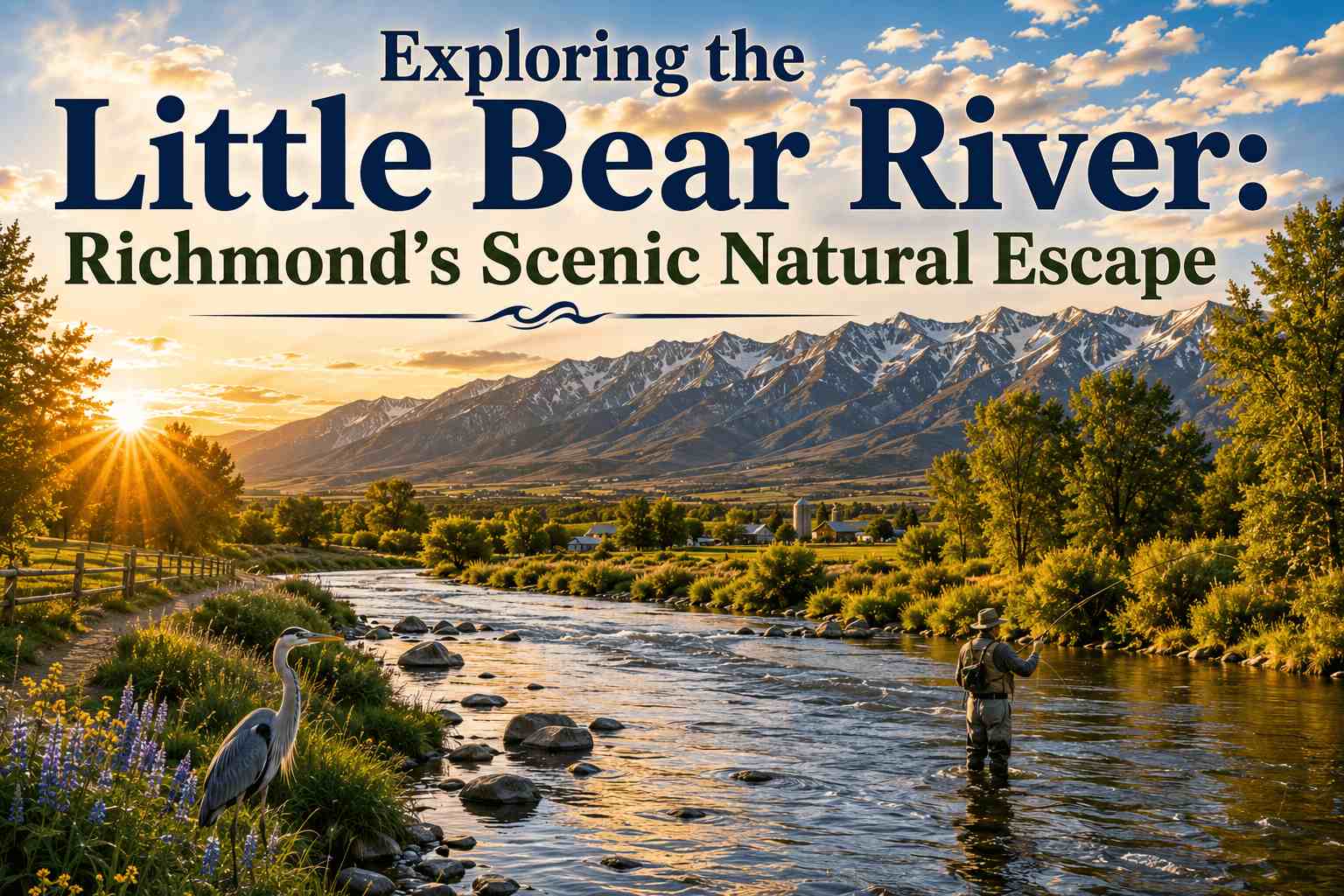
For those who live in or visit northern Cache Valley, the Little Bear River in Richmond, Utah, represents the quiet, natural beauty that makes this region so special. Far from the busy roads and crowded parks of larger cities, this gentle waterway winds its way through lush fields and quiet valleys, offering a peaceful sanctuary for anyone who loves the outdoors. Whether you are an avid angler, a wildlife photographer, or someone who simply enjoys the soothing sound of flowing water, the Little Bear River is a local treasure worth exploring.
Richmond’s Quiet Riparian Ribbon
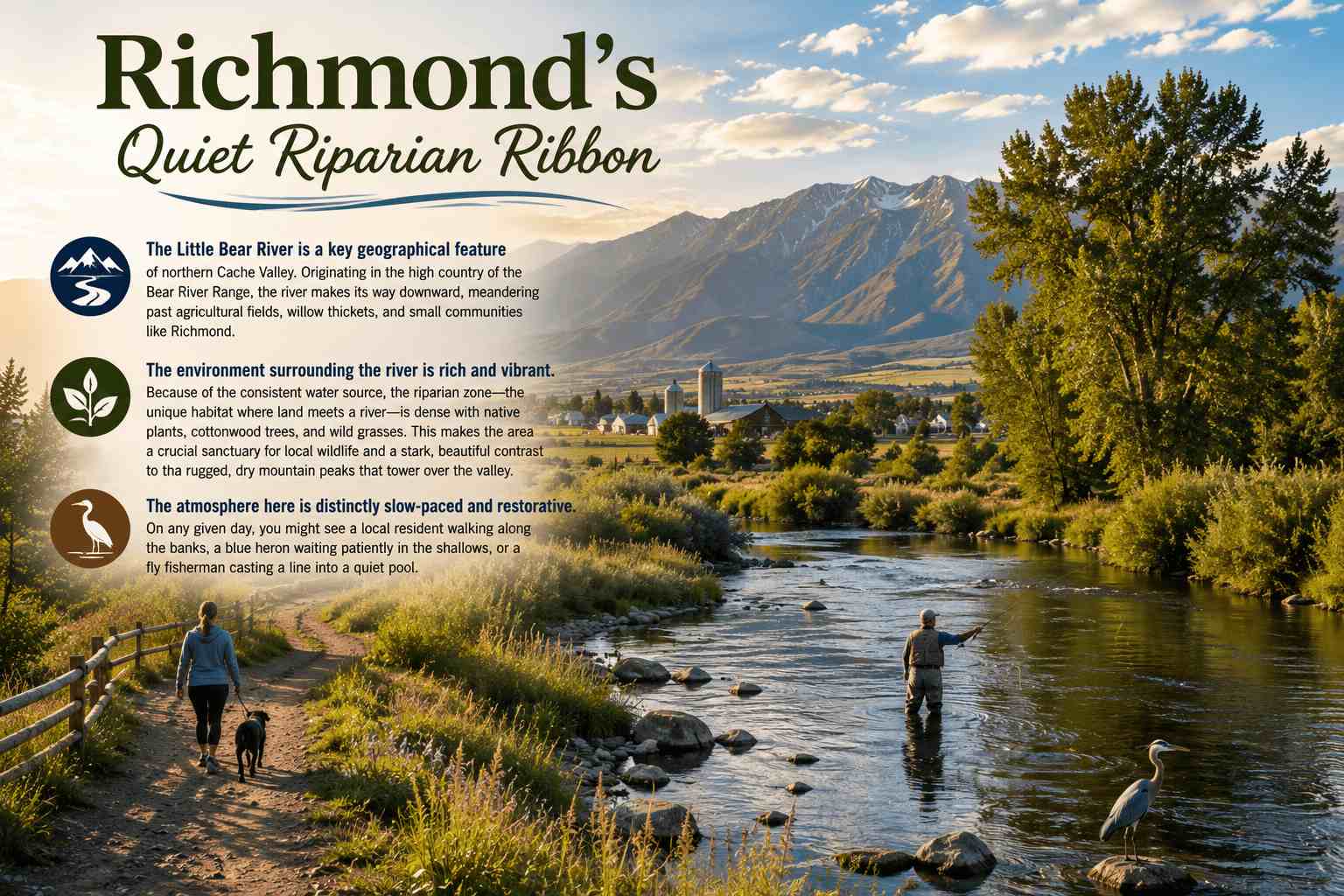
The Little Bear River is a key geographical feature of northern Cache Valley. Originating in the high country of the Bear River Range, the river makes its way downward, meandering past agricultural fields, willow thickets, and small communities like Richmond.
The environment surrounding the river is rich and vibrant. Because of the consistent water source, the riparian zone – the unique habitat where land meets a river – is dense with native plants, cottonwood trees, and wild grasses. This makes the area a crucial sanctuary for local wildlife and a stark, beautiful contrast to the rugged, dry mountain peaks that tower over the valley.
The atmosphere here is distinctly slow-paced and restorative. On any given day, you might see a local resident walking along the banks, a blue heron waiting patiently in the shallows, or a fly fisherman casting a line into a quiet pool.
Local Attractions and Nearby Destinations Along the River
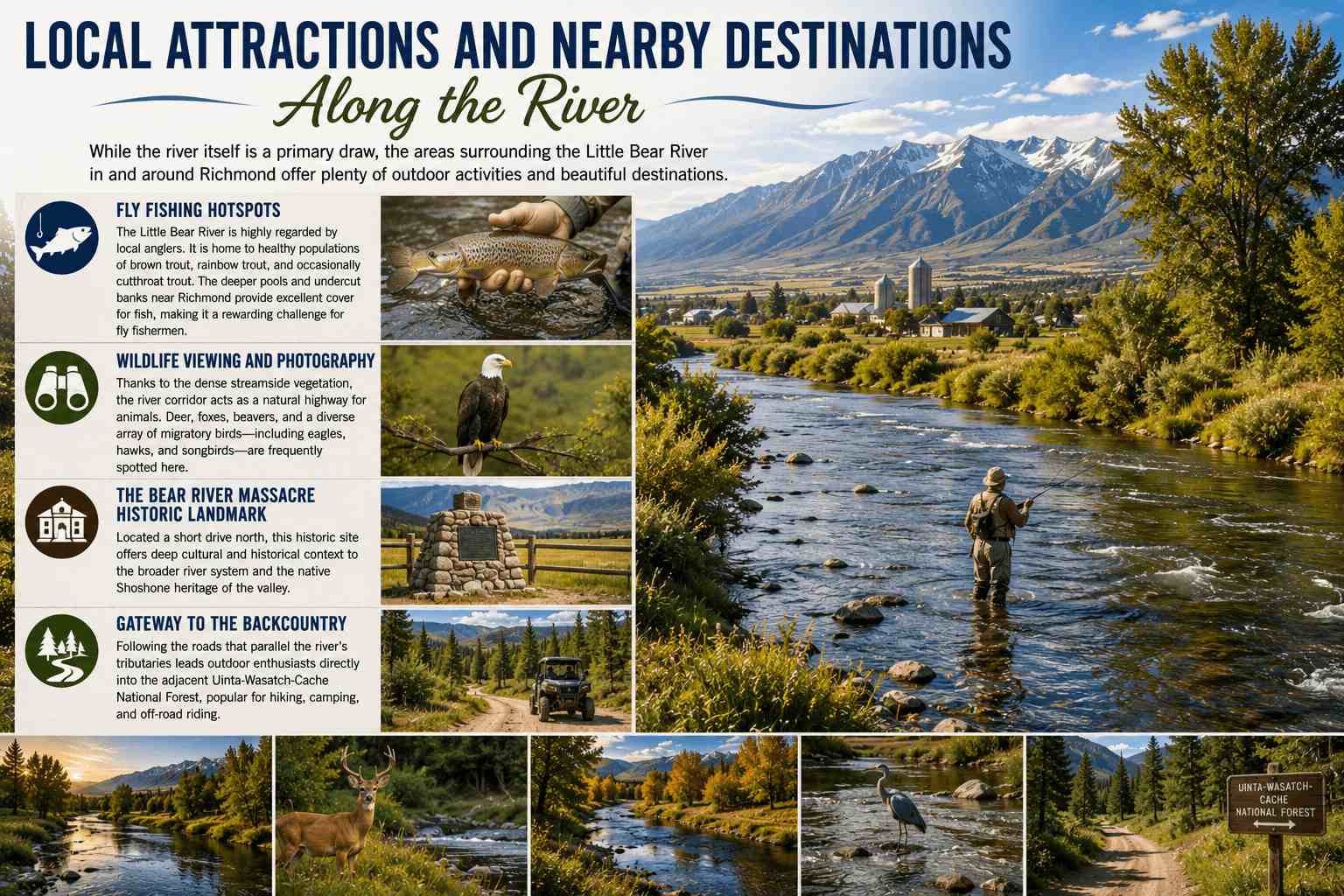
While the river itself is a primary draw, the areas surrounding the Little Bear River in and around Richmond offer plenty of outdoor activities and beautiful destinations.
- Fly Fishing Hotspots: The Little Bear River is highly regarded by local anglers. It is home to healthy populations of brown trout, rainbow trout, and occasionally cutthroat trout. The deeper pools and undercut banks near Richmond provide excellent cover for fish, making it a rewarding challenge for fly fishermen.
- Wildlife Viewing and Photography: Thanks to the dense streamside vegetation, the river corridor acts as a natural highway for animals. Deer, foxes, beavers, and a diverse array of migratory birds – including eagles, hawks, and songbirds – are frequently spotted here.
- The Bear River Massacre Historic Landmark: Located a short drive north, this historic site offers deep cultural and historical context to the broader river system and the native Shoshone heritage of the valley.
- Gateway to the Backcountry: Following the roads that parallel the river’s tributaries leads outdoor enthusiasts directly into the adjacent Uinta-Wasatch-Cache National Forest, popular for hiking, camping, and off-road riding.
Seasonal Changes and the Local River Lifestyle
Life along the Little Bear River changes beautifully with the passing of each season, shifting the way residents interact with the landscape.
- Spring: As the heavy winter snowpack in the surrounding mountains begins to melt, the river swells. This period of spring runoff brings high, fast-moving water that breathes new life into the valley’s soil but also demands respect from those living nearby.
- Summer: The river becomes a cool oasis. Hot summer days draw locals to its shaded banks to escape the heat, wade in the shallower runs, or spend peaceful evenings fishing as the sun sets over the Wellsville Mountains.
- Autumn: This is arguably the most picturesque time of year. The cottonwoods and willows turning brilliant shades of gold and orange reflect beautifully on the water’s surface, attracting photographers from all over Cache Valley.
- Winter: Cold temperatures bring a quiet hush to the river. Ice forms along the banks, and the snow-draped trees create a stark, beautiful winter landscape that is perfect for snowshoeing or quiet winter walks.
Why People Enjoy the Area (and Protecting Your Riverside Home)
The appeal of living near the Little Bear River is obvious: immediate access to nature, stunning mountain backdrops, and a sense of peaceful seclusion. However, living close to a natural waterway also means adapting to the cycles of nature.
During the spring thaw, the sudden influx of melted snow can lead to localized flooding along low-lying fields and properties. Even if the river does not overflow its banks, the rising water table can cause hidden problems for nearby homes. Excess moisture often finds its way into crawl spaces, leading to foundation leaks and high indoor humidity.
If this moisture is left unaddressed, it can quickly seep into flooring, drywall, and insulation, creating the perfect environment for mold to grow. To keep these beautiful homes safe and structurally sound, local experts like Cache Restoration work closely with the community. They help homeowners identify moisture issues early, dry out damp crawl spaces, and restore properties after unexpected seasonal water intrusion.

Helpful Tips for Visitors and Residents
Whether you are planning a weekend fishing trip or own a home near the water, these practical tips will help you enjoy the Little Bear River safely:
- Respect Private Property: Much of the land surrounding the river in Richmond is privately owned agricultural land. Always look for public access points or ask for permission before crossing fences to fish or hike.
- Monitor Spring Runoff: Keep a close eye on local water level reports in May and June. High water can make the banks unstable and currents surprisingly strong.
- Check Your Sump Pump: If you live near the river corridor, make sure your home’s sump pump is clean and functioning properly before the spring thaw begins.
- Practice “Leave No Trace”: Help preserve this delicate riparian ecosystem by packing out all trash, fishing line, and leftover bait.
Conclusion
The Little Bear River is more than just a stream winding through the fields of Richmond – it is the lifeblood of northern Cache Valley’s natural landscape. Its scenic beauty, quiet fishing holes, and rich wildlife make it a cornerstone of the local outdoor lifestyle.
Living alongside this beautiful river is a privilege, but it also means staying prepared for the natural moisture challenges that come with the changing seasons. Whenever local homeowners need a hand keeping their properties dry, safe, and free from moisture damage, Cache Restoration is proud to stand by the Richmond community as a trusted neighbor.
Frequently Asked Questions
Where is the Little Bear River located?
The Little Bear River originates in the high terrain of the Bear River Range and flows through northern Cache Valley, winding past agricultural fields and quiet communities like Richmond, Utah.
What fish species can anglers target in the Little Bear River near Richmond?
The Little Bear River supports healthy populations of brown trout and rainbow trout, along with occasional native cutthroat trout. Undercut banks and deeper pools near Richmond provide excellent cover for fly fishing.
What wildlife can be seen along the river corridor?
The dense cottonwood, willow, and grass vegetation along the river habitat shelters mule deer, foxes, beavers, and migratory bird species including bald eagles, red-tailed hawks, and songbirds.
What nearby outdoor destinations connect to the Little Bear River area?
Visitors can explore the Bear River Massacre Historic Landmark located a short drive north or access the adjacent Uinta-Wasatch-Cache National Forest via nearby canyon roads for hiking, camping, and off-road riding.
How does spring runoff affect homes located near the Little Bear River in Richmond?
Rapid mountain snowmelt during May and June swells local river levels and elevates underground water tables. This high moisture can seep into surrounding crawl spaces, basements, and home foundations.
What steps can homeowners take to protect riverside properties from spring water damage?
Property owners should inspect and test basement sump pumps before the spring thaw, maintain proper drainage grading away from foundation walls, and ensure crawl space vents and vapor barriers are intact.
Is access to the Little Bear River in Richmond public or private?
Much of the land bordering the river in Richmond is privately owned agricultural property. Visitors and anglers should always seek landowner permission or use designated public access points before crossing fences.
Who provides professional water extraction and structural drying near Richmond, UT?
Cache Restoration proudly serves homeowners, farmers, and commercial property owners in Richmond and throughout Cache Valley, offering fast emergency water removal, crawl space drying, flood cleanup, and mold remediation.