Burst Pipe at Home: What to Do in the First Hour?
Key points
- Shut off the main water valve first, then drain the lines.
- Stay out of standing water near outlets and appliances, and never switch power while standing in water.
- Photograph the damage and save receipts before you clean up.
- Start drying within 24 to 48 hours, or call a restoration team.
If you are wondering what to do when a pipe bursts, shut off the main water valve first, stay clear of electricity and standing water, then call a plumber and a restoration team. With a burst pipe, the first hour is about limiting damage, not fixing everything.
This guide walks through each step in order, so you can follow it while your heart is racing. If you need help right now, our water damage restoration team is open 24/7 at (435) 787-7007.
This article is general information, not professional advice. Have a licensed electrician or plumber check anything you are unsure about.
What should you do in the first five minutes after a pipe bursts?
Shut off the main water valve, open the faucets to drain the lines, and stay out of standing water near outlets, appliances, and the electrical panel. Turn off power only if you can reach the panel from a dry spot. If you smell gas, leave the house and call for help.
- Stay safe. If water is near outlets, appliances, or the electrical panel, do not step into it.
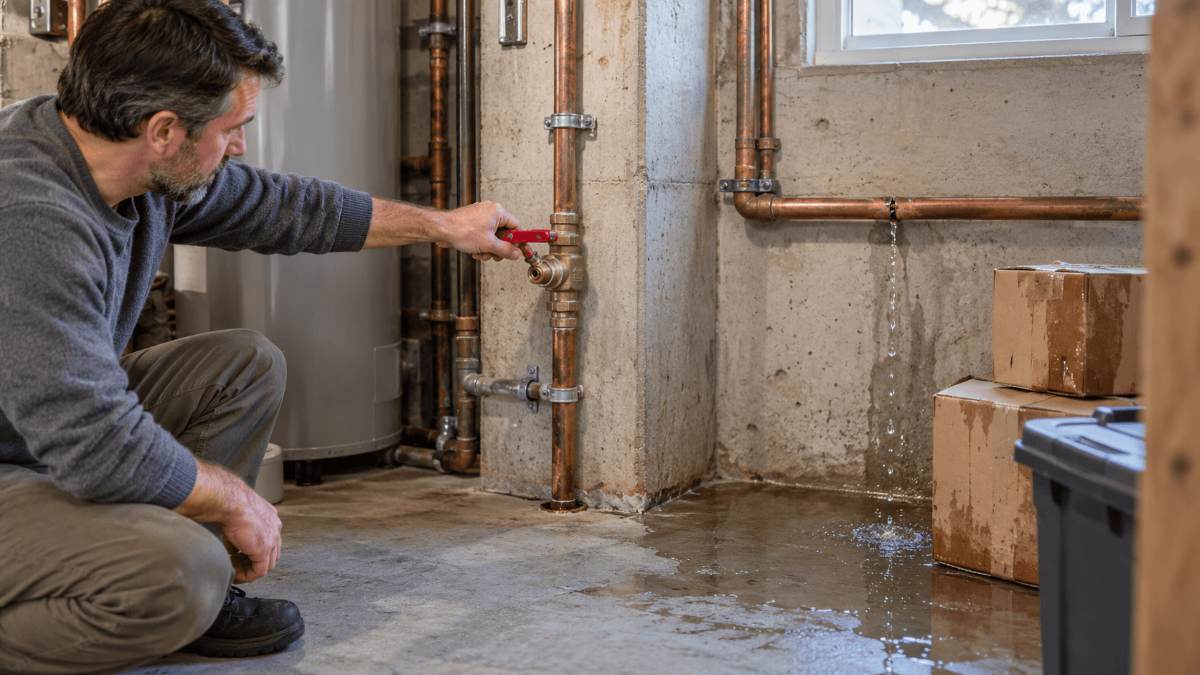
- Shut off the main water valve.
- Open the faucets to drain the lines, starting on the lowest floor.
- Turn off power to the affected area only if you can reach the panel from a dry spot. If you would have to enter water to reach it, call an electrician.
- If you smell gas, leave right away and call your gas company or emergency services from outside.
The electrical and gas steps follow the CDC’s guidance for reentering a flooded home. It is written for floods, and the same safety rules apply to water from a burst pipe.
Where is your main water shut-off valve, and what if you cannot find it?
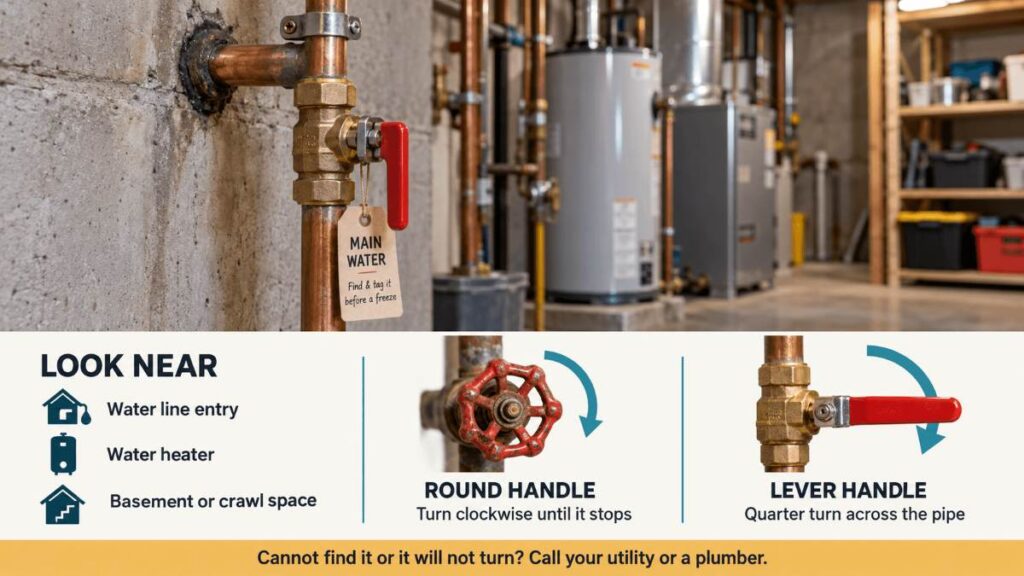
The main shut-off valve is usually where the water line enters your home, often near the water heater or in a basement or crawl space. Turn a round handle clockwise until it stops, or turn a lever a quarter turn so it sits across the pipe.
If you cannot find the valve or it will not turn, call your water utility or a plumber right away. Better yet, find and tag your valve this fall, before the first hard freeze.
Is the water safe to touch or walk through?
Not until you know where the electricity is. Never use electrical equipment, or switch power on or off, while standing in water. If you would have to enter water to reach the panel, call an electrician.
Water from a burst supply line is usually clean at first, but that can change once it soaks floors, insulation, or drywall and sits, or if it mixes with sewage. If sewage may be involved, the EPA says to bring in experienced professionals. Do not use a household vacuum on standing water.
What can you safely do yourself in the first hour?
If the wet area is small and there is no electrical hazard nearby, you can limit damage while you wait for help.
- Move small belongings, rugs and electronics to a dry room.
- Lift or prop furniture off wet carpet.
- Blot or mop small puddles where there is no electrical risk.
- Photograph everything before you move or throw anything away.
- In a Cache Valley cold snap, balance airflow against the risk of freezing more pipes before you open windows.
Wet carpet and the pad underneath are among the hardest materials to dry in time, so call early if the water reached them.
What should you photograph and save for your insurance claim?
Take photos and video of all the damage before you clean up, keep every receipt for temporary repairs, and call your insurer or agent as soon as you can. The Utah Insurance Department gives the same basic advice.
- Photos and video of wet areas, damaged belongings, and the burst pipe itself, before anything is moved or thrown out.
- Receipts for temporary repairs and cleanup, including a plumber’s visit.
- A list of items that were damaged, moved, or discarded.
- Your policy number, plus the date and time you found the leak.
- Receipts for extra living costs if you cannot stay in the home and your policy covers them.
Make repairs that prevent further damage, but hold off on permanent repairs until your insurer has inspected, as the department advises. Coverage depends on your policy, so ask your insurer what applies. This is general information, not insurance advice.
Cache Restoration works with homeowners, agents, and adjusters, and can document the damage and the drying steps for your claim.
When should you call a restoration team instead of drying it yourself?
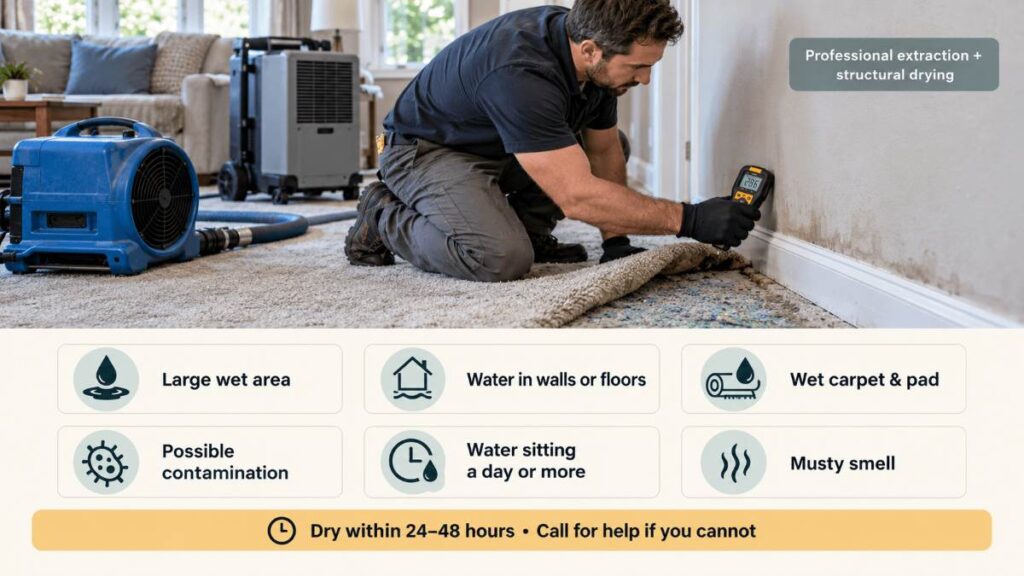
Call a restoration team when the wet area is more than a small patch, water got into walls, ceilings, or carpet and pad, sewage may be involved, or you cannot dry everything within 24 to 48 hours. The EPA aims for drying within that window to prevent mold, and says large areas may need professional help.
- More than a small wet area
- Water in walls, ceilings, or under flooring
- Wet carpet and pad
- Possible sewage or other contamination
- Water that has sat for a day or more
- A musty smell
A professional team extracts standing water, then dries the structure with air movers and dehumidifiers, cleans and sanitizes, and works to prevent mold. Cache Restoration is open 24/7. Call (435) 787-7007 or request a free estimate.
What mistakes make burst pipe damage worse?
- Switching power on or off, or using electrical tools, while standing in water.
- Running gasoline-powered pumps or generators indoors or near doors and windows, which risks carbon monoxide poisoning.
- Leaving materials wet longer than 48 hours.
- Throwing out damaged items before photographing them.
- Waiting to call your insurer.
How do you prevent the next burst pipe?
Freezing is a common cause of burst pipes in a cold climate like ours, so prevention starts in the fall. Keep the house heated, insulate exposed pipes in garages and crawl spaces, and know where your shutoff valve is.
Get help any hour
What to do first on burst pipe? A calm first hour saves a lot of damage: stop the water, stay safe around electricity, document everything, and get drying started within 24 to 48 hours. If you want a hand, our team at Cache Restoration is open 24/7.
Call (435) 787-7007 or request a free estimate.
Frequently Asked Questions
What should I do first when a pipe bursts?
Shut off the main water valve. Then open the faucets to drain the lines, keep clear of standing water near electricity, and call a plumber and a restoration team.
Where is my main water shut-off valve?
It is usually where the water line enters your home, often near the water heater or in a basement or crawl space. If you cannot find it, call your water utility or a plumber.
Should I turn off the electricity?
Only if you can reach the panel from a dry spot. Never switch power or use electrical equipment while standing in water; call an electrician instead, as the CDC advises.
Is water from a burst pipe dangerous?
It can be. Even clean water can create an electrical hazard, and water that sits or touches sewage can carry contamination. If sewage may be involved, call professionals.
Who should I call first, a plumber or a restoration company?
Shut off the water first. The plumber repairs the pipe, and the restoration team dries the home, so you can call both right away.
How fast do I need to dry things to prevent mold?
The EPA aims for 24 to 48 hours and calls that a guideline. After 48 hours, treat the area as a possible mold risk and ask a professional to check it.
Will homeowners insurance cover a burst pipe?
It depends on your policy and the cause of the damage, so call your insurer or agent as soon as you can. This is general information, not insurance advice.
What should I photograph for an insurance claim?
Take photos and video of the damage before you clean up. Keep receipts for temporary repairs and a list of anything moved or discarded, as the Utah Insurance Department suggests.
Can I fix a burst pipe myself?
Shutting off the water and draining the lines is a good first step. The repair itself is a job for a licensed plumber.
How long does professional drying take?
It depends on how much water got in and what it soaked. A restoration team measures moisture to know when materials are dry.