Water Damage and Disaster Restoration in Cache County, Utah: What Homeowners Need to Know
Keypoints
- Cache County’s mountain climate creates real water damage risk through frozen pipes, spring runoff, summer storms, and winter inversions.
- Each season brings a different threat, from ice dams in winter to basement flooding in spring.
- Logan, Smithfield, Hyrum, Providence, and the surrounding valley towns all share this risk, though local conditions vary.
- Acting within the first few hours after water damage occurs makes the biggest difference in the final repair cost.
- Cache Restoration is a locally owned company offering water damage restoration, storm damage response, fire and smoke damage restoration, and carpet cleaning and restoration across Cache Valley.
- Simple seasonal habits, like winterizing pipes and testing sump pumps, prevent many of the most common claims.
Introduction
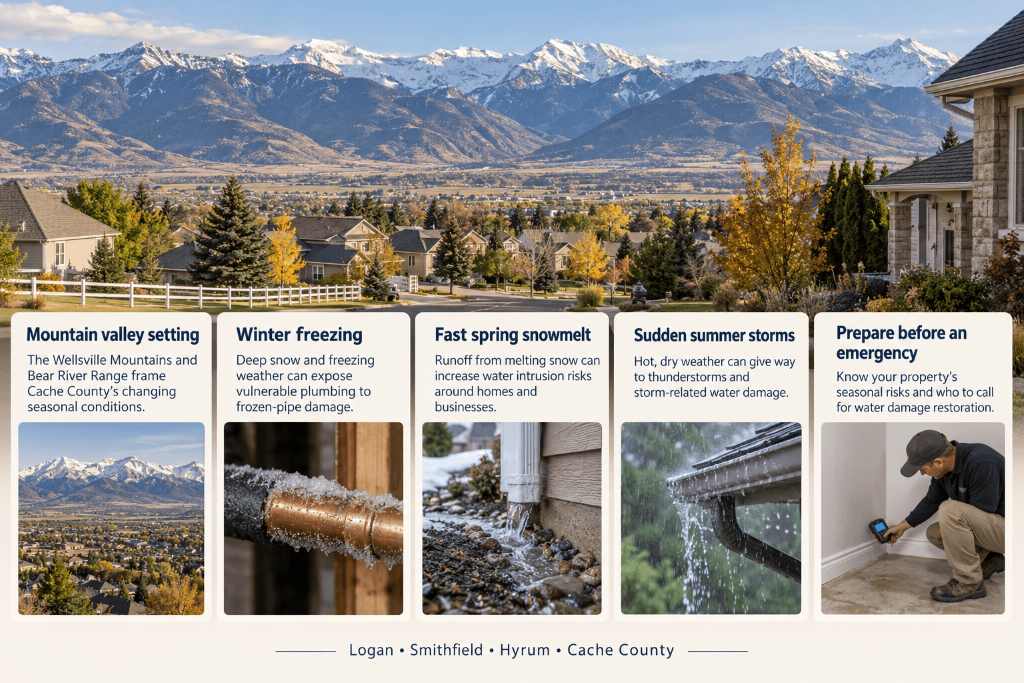
Cache County sits in the northernmost corner of Utah, framed by the Wellsville Mountains on one side and the Bear River Range on the other. It is one of the most scenic parts of the state, with deep winter snowpack, a fast spring melt, and hot dry summers that break into sudden thunderstorms. That same climate that draws people to Cache Valley also puts real strain on the homes and businesses here.
Frozen pipes, spring runoff, storm damage, and the valley’s well-known winter inversions all create serious water damage risk for property owners from Logan to Smithfield to Hyrum. Understanding how these seasonal patterns affect a house, and knowing who to call for water damage restoration when something goes wrong, is one of the most practical things a Cache County homeowner can learn before an emergency happens.
Why Cache Valley’s Climate Creates Water Damage Risk
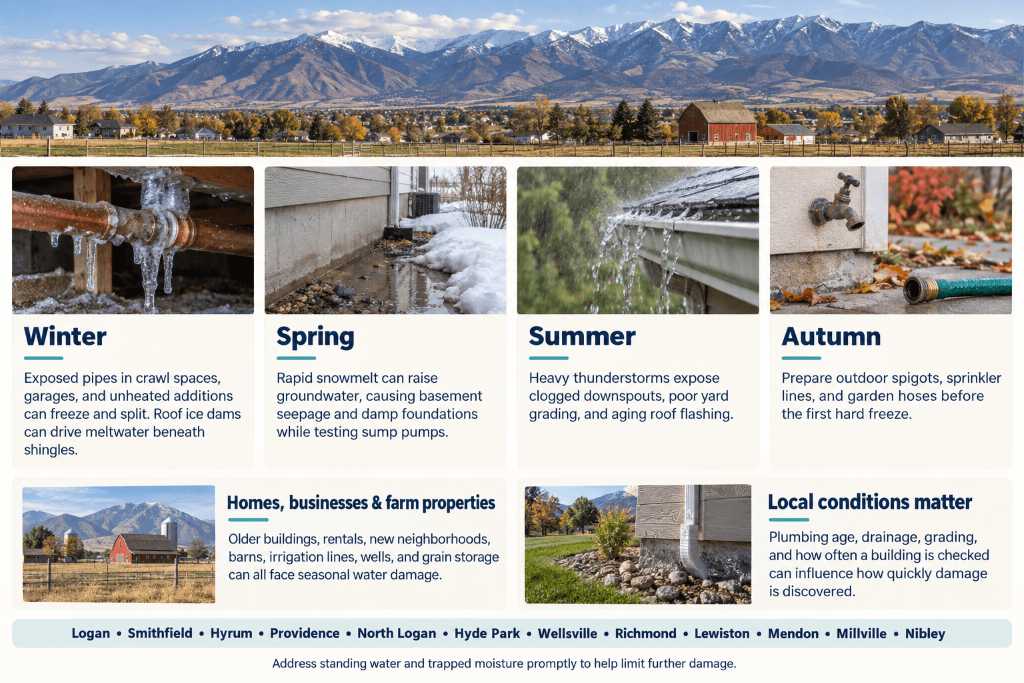
The valley floor sits low between two mountain ranges, and that bowl shape traps cold air and moisture much like a lid traps steam. The result is a true four-season climate. Winters bring deep mountain snowpack. Spring arrives with a fast melt that raises groundwater across the valley. Summers turn hot and dry, then break into sudden, heavy thunderstorms. Autumn can flip to a hard freeze almost overnight, often before homeowners have finished preparing for winter.
Each season pushes water into places it should never reach. Freeze-thaw cycles crack pipes and build ice dams along rooflines. Rising groundwater tests sump pumps and foundations every spring. Intense summer storms overwhelm gutters and window seals in minutes. Long stretches of damp, hazy inversion weather in winter create the kind of prolonged moisture that lets mold develop quietly in a basement or crawl space.
None of this means Cache Valley is a difficult place to own a home. It means the pattern is worth knowing, and it is why having a local restoration company that already understands the valley’s climate makes a real difference when something goes wrong.
Water Damage Risks Through the Cache Valley Year
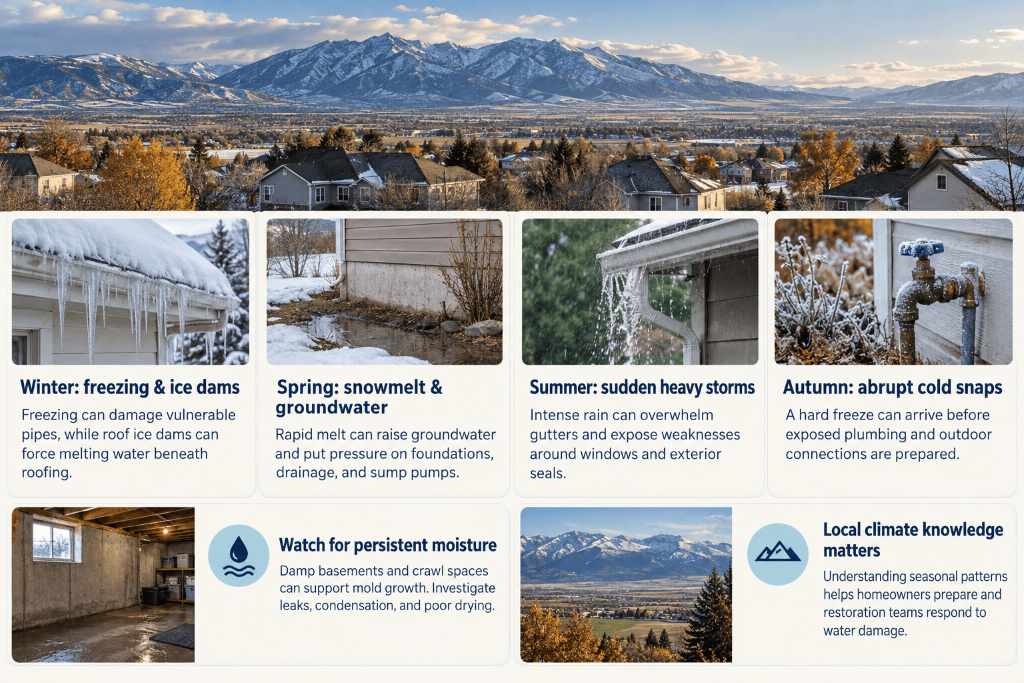
Every season in Cache Valley creates a different kind of water damage risk for homeowners.
- Winter: Exposed pipes in crawl spaces, garages, and unheated additions freeze, expand, and split, often without warning. Heavy snowpack builds ice dams that push meltwater back under the shingles and into attics and ceilings.
- Spring: Rapid snowmelt raises groundwater across the valley floor, which is when basement seepage, damp foundations, and failed sump pumps tend to appear. A heavy winter almost always means a busier spring for local restoration crews.
- Summer: A single intense thunderstorm can drop more rain than a roof or a set of gutters was built to handle—clogged downspouts, poor yard grading, and aging roof flashing all become liabilities once the storm hits.
- Autumn: The valley’s first hard freeze often arrives before homeowners have winterized their outdoor spigots, sprinkler lines, and garden hoses. Skipping that step sets up the exact pipe failure that shows up a few months later.
Any one of these events can leave a home with standing water, soaked drywall, or a damp crawl space within hours, and the damage only grows the longer the moisture sits.
Serving Logan, Smithfield, Hyrum, and the Rest of Cache Valley, Cache Restoration works with homeowners, farm property owners, and businesses across the entire valley, not just the county seat.
Logan, home to Utah State University, mixes older downtown buildings, student rental housing, and newer construction, each with different plumbing and drainage weak points. Smithfield, Providence, North Logan, and Hyde Park combine historic homes with growing neighborhoods built on what used to be dairy and farmland, where older plumbing and shallow foundations can be more vulnerable to spring runoff.
Hyrum and Wellsville sit close enough to Hyrum Reservoir that its drainage patterns shape local flood risk, while Richmond, Lewiston, Mendon, Millville, and Nibley round out the valley’s farming communities.
Agricultural properties throughout the valley carry their own version of this risk. Barns, irrigation lines, well systems, and grain storage buildings can all suffer serious water damage from the same spring runoff and summer storms that affect houses, often with less warning since these buildings are checked less often than a home.
Wherever a property sits in Cache County, it faces the same valley-wide climate, which is why working with a restoration company based here, rather than one dispatched from another region, matters.
What Happens When Water Damage Strikes
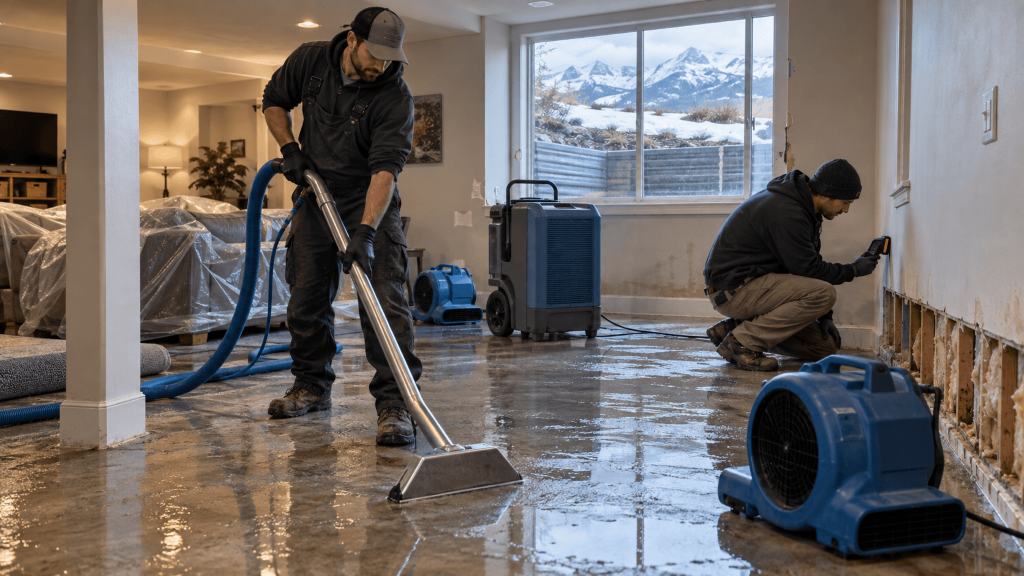
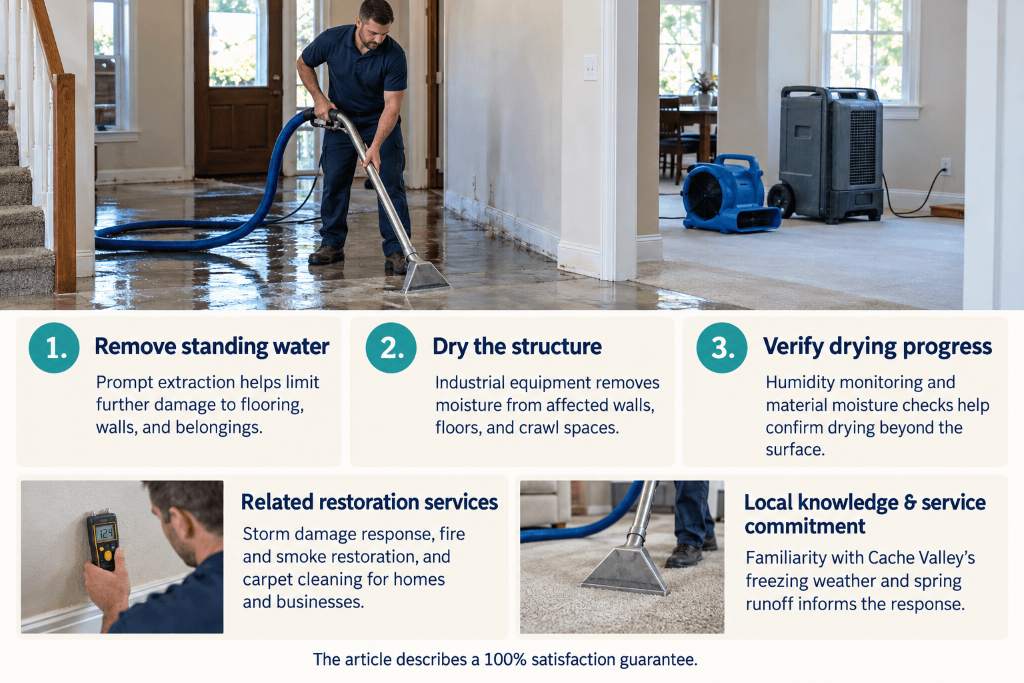
Quick action in the first few hours after water damage occurs makes the biggest difference in how a repair turns out. Cache Restoration responds by removing standing water first, since every hour it sits increases the risk of structural damage and mold. Once the water is out, industrial drying equipment reduces moisture in walls, flooring, and crawl spaces to safe levels, while the team monitors humidity to confirm the structure is actually dry, not just dry to the touch.
From there, services extend into storm damage response, fire and smoke damage restoration, and carpet cleaning and restoration for homes and businesses across the valley.
Every job is backed by a 100% satisfaction guarantee, and because the team lives in Cache Valley, they already know its freeze and thaw cycles, runoff patterns, and inversion-driven moisture problems firsthand.
Simple Steps to Prevent Water Damage
Most water damage in Cache County is preventable with a few seasonal habits.
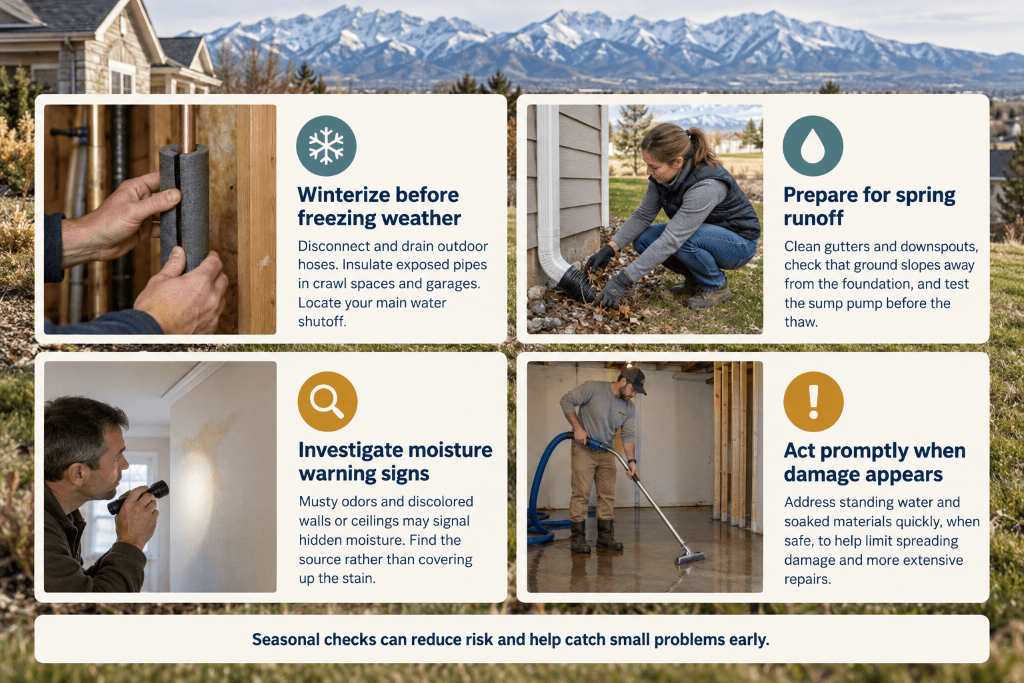
- Winterize before the first hard freeze. Drain outdoor hoses, insulate exposed pipes in crawl spaces and garages, and know where the main water shutoff is located before an emergency happens.
- Prepare for spring runoff every fall. Clean gutters and downspouts, confirm the yard grading slopes away from the foundation, and test the sump pump before the spring thaw begins.
- Watch for signs during inversion season. A musty smell or a discolored patch on a wall or ceiling often means hidden moisture is already turning into mold.
- Act immediately once damage appears. Water spreads and compounds by the hour, so addressing standing water or soaked materials quickly is often the difference between a simple repair and a major one.
Conclusion
Cache Valley’s mountains and seasons make it a beautiful place to live, but the same weather that draws people here can turn into a serious problem for a home or business within hours. Knowing the risks by season and preparing for them ahead of time is the best defense any property owner has.
When prevention is not enough, Cache Restoration is ready to help. As Cache Valley’s own disaster restoration experts, the team offers fast, locally based water damage restoration, storm damage response, fire and smoke damage restoration, and carpet cleaning and restoration, all backed by a 100% satisfaction guarantee.
Homeowners and businesses across Logan, Smithfield, Hyrum, Providence, Wellsville, and the rest of Cache Valley can reach Cache Restoration at (435) 787-7007 or request a free estimate!
Frequently Asked Questions
What should I do first if I discover water damage in my home?
Turn off the water source if it is still running, and move valuables away from the affected area if it is safe to do so. Call a local water damage restoration company right away, since water damage gets worse quickly and raises the risk of mold.
Why is Cache County particularly prone to water damage?
The valley’s climate is the main reason. Heavy winter snowpack, a fast spring melt, sudden summer thunderstorms, and constant freeze and thaw cycles all give pipes, roofs, and basements repeated chances to fail.
Does homeowners insurance cover water damage in Utah?
It depends on the cause. A sudden event like a burst pipe is typically covered, while gradual leaks or flooding from rising groundwater often are not and may require separate flood coverage. It is best to check your policy or ask your insurer directly.
What areas does Cache Restoration serve?
Cache Restoration serves Logan, Smithfield, North Logan, Hyde Park, Providence, Hyrum, Wellsville, Richmond, Nibley, Mendon, Millville, Lewiston, and the surrounding communities throughout Cache Valley, Utah.
What services does Cache Restoration provide?
Cache Restoration offers water damage restoration, storm damage response, fire and smoke damage restoration, and carpet cleaning and restoration for homes and businesses throughout the valley.
What is the difference between water damage restoration and mold remediation?
Water damage restoration removes water and dries a structure before mold has a chance to grow. Mold remediation deals with mold that has already developed, containing and removing it safely. Acting quickly on water damage restoration usually prevents the need for mold remediation later.
How long does water damage restoration take?
Drying a structure typically takes a few days once water extraction and equipment setup begin. The exact timeline depends on how much water intruded, which materials were affected, and how long the water sat before cleanup started.
How much does water damage restoration cost?
Cost depends on the extent of the damage, the materials affected, and how much drying or repair work is needed. A free, no-obligation estimate is the most reliable way to know the actual cost for a specific property.
How can I prevent frozen pipes during a Cache Valley winter?
Insulate exposed pipes in crawl spaces, garages, and unheated rooms, and disconnect outdoor hoses before the first freeze. Keeping the indoor temperature steady during cold snaps also helps, especially when the house will be empty for a while.
Who provides water and disaster restoration in Cache County?
Cache Restoration is a locally owned disaster restoration company serving homeowners and businesses across Cache Valley, backed by a 100% satisfaction guarantee. They can be reached at (435) 787-7007.