
How to Prevent Frozen Pipes in Cache Valley?
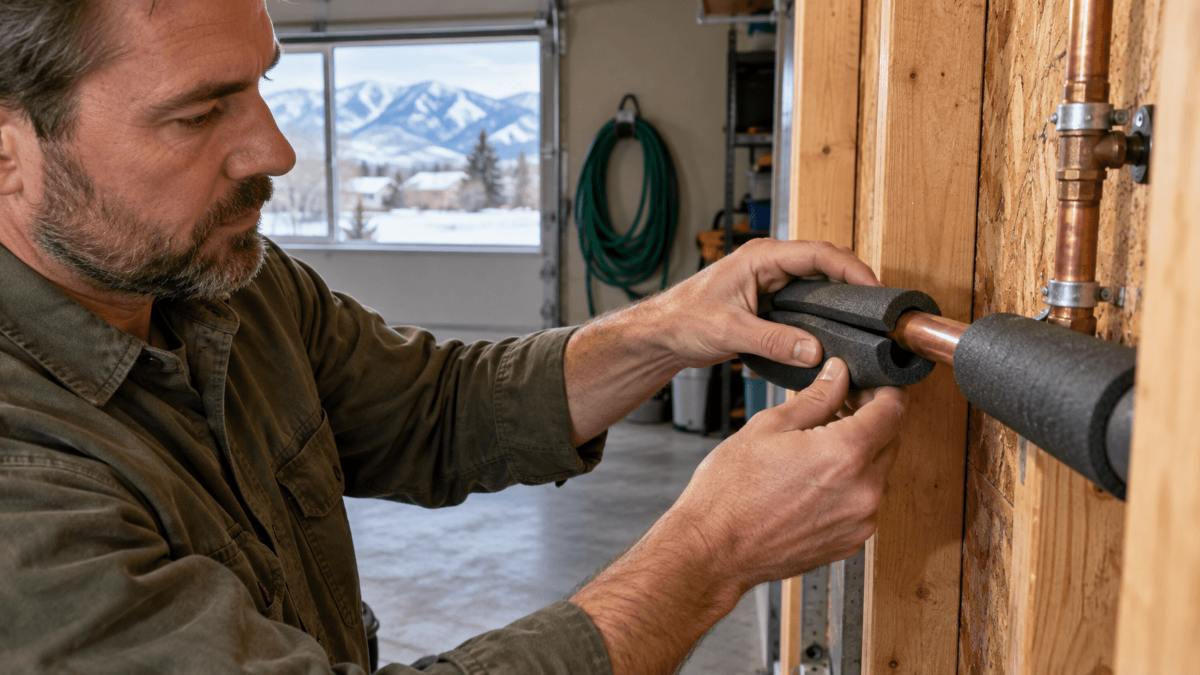
Key points
-
- Do the outdoor and garage jobs before the first hard freeze.
- Insulate and seal exposed pipes in unheated spaces.
- On cold nights, open cabinet doors, let a faucet drip, and keep the thermostat steady.
- Never use an open flame to thaw a pipe.
- If a pipe bursts, shut off the water and call a plumber.
Introduction
To prevent frozen pipes, drain outdoor hoses and spigots, insulate pipes in unheated spaces, and keep warm air and a little moving water around your plumbing on the coldest nights. Cache Valley winters bring hard freezes, and a frozen pipe can crack and then flood the house once it thaws.
Cache Restoration, a water damage team based in Richmond, cleans up after burst pipes. This checklist is organized by area of the house, so you can finish it in a weekend before the first hard freeze.
This article is for general information. For plumbing repairs, call a licensed plumber.
When do pipes freeze, and which pipes in your house are at risk?
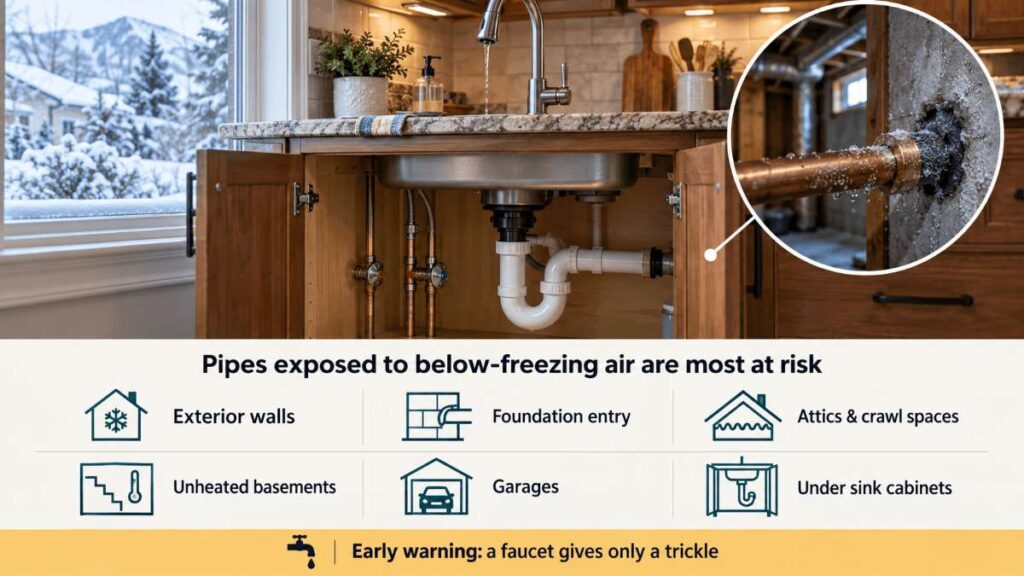
Pipes freeze when they sit in below-freezing air, so the pipes most at risk are the ones in unheated spaces and along exterior walls. The American Red Cross points to pipes against exterior walls and where the water service enters through the foundation, along with pipes in attics, basements, crawl spaces, garages, and under kitchen and bathroom cabinets.
A faucet that gives only a trickle is the usual first sign. Cache Valley can get severe cold: during a January 2013 cold snap, with nighttime lows of 10 to 20 degrees below zero, KSL reported frozen buried water lines in the Cache Valley town of Trenton. That is an extreme case, but it shows how hard the valley can freeze.
What should you do outside before the first hard freeze?
Disconnect and drain your garden hoses, close the indoor valve that feeds each outdoor spigot, and leave the outdoor spigot open so trapped water has room to expand. Then drain sprinkler and pool lines following the installer’s directions. These are the Red Cross steps for outdoor plumbing.
-
- Store hoses indoors once they are drained.
- Close the indoor valve to each outdoor spigot, then open the outdoor spigot.
- Drain sprinkler and pool supply lines. Do not add antifreeze unless the installer says to.
- Check frost-free spigots too: the hose still has to come off.
How do you protect pipes in the garage, crawl space, and unheated rooms?
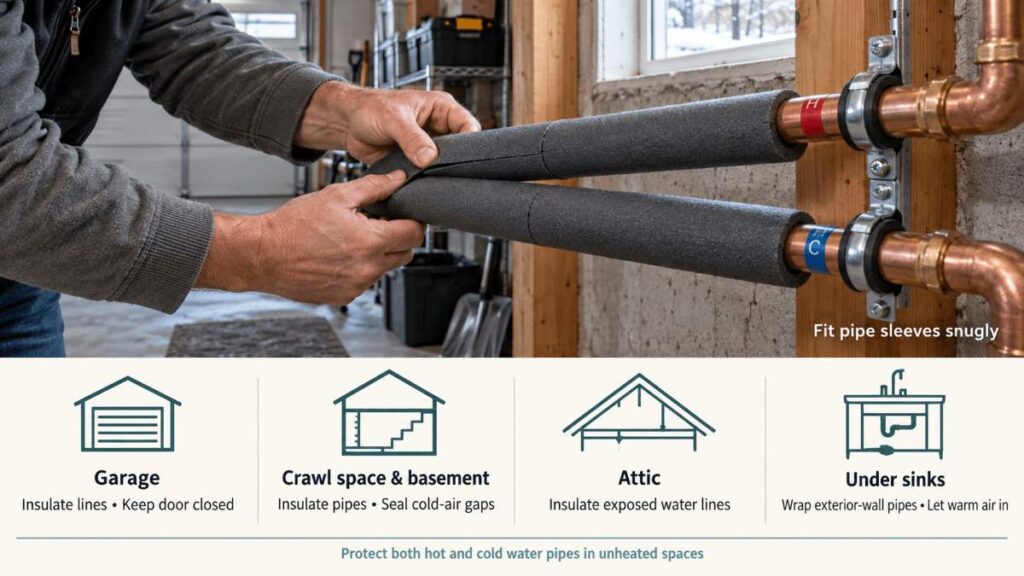
Insulate every exposed hot and cold water pipe in unheated spaces, and keep cold air away from them. The Red Cross recommends pipe sleeves, or UL-listed heat tape or heat cable on exposed pipes, installed to the manufacturer’s directions.
Here is a room-by-room version you can work through:
-
- Garage: Insulate any water lines and keep the garage door closed if lines run through it.
- Crawl space and basement: Insulate the pipes, and seal gaps where cold air gets in.
- Attic: Add insulation around exposed lines.
- Under sinks: Wrap pipes on exterior walls, and use cabinet doors (below) to let warm air in.
The Red Cross also notes that even a quarter inch of newspaper gives exposed pipes meaningful protection, which helps if you cannot get to the store today. For pipes that freeze every year, consider asking a plumber about relocating them.
What should you do inside on the coldest nights, and when you are away?
On very cold nights, open the cabinet doors under sinks, let a small stream of cold water drip from faucets on exposed pipes, and keep the thermostat at the same setting day and night. The Red Cross lists all three and notes the steady thermostat may mean a higher heating bill.
-
- Cabinet doors: Open them on exterior walls so warm air reaches the pipes. Move cleaning products out of children’s reach first.
- Dripping faucet: A slow, steady drip is enough. Moving water is harder to freeze.
- Thermostat: Do not turn it down at night.
What if you are leaving town?
Keep the heat on at no lower than 55 degrees F, per the Red Cross, and ask someone to check the house during cold snaps.
How do you thaw a frozen pipe safely?
Keep the faucet open and warm the pipe gently with a heating pad, hair dryer, or towels soaked in hot water, and never use an open flame. The Red Cross describes these steps:
-
- Confirm the freeze. A faucet that gives only a trickle points to a frozen pipe, often on an exterior wall or where the water line enters through the foundation.
- Open the faucet. Leave it open so water can flow as the ice melts.
- Apply gentle heat. Use an electric heating pad, a hair dryer, a portable space heater kept away from anything flammable, or towels soaked in hot water.
- Skip the flame. Do not use a blowtorch, kerosene or propane heater, charcoal stove or any open flame.
- Keep going until pressure returns, then check the other faucets, since more than one pipe may be frozen.
Keep electrical heat sources away from standing water. If you cannot find the frozen section, cannot reach it, or cannot thaw it, call a licensed plumber.
What if a pipe has already burst?
Shut off the main water valve, stay clear of any standing water near electrical outlets or appliances, call a licensed plumber, and start photographing the damage. Our guide to what to do in the first hour after a burst pipe walks through each step.
The plumber fixes the pipe. Cache Restoration handles the water cleanup afterward: pulling out standing water, drying the structure, and checking for moisture you cannot see. You can read more on our water damage restoration page.
Conclusion
Pick a weekend before the first hard freeze and work through the list: outdoors first, then the garage and crawl space, then your cold-night routine. An afternoon of prevention is far easier than cleaning up after a split pipe.
If you do end up with water in the house, Cache Restoration can help. Call (435) 787-7007 or request a free estimate.
Frequently Asked Questions
At what temperature do pipes freeze?
Pipes freeze when they are exposed to below-freezing air, and unheated spaces and exterior walls are the usual trouble spots. The Red Cross gives no single threshold, so act before the first hard freeze rather than waiting for a number.
How do I know if a pipe is frozen?
A faucet that gives only a trickle is the most common sign. Check pipes on exterior walls and where the water line enters the house first.
Does letting a faucet drip prevent freezing?
It helps. The Red Cross advises letting cold water drip from faucets served by exposed pipes in very cold weather. A slow, steady drip is enough.
What temperature should I keep my house when I am away?
Keep the heat on at no lower than 55 degrees F, according to the Red Cross. Ask someone to check on the house during cold snaps.
Should I open cabinet doors under sinks?
Yes, especially on exterior walls, so warm air can reach the pipes. Move chemicals and cleaners out of children’s reach first.
Do frost-free spigots need covers?
The hose still has to come off and be drained, even with a frost-free spigot.
Is heat tape safe to use on pipes?
Use a UL-listed product and follow the manufacturer’s directions, per the Red Cross. If you are unsure about the install, ask a licensed plumber or electrician.
How do I thaw a frozen pipe?
Keep the faucet open and warm the pipe gently with a heating pad, hair dryer, or hot towels. Never use an open flame, and call a plumber if you cannot find, reach, or thaw it.
What should I do if a frozen pipe bursts?
Shut off the main water, stay clear of electrical hazards, call a plumber, and photograph the damage. Our first-hour burst pipe guide has the full steps.
Does insurance cover frozen pipe damage?
Coverage varies by policy, so check with your insurer before you assume anything. Photos and a written record of the damage help any claim.