
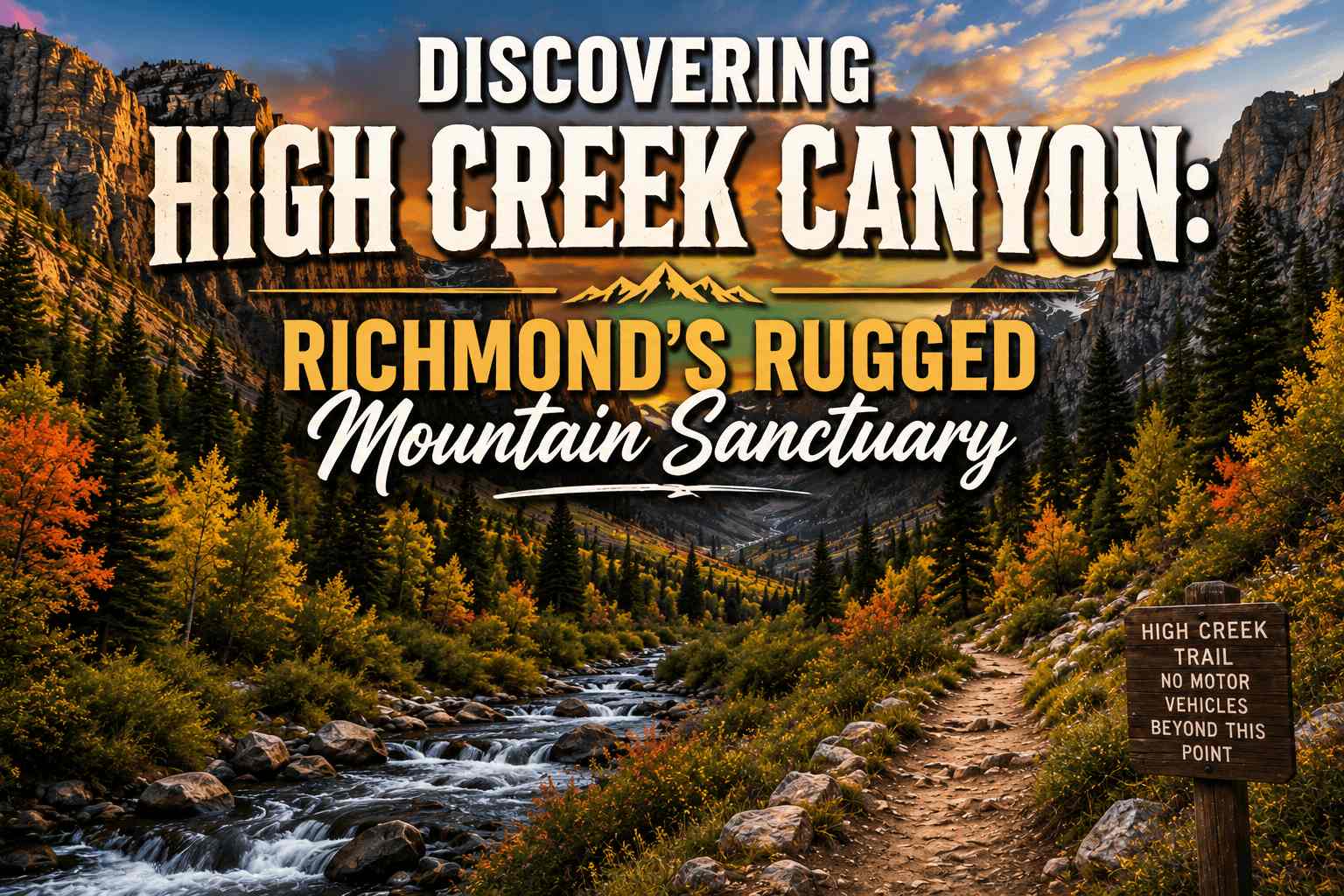
Discovering High Creek Canyon: Richmond’s Rugged Mountain Sanctuary
About the Area
If you drive northeast from the historic town of Richmond, Utah, the agricultural valley floor begins to fold upward into the dramatic limestone cliffs of the Bear River Range. Here, tucked away on the border of the Mount Naomi Wilderness, lies High Creek Canyon.
For Richmond residents and outdoor enthusiasts across Cache Valley, High Creek Canyon is a rugged, relatively untouched escape. Unlike heavily trafficked tourist canyons, High Creek retains a quiet, wilderness-first atmosphere. It is a place defined by towering cliffs, rushing mountain streams, dense stands of bigtooth maple and aspen, and the absolute peace of the Northern Utah backcountry.
Richmond’s High-Alpine Backyard
High Creek Canyon sits roughly eight miles northeast of Richmond, serving as a dramatic transition from valley farmland to high-alpine wilderness. The canyon is carved by High Creek, a cold, clear mountain stream that flows year-round.
The community of Richmond views High Creek Canyon as its premier natural landmark. While nearby Logan Canyon draws massive weekend crowds, High Creek offers a more intimate connection with nature. Because it is the western gateway to the Mount Naomi Wilderness, motorized vehicles are strictly prohibited past the trailhead. This protection keeps the air incredibly clean, the trails quiet, and the local wildlife abundant.
Local Attractions and Wilderness Destinations
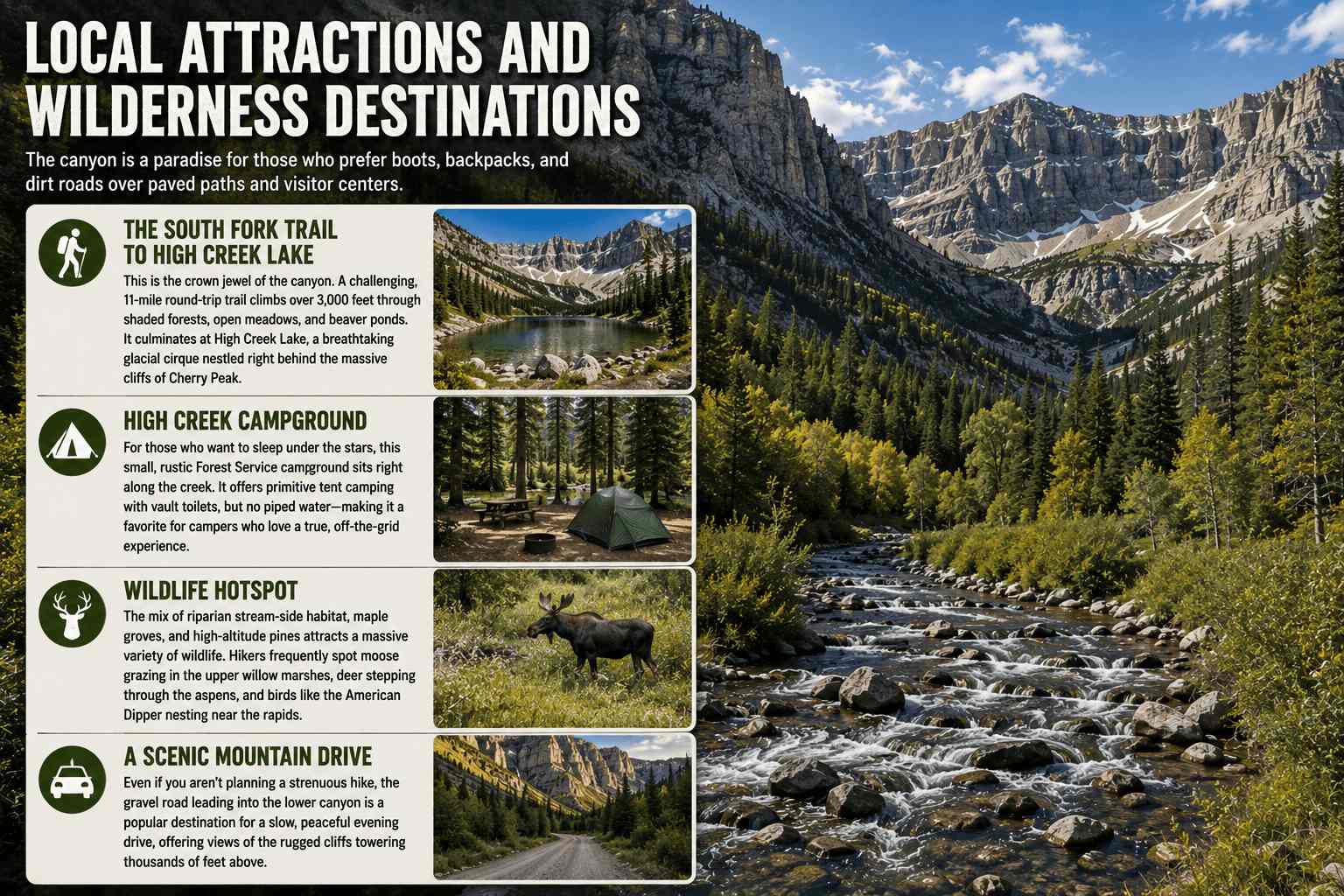
The canyon is a paradise for those who prefer boots, backpacks, and dirt roads over paved paths and visitor centers.
- The South Fork Trail to High Creek Lake: This is the crown jewel of the canyon. A challenging, 11-mile round-trip trail climbs over 3,000 feet through shaded forests, open meadows, and beaver ponds. It culminates at High Creek Lake, a breathtaking glacial cirque nestled right behind the massive cliffs of Cherry Peak.
- High Creek Campground: For those who want to sleep under the stars, this small, rustic Forest Service campground sits right along the creek. It offers primitive tent camping with vault toilets, but no piped water – making it a favorite for campers who love a true, off-the-grid experience.
- Wildlife Hotspot: The mix of riparian stream-side habitat, maple groves, and high-altitude pines attracts a massive variety of wildlife. Hikers frequently spot moose grazing in the upper willow marshes, deer stepping through the aspens, and birds like the American Dipper nesting near the rapids.
- A Scenic Mountain Drive: Even if you aren’t planning a strenuous hike, the gravel road leading into the lower canyon is a popular destination for a slow, peaceful evening drive, offering views of the rugged cliffs towering thousands of feet above.
Seasonal Changes and the Mountain Lifestyle
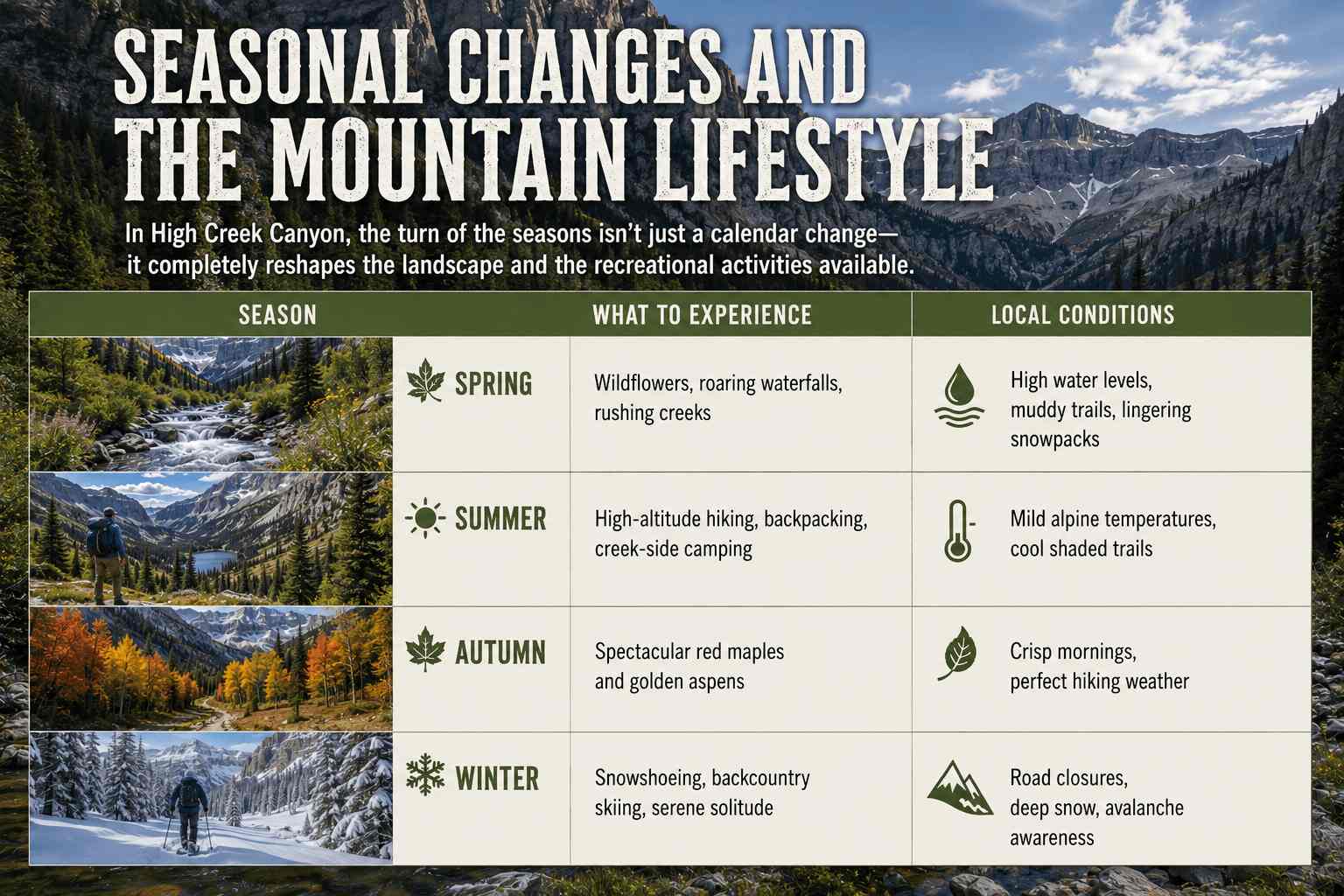
In High Creek Canyon, the turn of the seasons isn’t just a calendar change – it completely reshapes the landscape and the recreational activities available.
|
Season |
What to Experience |
Local Conditions |
|
Spring |
Wildflowers, roaring waterfalls, rushing creeks |
High water levels, muddy trails, lingering snowpacks |
|
Summer |
High-altitude hiking, backpacking, creek-side camping |
Mild alpine temperatures, cool shaded trails |
|
Autumn |
Spectacular red maples and golden aspens |
Crisp mornings, perfect hiking weather |
|
Winter |
Snowshoeing, backcountry skiing, serene solitude |
Road closures, deep snow, avalanche awareness |
Mountain Weather Challenges (and Keeping Your Home Secure)
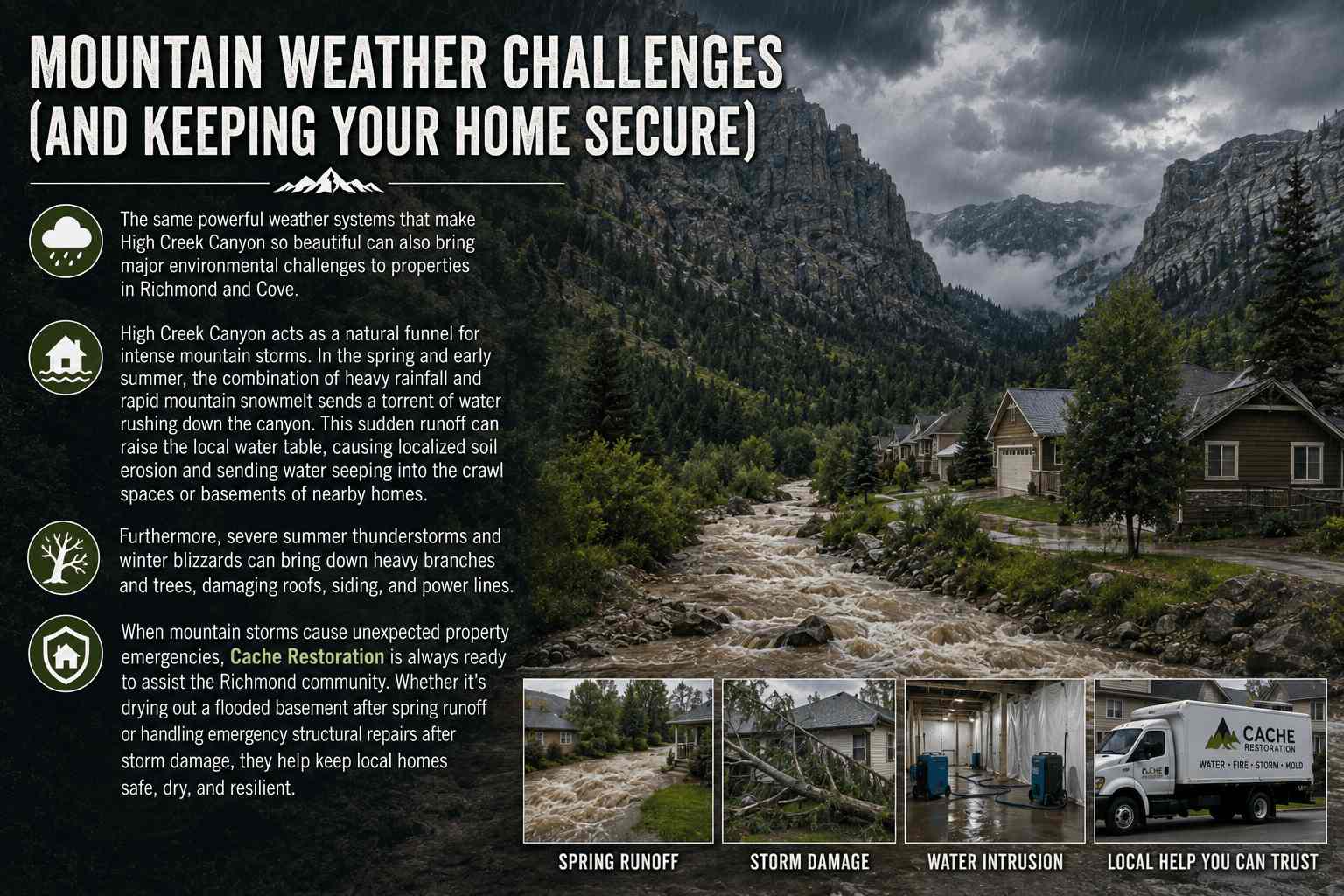
The same powerful weather systems that make High Creek Canyon so beautiful can also bring major environmental challenges to properties in Richmond and Cove.
High Creek Canyon acts as a natural funnel for intense mountain storms. In the spring and early summer, the combination of heavy rainfall and rapid mountain snowmelt sends a torrent of water rushing down the canyon. This sudden runoff can raise the local water table, causing localized soil erosion and sending water seeping into the crawl spaces or basements of nearby homes.
Furthermore, severe summer thunderstorms and winter blizzards can bring down heavy branches and trees, damaging roofs, siding, and power lines. When mountain storms cause unexpected property emergencies, Cache Restoration is always ready to assist the Richmond community. Whether it’s drying out a flooded basement after spring runoff or handling emergency structural repairs after storm damage, they help keep local homes safe, dry, and resilient.
Practical Tips for Visitors and Residents
Whether you are heading up the canyon for an afternoon hike or live right along the foothills, keep these local tips in mind:
- Prep Your Vehicle: The road past the canyon entrance is gravel and can become heavily rutted, especially after storms. A high-clearance vehicle is highly recommended.
- Be Wildlife Aware: This is active moose and black bear country. Always store food securely in camp and give moose a wide berth if you encounter them on the trail.
- Pack Out What You Pack In: There is no trash service in the canyon or at the campground. Keep the wilderness pristine by taking all garbage home with you.
- Inspect Your Gutters and Drainage: If you live on the Richmond benches, ensure your home’s downspouts carry water well away from your foundation before the spring snowmelt begins.
Conclusion
High Creek Canyon stands as a proud reminder of Richmond’s rugged, wild beauty. It is a place where locals can leave the noise of daily life behind and immerse themselves in the raw, natural landscape of Northern Utah.
Living in the shadow of such a magnificent canyon is a gift, but it also requires a respect for the power of mountain weather. When seasonal storms or heavy runoffs create moisture or structural challenges, Cache Restoration is proud to serve as Richmond’s trusted partner, helping families keep their homes safe so they can continue enjoying the incredible outdoors.
Frequently Asked Questions
Where is High Creek Canyon located?
High Creek Canyon is located approximately 7 to 8 miles northeast of Richmond, Utah, near the Utah-Idaho border in northern Cache County, sitting along the western edge of the Mount Naomi Wilderness.
What is the most popular hiking trail in High Creek Canyon?
The South Fork Trail to High Creek Lake is the premier trail in the canyon. It is an 11-mile round-trip hike that gains roughly 3,000 feet of elevation, leading past beaver ponds, waterfalls, and towering cliffs of Cherry Peak to a glacial cirque lake.
Are motorized vehicles allowed in High Creek Canyon?
While high-clearance passenger vehicles can drive up the rough gravel road to the main trailhead, motorized vehicles are strictly prohibited past the trailhead into the protected Mount Naomi Wilderness area.
What amenities are available at High Creek Campground?
High Creek Campground is a rustic, primitive Forest Service camping area featuring tent sites and vault toilets. It does not have piped drinking water, so campers must bring their own water or filter creek water.
What wildlife can be seen in High Creek Canyon?
Due to the dense riparian vegetation, aspen groves, and high-alpine forests, hikers frequently spot moose, mule deer, beavers, and bird species including the American Dipper, Western Tanager, and Plumbeous Vireo.
How does spring snowmelt in High Creek Canyon affect homes in Richmond and Cove?
During late spring (May and June), heavy mountain snowpack combined with rain creates high water flows down High Creek. This runoff raises the local water table, increasing the risk of crawl space dampness, foundation leaks, and basement flooding in nearby bench properties.
What should homeowners do if mountain weather or spring runoff causes water or structural damage?
Homeowners should immediately address water intrusion by arranging professional water extraction and structural drying to prevent mold growth.
Who provides emergency water damage and storm repair in Richmond, UT?
Cache Restoration proudly serves Richmond, Cove, and surrounding Cache Valley communities, offering 24/7 emergency water extraction, structural drying, basement flood cleanup, storm damage repair, and mold remediation.