
Discovering Smithfield Canyon: Smithfield’s Natural Mountain Gateway
About the Area
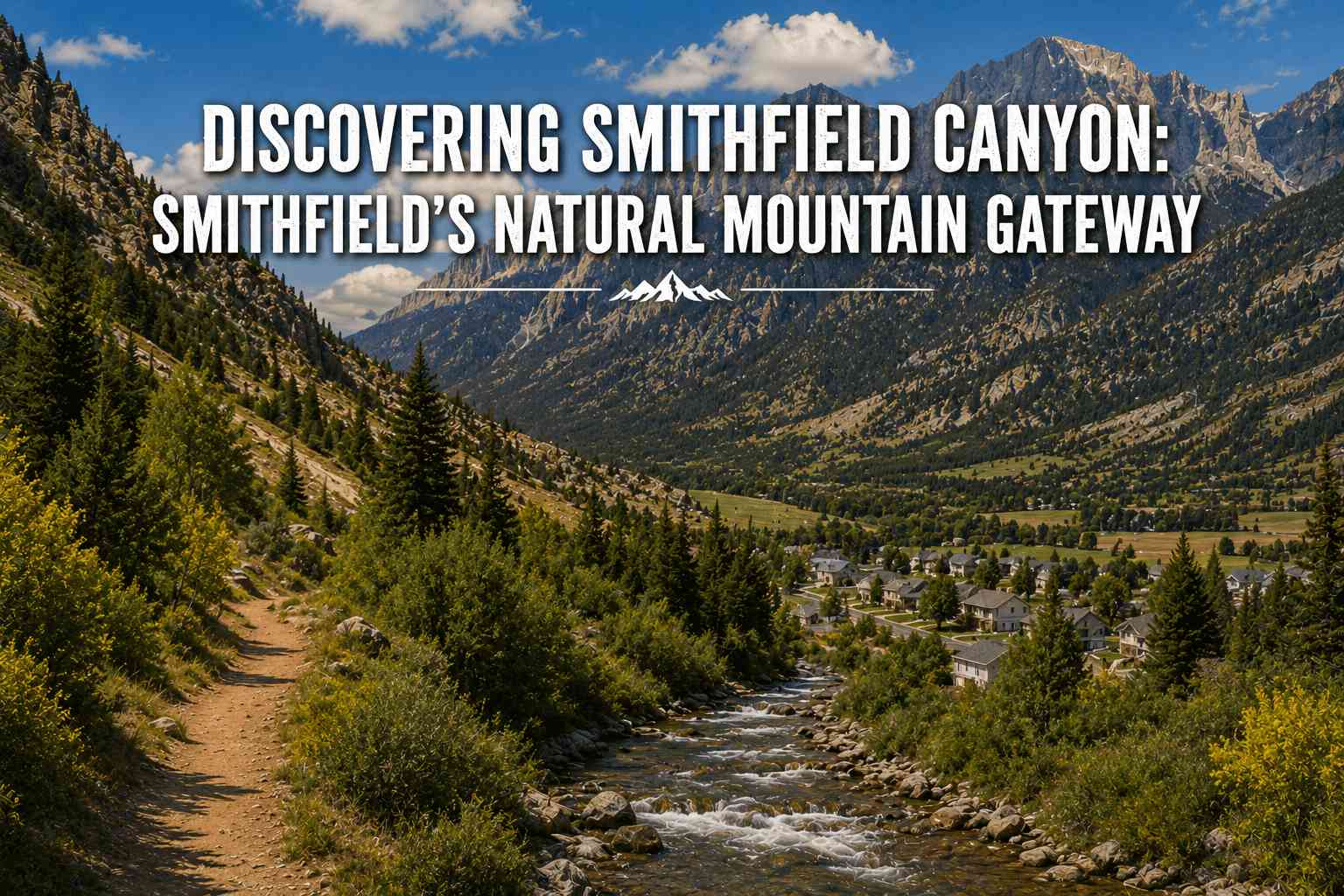
For those who call Northern Utah home, the majestic peaks of the Bear River Range are a daily reminder of the wild beauty right in our backyard. Tucked just northeast of the historic, friendly city of Smithfield, Smithfield Canyon stands as a local sanctuary.
Known for its rugged, uncrowded trails, cold mountain streams, and stunning vistas, the canyon is a favorite escape for outdoor enthusiasts. While larger nearby canyons draw heavy tourist traffic, Smithfield Canyon remains a peaceful, community-treasured destination where you can truly connect with the sights and sounds of nature.
Smithfield’s Rugged Mountain Backyard
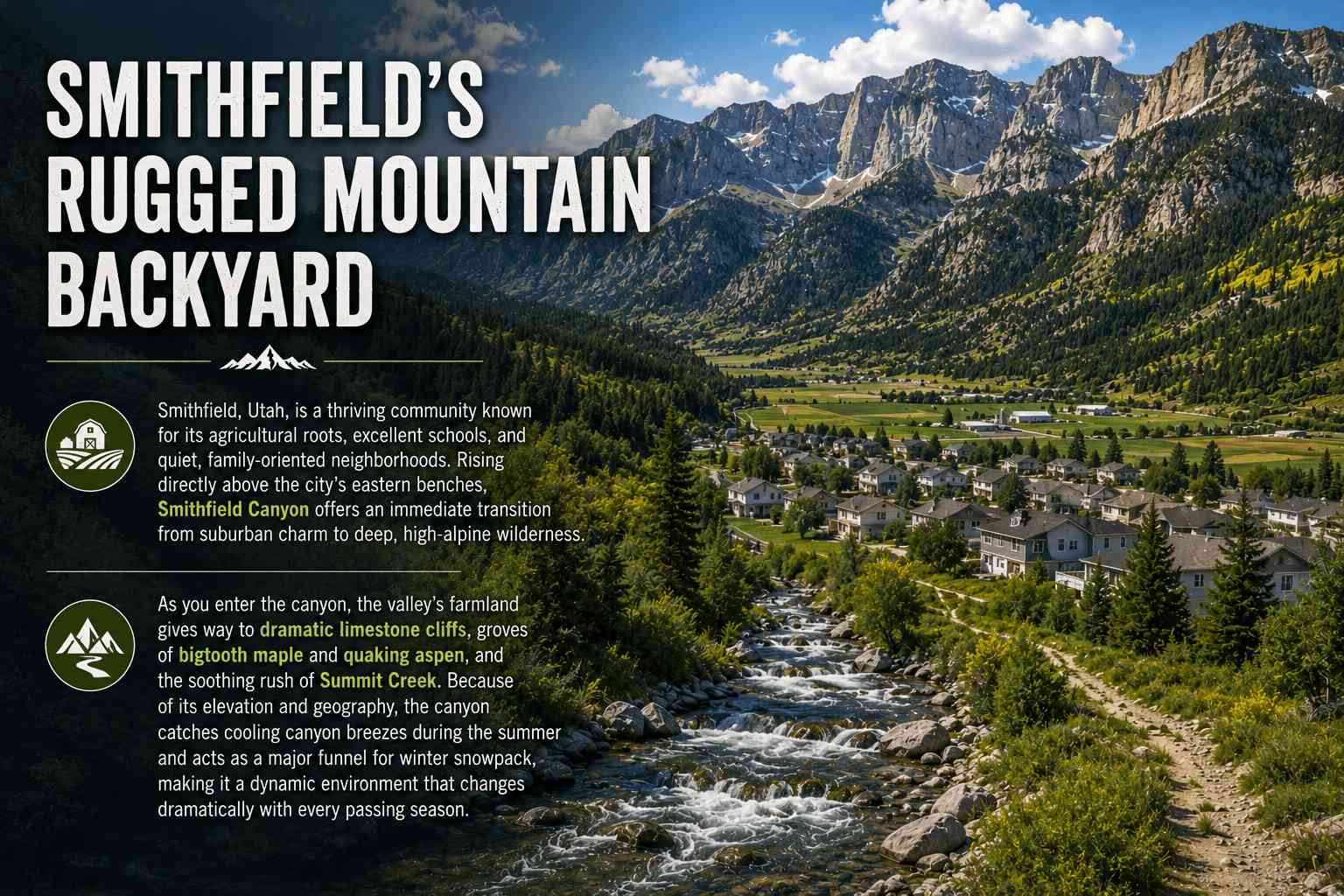
Smithfield, Utah, is a thriving community known for its agricultural roots, excellent schools, and quiet, family-oriented neighborhoods. Rising directly above the city’s eastern benches, Smithfield Canyon offers an immediate transition from suburban charm to deep, high-alpine wilderness.
As you enter the canyon, the valley’s farmland gives way to dramatic limestone cliffs, groves of bigtooth maple and quaking aspen, and the soothing rush of Summit Creek. Because of its elevation and geography, the canyon catches cooling canyon breezes during the summer and acts as a major funnel for winter snowpack, making it a dynamic environment that changes dramatically with every passing season.
Local Attractions and Wilderness Destinations
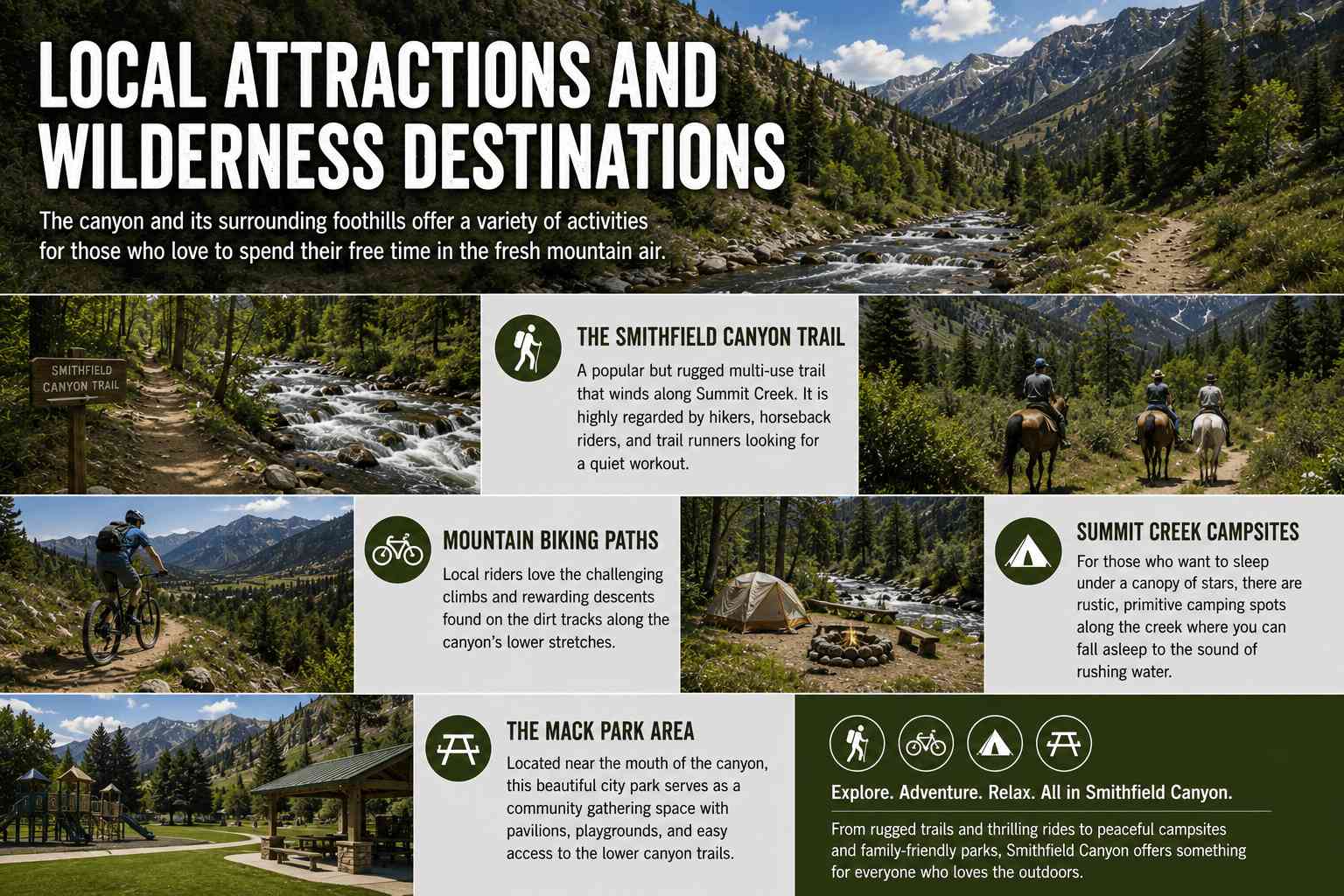
The canyon and its surrounding foothills offer a variety of activities for those who love to spend their free time in the fresh mountain air.
- The Smithfield Canyon Trail: A popular but rugged multi-use trail that winds along Summit Creek. It is highly regarded by hikers, horseback riders, and trail runners looking for a quiet workout.
- Mountain Biking Paths: Local riders love the challenging climbs and rewarding descents found on the dirt tracks along the canyon’s lower stretches.
- Summit Creek Campsites: For those who want to sleep under a canopy of stars, there are rustic, primitive camping spots along the creek where you can fall asleep to the sound of rushing water.
- The Mack Park Area: Located near the mouth of the canyon, this beautiful city park serves as a community gathering space with pavilions, playgrounds, and easy access to the lower canyon trails.
Seasonal Changes and the Canyon Lifestyle
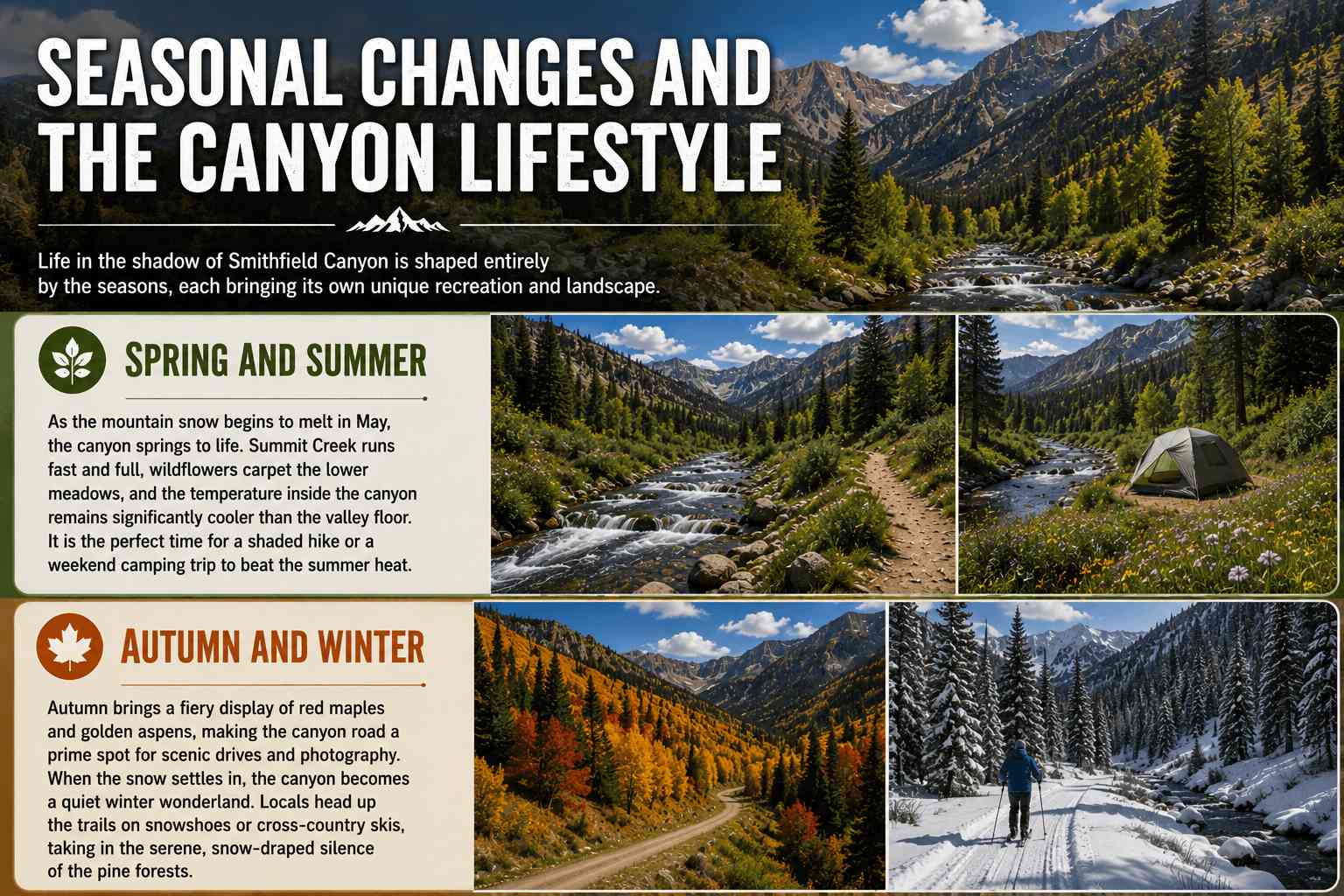
Life in the shadow of Smithfield Canyon is shaped entirely by the seasons, each bringing its own unique recreation and landscape.
Spring and Summer
As the mountain snow begins to melt in May, the canyon springs to life. Summit Creek runs fast and full, wildflowers carpet the lower meadows, and the temperature inside the canyon remains significantly cooler than the valley floor. It is the perfect time for a shaded hike or a weekend camping trip to beat the summer heat.
Autumn and Winter
Autumn brings a fiery display of red maples and golden aspens, making the canyon road a prime spot for scenic drives and photography. When the snow settles in, the canyon becomes a quiet winter wonderland. Locals head up the trails on snowshoes or cross-country skis, taking in the serene, snow-draped silence of the pine forests.
Why People Enjoy the Area (and Protecting Your Canyon-Adjacent Home)
Residents choose to live on Smithfield’s eastern benches specifically for the lifestyle. Having direct, five-minute access to a mountain canyon while still being close to Logan’s shopping and Utah State University is a rare balance.
However, living so close to a mountain wilderness means experiencing the full power of Northern Utah’s weather. The heavy winter snowpack that blankets Smithfield Canyon eventually melts, sending significant runoff down Summit Creek and raising the local water table. For nearby homes, this seasonal shift can lead to slow foundation seepage, damp crawl spaces, or unexpected basement moisture.
Additionally, canyon winds can be incredibly fierce. Strong windstorms funneling through the canyon walls can tear shingles from roofs, damage siding, and down heavy tree limbs. During the coldest months, intense freeze-thaw cycles can freeze water pipes in vulnerable areas of a home.
When mountain weather leads to water damage, roof leaks, or burst pipes, Cache Restoration is proud to support the Smithfield community. As local experts in water extraction, structural drying, and storm damage repair, they help families protect their investments and keep their homes safe and dry through every season.
Helpful Tips for Visitors and Residents
Whether you are heading up the canyon for an afternoon run or live just down the street, these tips will keep your experience safe and enjoyable:
- Check the Flow: Summit Creek can run incredibly fast during the spring runoff (typically May through June). Keep children and pets a safe distance from the water’s edge.
- Watch for Wildlife: Moose, deer, and the occasional wild turkey are common in the canyon. Give them plenty of space, especially during the winter months when they move to lower elevations.
- Prepare Your Home’s Pipes: Before freezing temperatures arrive in late autumn, make sure to disconnect outdoor hoses and insulate exposed pipes in crawl spaces or unheated garages.
- Practice Trail Etiquette: Mountain bikers yield to hikers, and everyone yields to horses. Keep our canyon beautiful by packing out all trash.
Conclusion
Smithfield Canyon is a beautiful, rugged slice of Northern Utah that highlights the very best of the Cache Valley lifestyle. It is a place of recreation, quiet reflection, and community pride.
While the wild mountain weather occasionally brings challenges like heavy snowmelt or strong canyon winds, residents can rest easy knowing that the community looks out for its own. Whenever local homeowners need a helping hand to recover from water, wind, or seasonal storm damage, Cache Restoration is always nearby, dedicated to keeping Smithfield’s homes as resilient as the mountains themselves.
Frequently Asked Questions
Where is Smithfield Canyon located?
Smithfield Canyon is located directly east of Smithfield, Utah, sitting along the western slopes of the Bear River Range in northern Cache County, just minutes from downtown Logan.
What recreational activities are available in Smithfield Canyon?
Visitors and locals enjoy rugged multi-use hiking trails, mountain biking, horseback riding, primitive camping along Summit Creek, wildlife watching, cross-country skiing, and snowshoeing.
What is Summit Creek, and how does it flow through the canyon?
Summit Creek is the cold mountain stream that flows down Smithfield Canyon, feeding into Mack Park at the canyon mouth and providing mountain water runoff across the eastern benches of Smithfield.
Are there campsites or public parks near Smithfield Canyon?
Yes. Rustic, primitive campsites are available along Summit Creek inside the canyon, and Mack Park sits right at the canyon entrance, offering pavilions, playgrounds, and picnic spaces.
How does spring runoff from Smithfield Canyon affect nearby homes on Smithfield's east bench?
As the heavy mountain snowpack melts in late spring (May through June), Summit Creek flows at peak capacity and elevates the local water table. This high groundwater can cause foundation seepage, damp crawl spaces, or basement flooding in nearby properties.
What risks do canyon winds and freeze-thaw cycles pose to local homes?
Fierce winds funneling down the canyon can strip roof shingles and damage siding, while severe winter freezing temperatures put vulnerable or uninsulated plumbing lines at high risk of bursting.
How can homeowners near Smithfield Canyon prepare for severe winter weather and snowmelt?
Property owners should disconnect outdoor hoses, insulate exposed pipes in crawl spaces or unheated garages, test basement sump pumps before May, and clear roof gutters of autumn debris.
Who provides emergency water damage cleanup and storm repair in Smithfield, UT?
Cache Restoration proudly serves homeowners, mountain cabin owners, and businesses throughout Smithfield and Cache Valley, delivering 24/7 emergency water extraction, structural drying, wind damage repair, and mold remediation.