Preserving History and Harvest: Life in Lewiston, Utah
About the Area
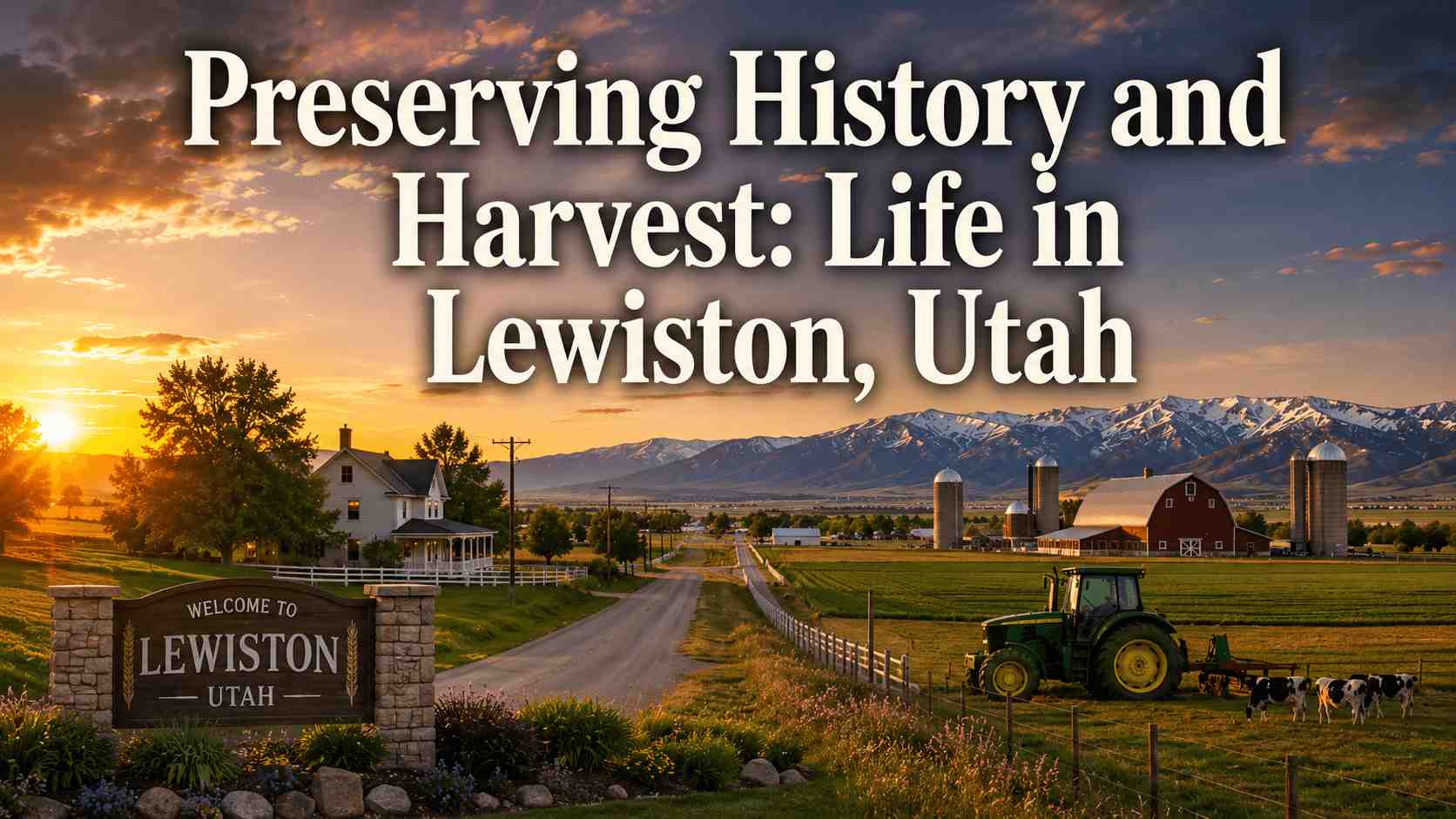
Situated at the northernmost edge of Cache County, right along the Idaho border, lies Lewiston, Utah. Known for its wide-open country roads, endless fields of green, and deep-seated agricultural roots, Lewiston offers a classic rural lifestyle that has remained wonderfully unchanged for generations.
Unlike the busier urban pockets of the valley, Lewiston moves to the rhythm of the farming calendar. It is a community defined by family-owned dairies, historic homesteads, and a quiet pride in the land.
Rural Independence and a High Water Table
Lewiston sits on a uniquely flat, fertile stretch of the northern Cache Valley floor. Framed by the distant silhouettes of the Bear River Range and the Wellsville Mountains, the town features classic rural layouts with spacious acreage, historic barns, and century-old farmhouses.
The geography here is highly unique. Surrounded by the Bear River and Cub River, Lewiston features a remarkably high water table. While this damp, nutrient-rich soil has made the area one of the most productive agricultural zones in northern Utah, it also presents distinct environmental challenges for local properties. Many of the older homesteads, dug-out basements, and barns in the area are constantly interacting with the moisture right beneath the surface.
Local Attractions and Farm-Town Favorites
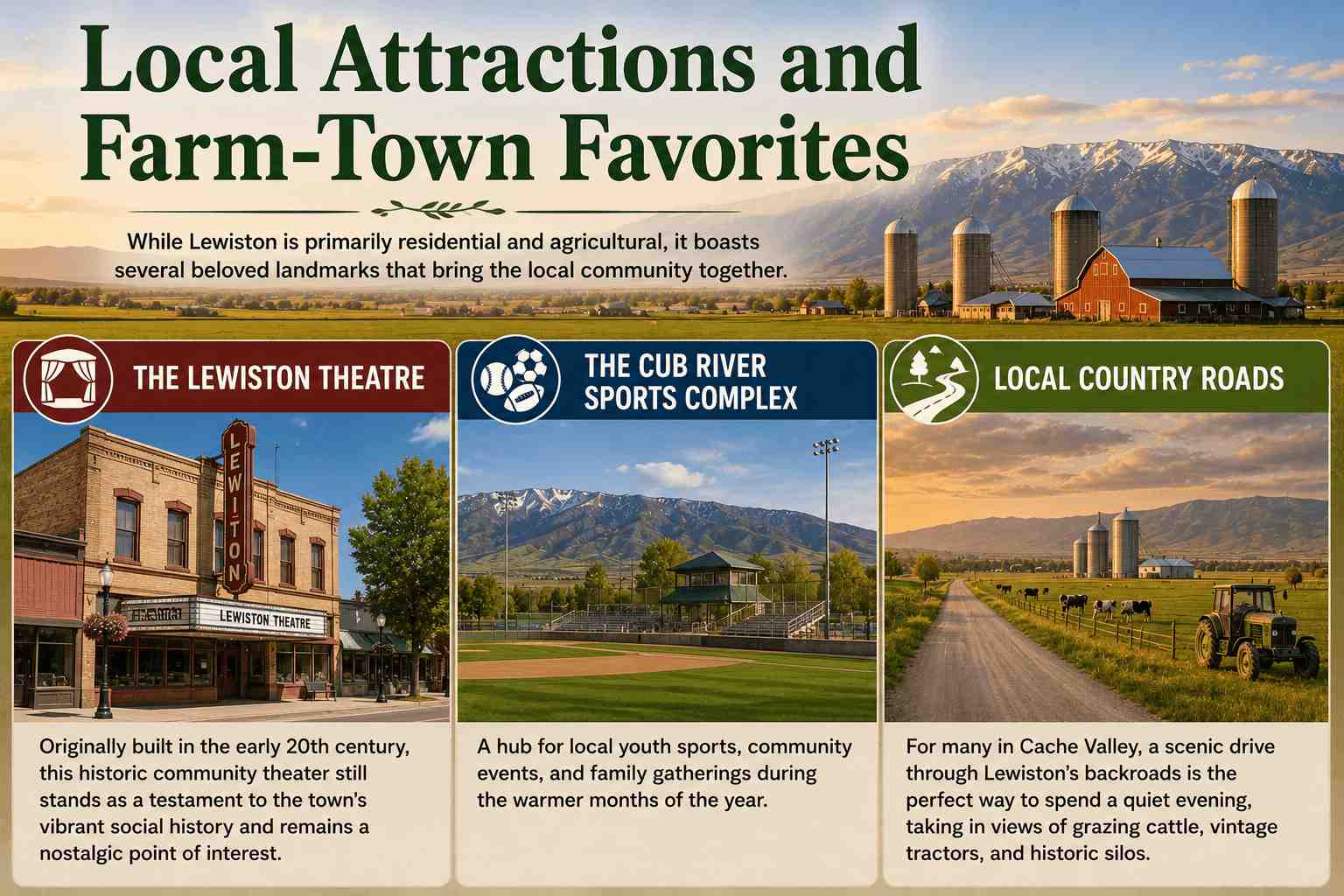
While Lewiston is primarily residential and agricultural, it boasts several beloved landmarks that bring the local community together.
- The Lewiston Theatre: Originally built in the early 20th century, this historic community theater still stands as a testament to the town’s vibrant social history and remains a nostalgic point of interest.
- The Cub River Sports Complex: A hub for local youth sports, community events, and family gatherings during the warmer months of the year.
- Local Country Roads: For many in Cache Valley, a scenic drive through Lewiston’s backroads is the perfect way to spend a quiet evening, taking in views of grazing cattle, vintage tractors, and historic silos.
Seasonal Changes, Spring Thaw, and Local Property Care
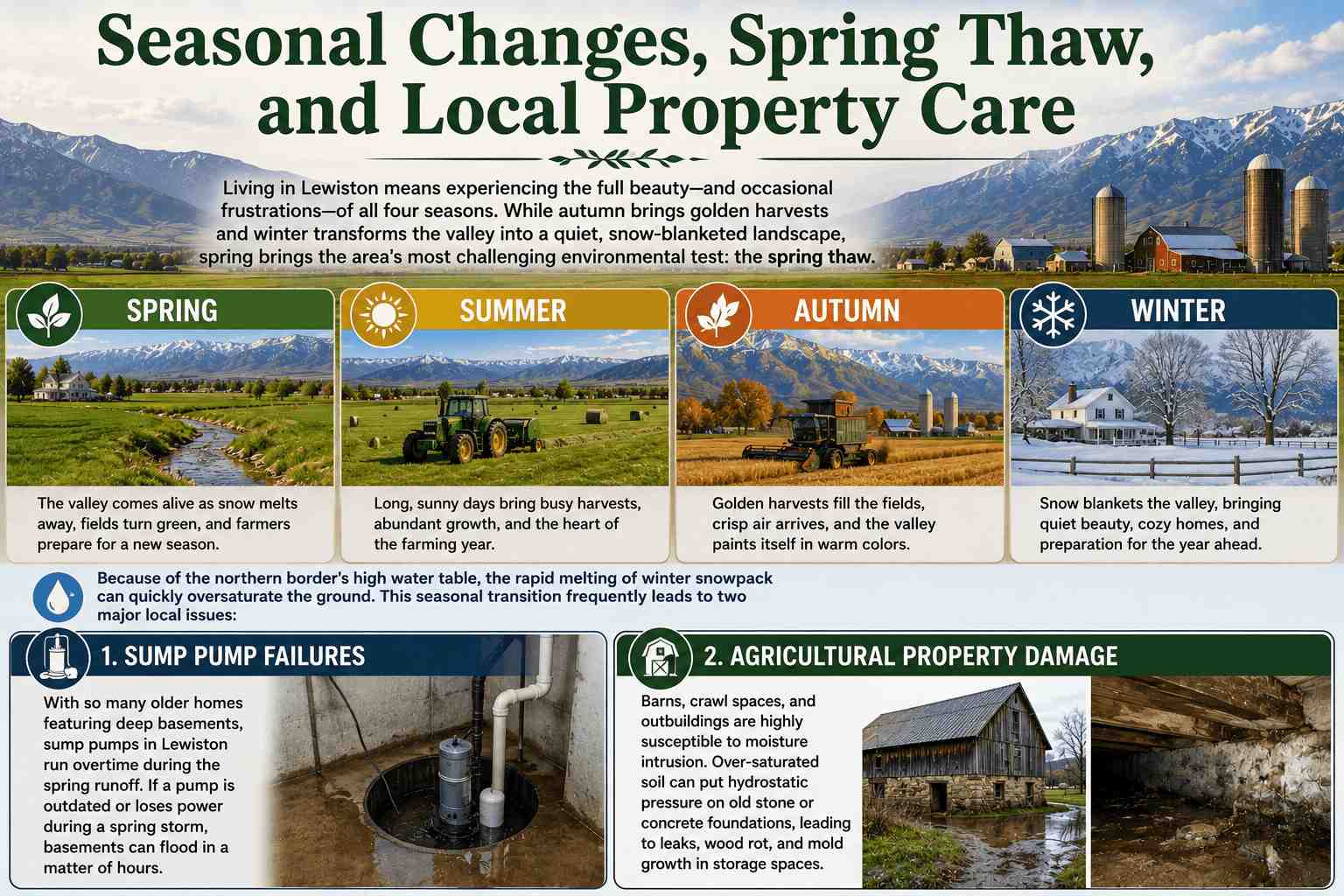
Living in Lewiston means experiencing the full beauty – and occasional frustrations – of all four seasons. While autumn brings golden harvests and winter transforms the valley into a quiet, snow-blanketed landscape, spring brings the area’s most challenging environmental test: the spring thaw.
Because of the northern border’s high water table, the rapid melting of winter snowpack can quickly oversaturate the ground. This seasonal transition frequently leads to two major local issues:
- Sump Pump Failures: With so many older homes featuring deep basements, sump pumps in Lewiston run overtime during the spring runoff. If a pump is outdated or loses power during a spring storm, basements can flood in a matter of hours.
- Agricultural Property Damage: Barns, crawl spaces, and outbuildings are highly susceptible to moisture intrusion. Over-saturated soil can put hydrostatic pressure on old stone or concrete foundations, leading to leaks, wood rot, and mold growth in storage spaces.
Why People Love Calling Lewiston Home
Despite the hard work of managing rural properties, residents wouldn’t trade the peace of Lewiston for anything. The schools are excellent, neighbors look out for one another, and there is a profound sense of safety and quiet that is hard to find in modern suburbs.
To help preserve this beautiful way of life, local support is key. When spring runoff overwhelms a basement or a crawl space suffers from hidden moisture damage, Cache Restoration is proud to stand by Lewiston’s farmers and families. Providing specialized water extraction, structural drying, and mold remediation, the team helps ensure that Lewiston’s historic homesteads and agricultural structures remain safe and dry for the next generation.
Helpful Tips for Lewiston Residents and Landowners
If you own a home, barn, or agricultural property in the Lewiston area, practicing preventative maintenance is essential to protect your investment:
- Test Your Sump Pump Early: Don’t wait for the spring thaw to find out your pump is broken. Test it every late winter by pouring a bucket of water into the pit to ensure the float switch activates properly.
- Install a Backup Power Source: Spring storms can occasionally knock out local power lines. Investing in a battery-backup sump pump can keep your basement dry even when the electricity goes out.
- Keep Crawl Spaces Well-Ventilated: Ensure that barn foundations and crawl spaces have proper drainage pathways routing water away from the structure. Regularly check these spaces for damp musty odors, which are the first sign of mold growth.
Keeping Our Heritage Intact
From its quiet country lanes to its proud agricultural heritage, Lewiston, Utah represents the very best of Cache Valley’s rural spirit. It is a place where hard work is respected, and the beauty of the land is preserved daily.
As seasonal shifts and high water tables continue to test local properties, remember that you don’t have to face property damage alone. Cache Restoration proudly serves the Lewiston community, delivering expert care to keep our historic valley homes, barns, and businesses secure through every season.
Frequently Asked Questions
Where is Smithfield, Utah located?
Smithfield is situated in Cache County in northern Utah, sitting along the foothills of the Bear River Range at an elevation of roughly 4,600 feet, positioned approximately 7 miles north of Logan along US Highway 91.
What is Smithfield, Utah known for?
Smithfield is recognized as the dynamic commercial and retail center of northern Cache Valley, known for its historic pioneer wide-grid streets, Birch Creek Golf Course, family-friendly parks like Mack Park, and annual Health Days celebration.
What outdoor and recreational attractions are located in Smithfield?
Key recreation spots include the 18-hole Birch Creek Golf Course on the east bench, Mack Park along Summit Creek, and Smithfield Canyon, which provides trails for hiking, mountain biking, horseback riding, and snowmobiling.
What is Smithfield Health Days?
Health Days is Smithfield’s signature annual community festival held every May. The event features a local parade, a 10K race, food booths, entertainment, and family activities celebrating the city’s health and wellness traditions.
How far is Smithfield from Logan and Utah State University?
Smithfield is located just 10 to 15 minutes north of downtown Logan and the Utah State University campus via US Highway 91, making it a convenient hub for students, faculty, and commuters.
What seasonal weather conditions do residents in Smithfield experience?
Smithfield experiences a classic high-elevation Cache Valley climate: warm, dry summers ideal for golfing and canyon recreation; crisp autumns; lush springs; and cold, snow-heavy winters with sub-zero freezing spells.
What risks do freezing winter temperatures pose to commercial and residential properties in Smithfield?
Sub-zero winter stretches in Smithfield often cause frozen water lines, main line bursts, and sprinkler system failures in commercial storefronts, apartment complexes, and residential basements, leading to sudden water damage.
How can property owners prevent burst pipes during Smithfield winters?
Homeowners and business owners should insulate vulnerable pipes, keep indoor thermostats consistent overnight, and allow a slight drip from faucets during sub-zero freezes to relieve pressure buildup inside water lines.
Who provides 24/7 emergency water extraction and property restoration in Smithfield, UT?
Cache Restoration proudly serves commercial businesses, multi-family housing complexes, and single-family homes in Smithfield and throughout Cache Valley, delivering rapid emergency water extraction, structural drying, mold remediation, and storm damage repair.