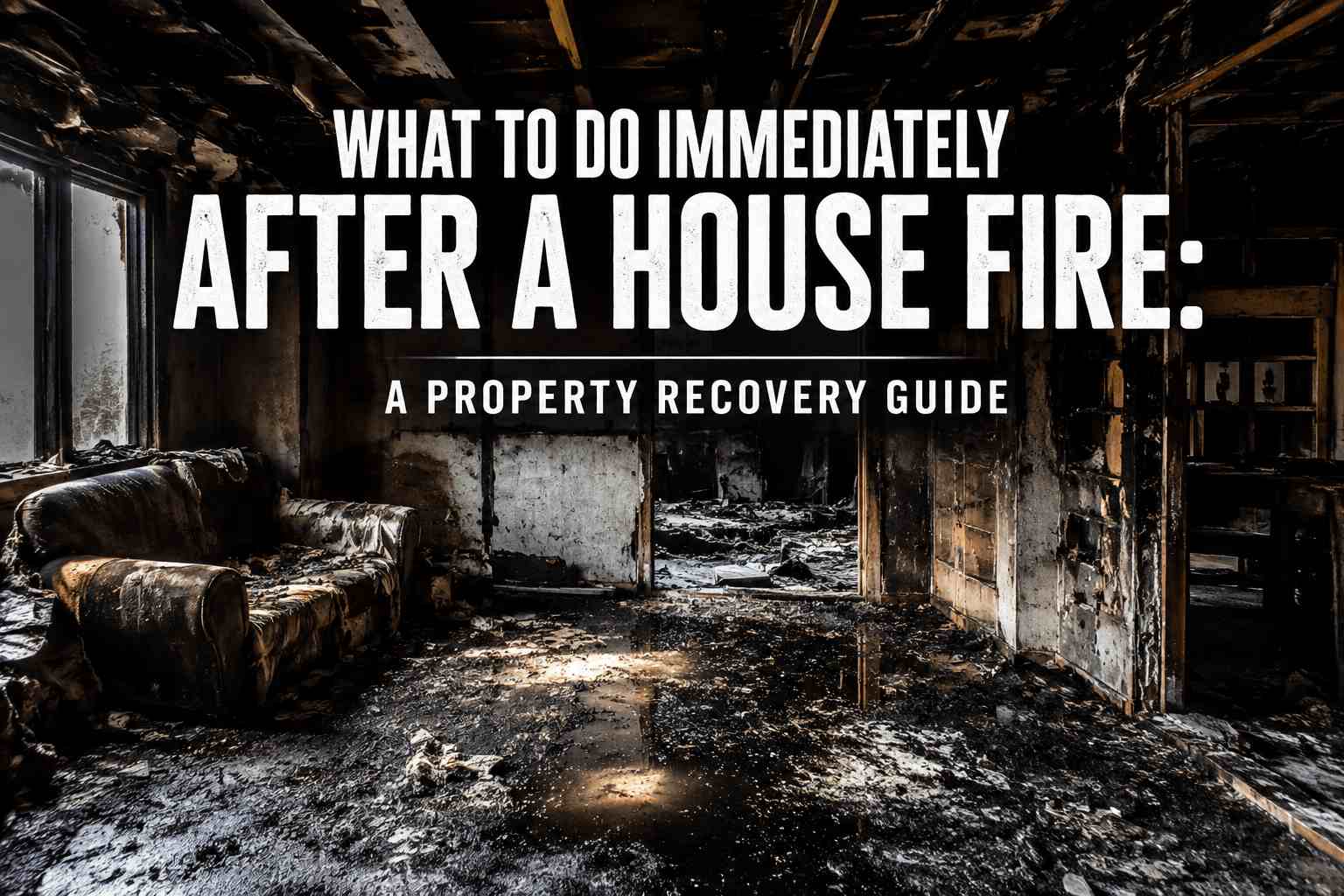
What to Do Immediately After a House Fire: A Property Recovery Guide
Key Takeaways
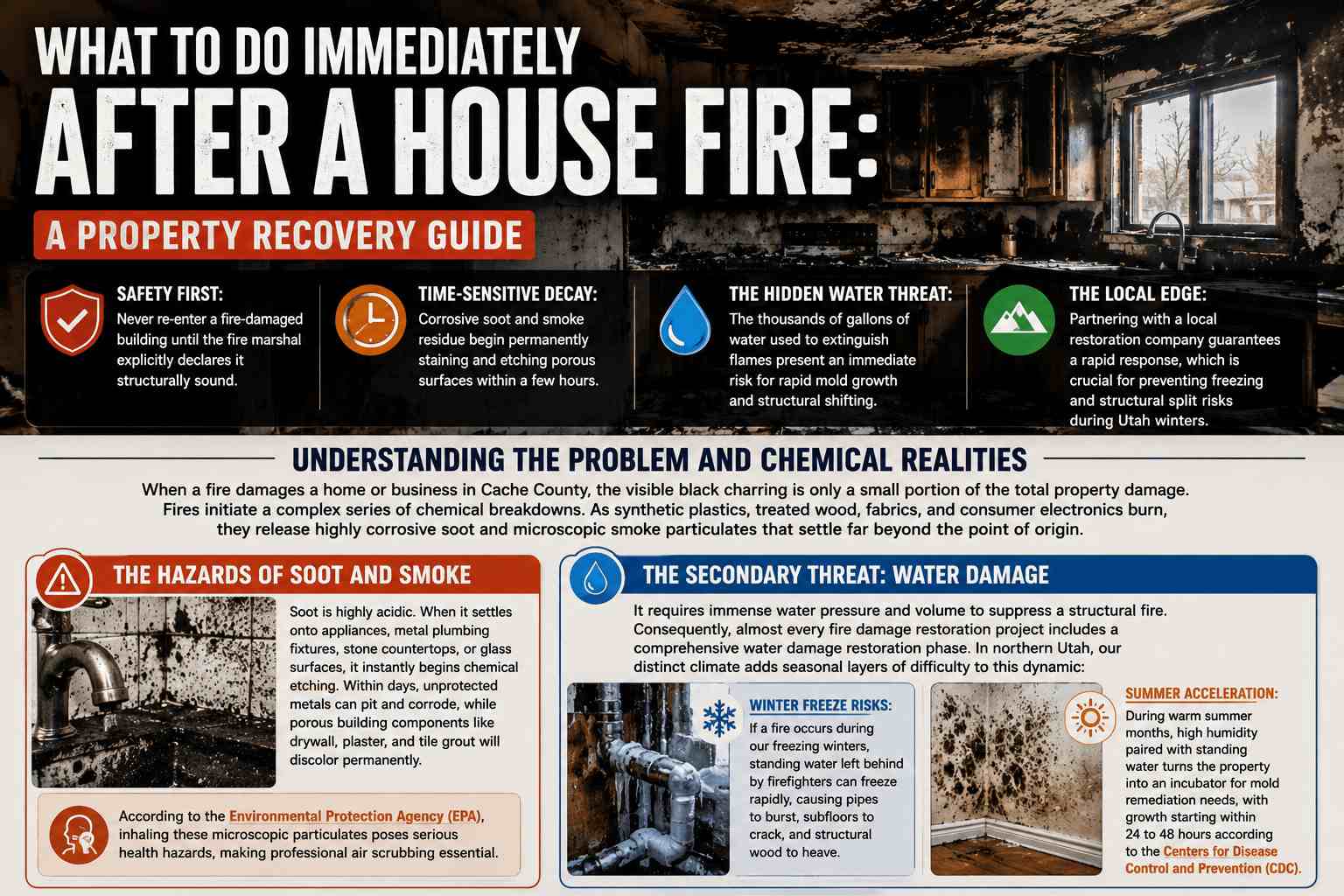
- Safety First: Never re-enter a fire-damaged building until the fire marshal explicitly declares it structurally sound.
- Time-Sensitive Decay: Corrosive soot and smoke residue begin permanently staining and etching porous surfaces within a few hours.
- The Hidden Water Threat: The thousands of gallons of water used to extinguish flames present an immediate risk for rapid mold growth and structural shifting.
- The Local Edge: Partnering with a local restoration company guarantees a rapid response, which is crucial for preventing freezing and structural split risks during Utah winters.
Facing the Aftermath of Property Damage
Discovering the aftermath of a property fire is one of the most stressful experiences a home or business owner can endure. Once the first responders pack up their equipment and leave the scene, the true scale of the situation begins to set in. You are left dealing with structural charring, toxic smoke particles, thick soot, and extensive water intrusion from firefighting efforts.
Navigating this complex process requires a clear, strategic approach to ensure your property can be safely salvaged. Understanding the mechanics of fire damage restoration can help you make informed decisions during those critical first few hours, protecting both your investment and your health.
Understanding the Problem and Chemical Realities
When a fire damages a home or business in Cache County, the visible black charring is only a small portion of the total property damage. Fires initiate a complex series of chemical breakdowns. As synthetic plastics, treated wood, fabrics, and consumer electronics burn, they release highly corrosive soot and microscopic smoke particulates that settle far beyond the point of origin.
The Hazards of Soot and Smoke
Soot is highly acidic. When it settles onto appliances, metal plumbing fixtures, stone countertops, or glass surfaces, it instantly begins chemical etching. Within days, unprotected metals can pit and corrode, while porous building components like drywall, plaster, and tile grout will discolor permanently. According to the Environmental Protection Agency (EPA), inhaling these microscopic particulates poses serious health hazards, making professional air scrubbing essential.
The Secondary Threat: Water Damage
It requires immense water pressure and volume to suppress a structural fire. Consequently, almost every fire damage restoration project includes a comprehensive water damage restoration phase. In northern Utah, our distinct climate adds seasonal layers of difficulty to this dynamic:
- Winter Freeze Risks: If a fire occurs during our freezing winters, standing water left behind by firefighters can freeze rapidly, causing pipes to burst, subfloors to crack, and structural wood to heave.
- Summer Acceleration: During warm summer months, high humidity paired with standing water turns the property into an incubator for mold remediation needs, with growth starting within 24 to 48 hours according to the Centers for Disease Control and Prevention (CDC).
What to Do Immediately After a House Fire
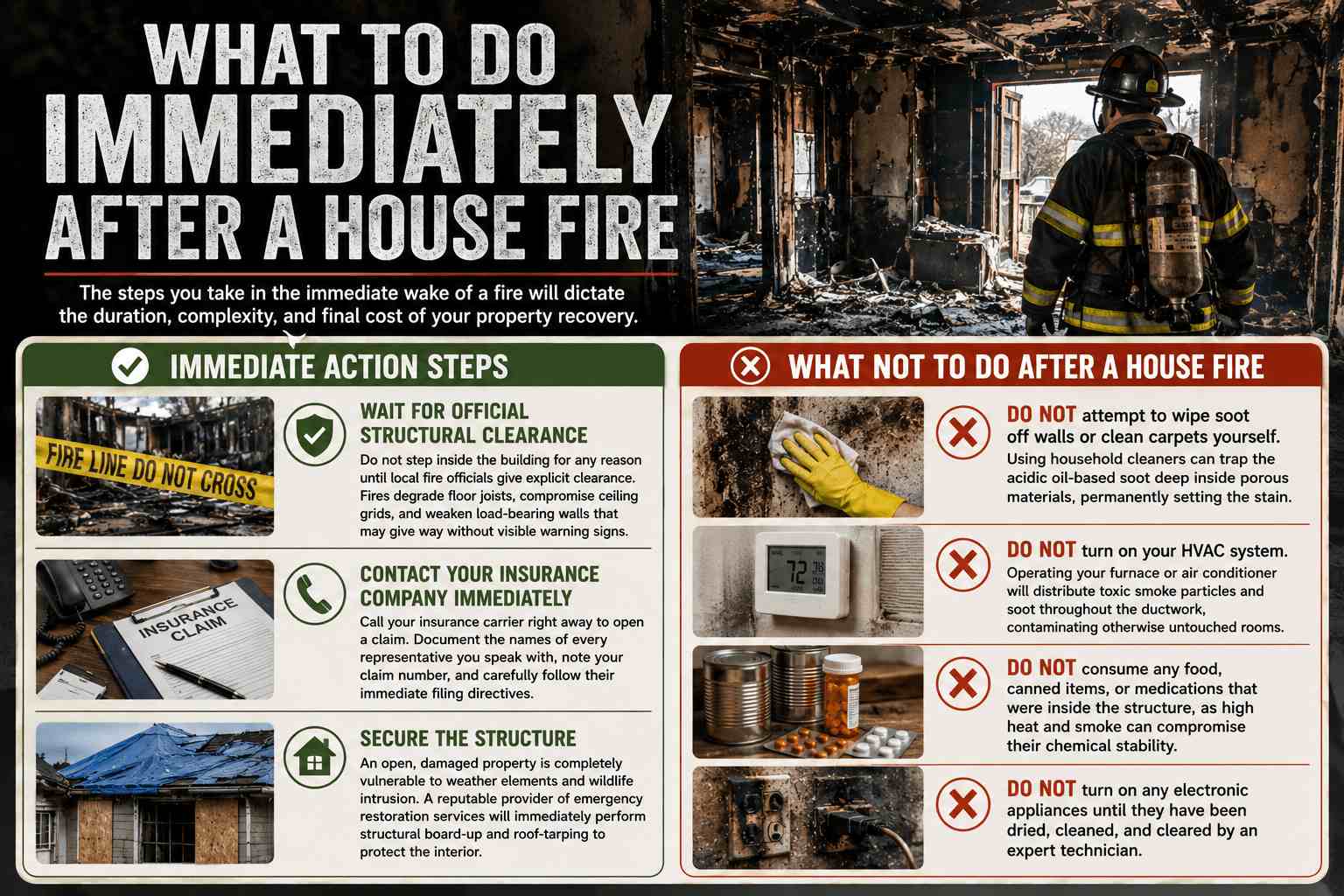
The steps you take in the immediate wake of a fire will dictate the duration, complexity, and final cost of your property recovery.
Immediate Action Steps
- Wait for Official Structural Clearance: Do not step inside the building for any reason until local fire officials give explicit clearance. Fires degrade floor joists, compromise ceiling grids, and weaken load-bearing walls that may give way without visible warning signs.
- Contact Your Insurance Company Immediately: Call your insurance carrier right away to open a claim. Document the names of every representative you speak with, note your claim number, and carefully follow their immediate filing directives.
- Secure the Structure: An open, damaged property is completely vulnerable to weather elements and wildlife intrusion. A reputable provider of emergency restoration services will immediately perform structural board-up and roof-tarping to protect the interior.
Tip: What NOT to Do After a House Fire
- Do not attempt to wipe soot off walls or clean carpets yourself. Using household cleaners can trap the acidic oil-based soot deep inside porous materials, permanently setting the stain.
- Do not turn on your HVAC system. Operating your furnace or air conditioner will distribute toxic smoke particles and soot throughout the ductwork, contaminating otherwise untouched rooms.
- Do not consume any food, canned items, or medications that were inside the structure, as high heat and smoke can compromise their chemical stability.
- Do not turn on any electronic appliances until they have been dried, cleaned, and cleared by an expert technician.
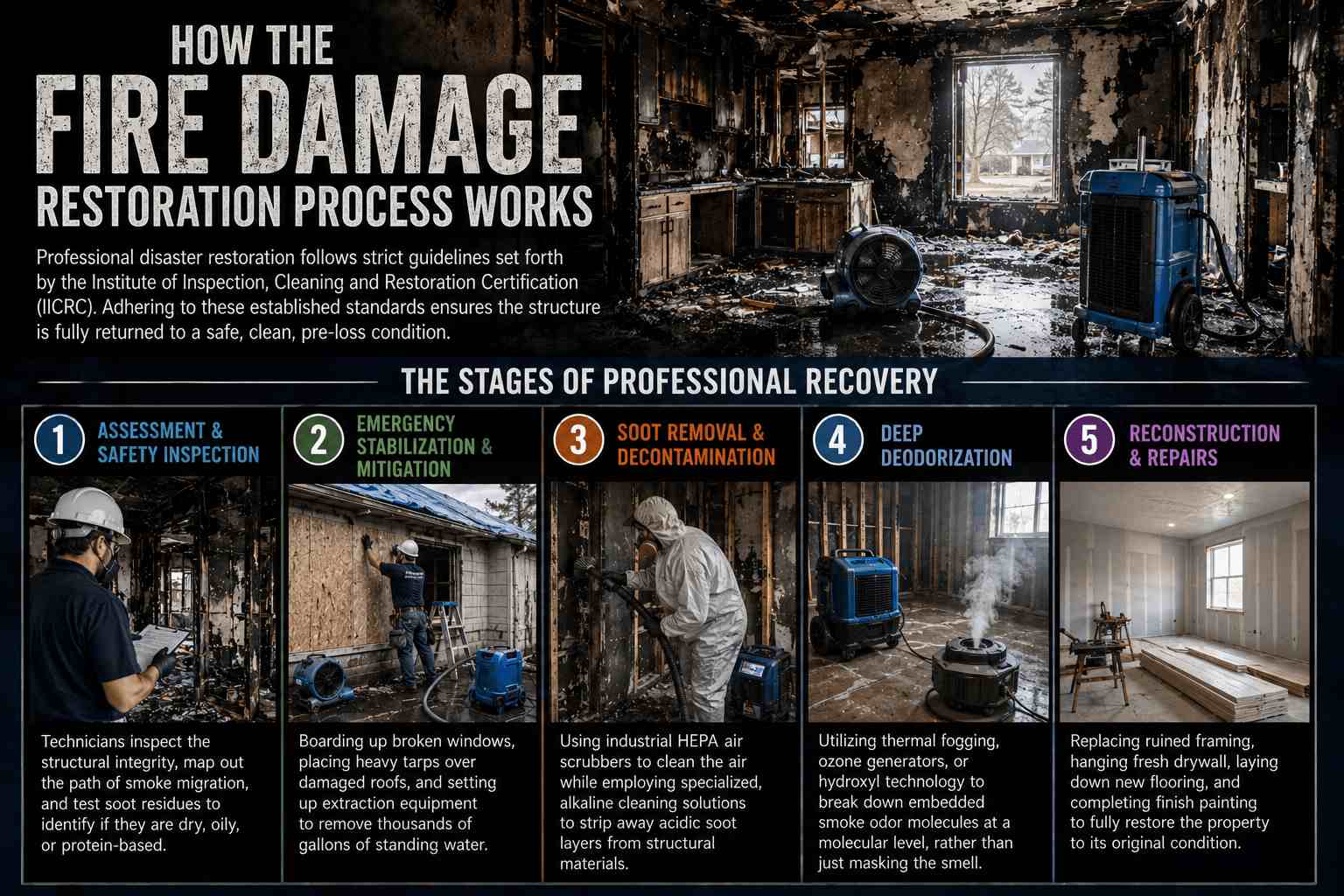
How the Fire Damage Restoration Process Works
Professional disaster restoration follows strict guidelines set forth by the Institute of Inspection, Cleaning and Restoration Certification (IICRC). Adhering to these established standards ensures the structure is fully returned to a safe, clean, pre-loss condition.
The Stages of Professional Recovery
- Assessment & Safety Inspection: Technicians inspect the structural integrity, map out the path of smoke migration, and test soot residues to identify if they are dry, oily, or protein-based.
- Emergency Stabilization & Mitigation: Boarding up broken windows, placing heavy tarps over damaged roofs, and setting up extraction equipment to remove thousands of gallons of standing water.
- Soot Removal & Decontamination: Using industrial HEPA air scrubbers to clean the air while employing specialized, alkaline cleaning solutions to strip away acidic soot layers from structural materials.
- Deep Deodorization: Utilizing thermal fogging, ozone generators, or hydroxyl technology to break down embedded smoke odor molecules at a molecular level, rather than just masking the smell.
- Reconstruction & Repairs: Replacing ruined framing, hanging fresh drywall, laying down new flooring, and completing finish painting to fully restore the property to its original condition.
DIY vs. Professional Restoration
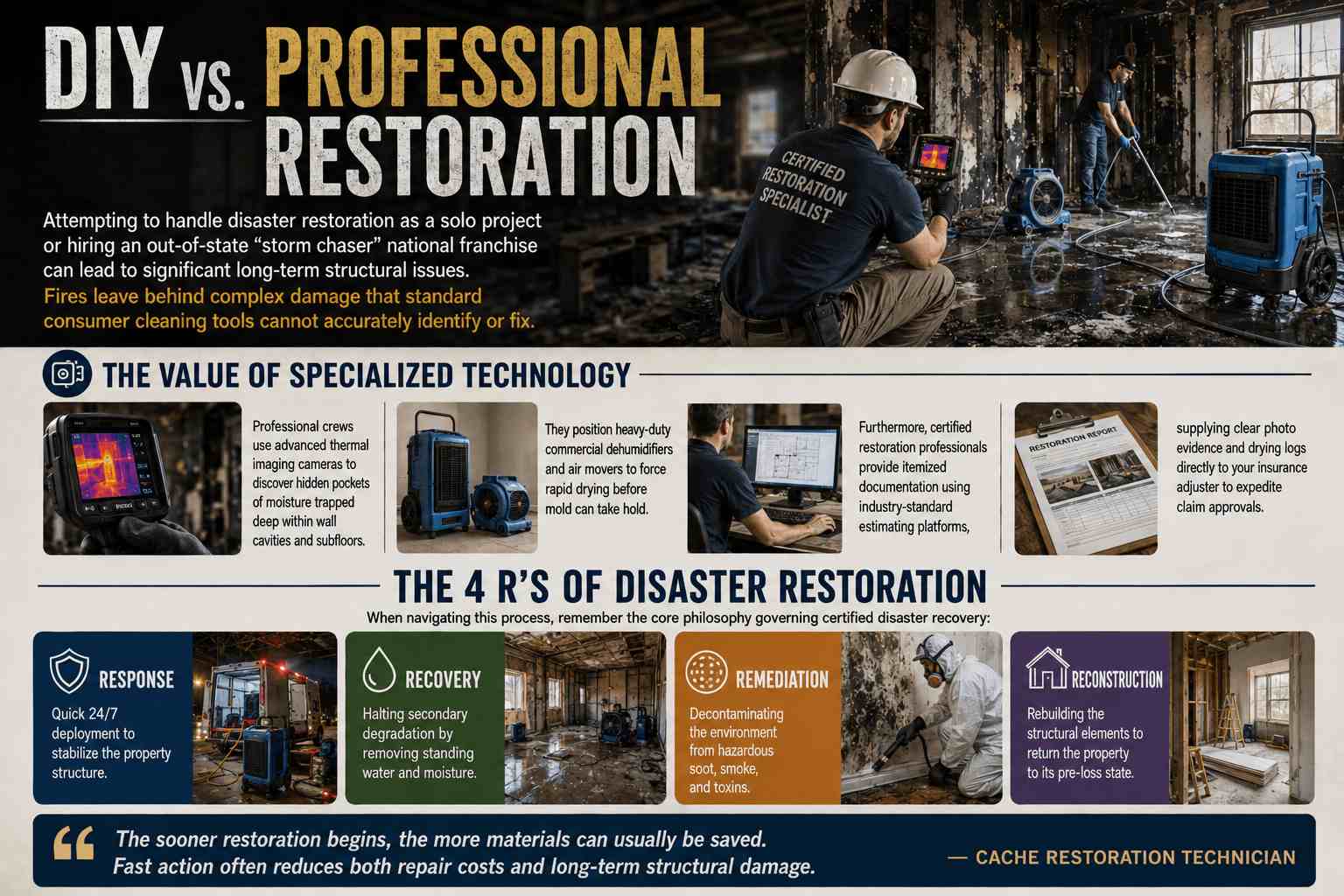
Attempting to handle disaster restoration as a solo project or hiring an out-of-state “storm chaser” national franchise can lead to significant long-term structural issues. Fires leave behind complex damage that standard consumer cleaning tools cannot accurately identify or fix.
The Value of Specialized Technology
Professional crews use advanced thermal imaging cameras to discover hidden pockets of moisture trapped deep within wall cavities and subfloors. They position heavy-duty commercial dehumidifiers and air movers to force rapid drying before mold can take hold. Furthermore, certified restoration professionals provide itemized documentation using industry-standard estimating platforms, supplying clear photo evidence and drying logs directly to your insurance adjuster to expedite claim approvals.
The 4 R’s of Disaster Restoration
When navigating this process, remember the core philosophy governing certified disaster recovery:
- Response: Quick 24/7 deployment to stabilize the property structure.
- Recovery: Halting secondary degradation by removing standing water and moisture.
- Remediation: Decontaminating the environment from hazardous soot, smoke, and toxins.
- Reconstruction: Rebuilding the structural elements to return the property to its pre-loss state.
Expert Quote: “The sooner restoration begins, the more materials can usually be saved. Fast action often reduces both repair costs and long-term structural damage.” – Cache Restoration Technician
Cache Restoration: Your Local Experts
When an emergency happens close to home, relying on a national corporate franchise often means waiting for a distant regional team to dispatch, or dealing with project managers who don’t understand the construction demands of northern Utah properties. Cache Restoration is a locally owned company deeply invested in our community. We provide comprehensive residential restoration and commercial property restoration solutions tailored to our local environment.
Our Comprehensive Recovery Solutions
- 24/7 Emergency Restoration: Ready to deploy around the clock to secure your property before secondary damage compounds.
- Water Damage Restoration Cache County: Prompt water extraction and structural drying to defend against mold expansion.
- Fire & Smoke Damage Restoration: Meticulous soot removal, deep surface cleaning, and structural deodorization.
- Mold Remediation: Fully certified containment and removal strategies to maintain safe breathing environments.
- Carpet Cleaning Services: Specialized deep-cleaning methods designed to save smoke-permeated fabrics and carpets whenever possible.
Safety & Property Protection FAQ
Critical Property Safety Guidelines
- Is it safe to stay inside a property immediately after a fire? No. Even small fires generate fine particulates, carbon monoxide, and volatile organic compounds (VOCs) that settle into surfaces and remain suspended in the air. The American Red Cross strongly advises staying out of the structure until the indoor air quality has been professionally remediated.
- Can soaked carpets be saved after a fire? If the carpet was exposed only to clean municipal water from firefighting efforts and drying protocols begin within 24 to 48 hours, it can often be successfully salvaged. However, if the carpet is saturated with toxic soot runoff, heavy char, or has remained damp past the 48-hour mark, replacement is required for health and safety reasons.
- Does homeowners insurance cover fire restoration? Standard homeowners and commercial property insurance policies typically cover fire damage restoration, smoke damage cleanup, and the water damage caused by extinguishing the fire, minus your policy’s standard deductible.
Proactive Property Protection Tips
While a sudden fire or disaster cannot always be anticipated, taking proactive maintenance steps can significantly minimize your property’s vulnerability to extensive water or structural damage:
- Winterize Exterior Plumbing: Insulate all exposed pipes and shut off exterior hose bibs before harsh Utah winter temperatures set in to avoid frozen pipes bursting.
- Maintain Clear Gutters: Clean out dead leaves and twigs regularly to let spring snowmelt flow away from your foundation, cutting down the threat of ice dams and basement flooding.
- Inspect Water Lines Annually: Regularly check the supply hoses connected to your washing machine, refrigerator ice maker, and dishwasher for small cracks or signs of wear.
Conclusion: Reliable Recovery for Cache County
When your home or commercial space suffers property damage, you need a team that arrives without delay, works with painstaking precision, and guides you through the process with care. Cache Restoration proudly serves homeowners, business owners, and property managers throughout Cache County, including Logan, North Logan, Smithfield, Hyde Park, Providence, Hyrum, Wellsville, Richmond, Mendon, Millville, Nibley, Paradise, and surrounding communities.
If you are dealing with the aftermath of fire, smoke, water, or mold, do not wait for the structural damage to expand. Contact Cache Restoration today to secure immediate, professional emergency restoration assistance.
Frequently Asked Questions
What should I do immediately after a house fire?
Ensure your family or employees are completely safe, contact your insurance provider to initiate the claim, and wait for official structural clearance from the fire marshal. Avoid going inside the building, and call Cache Restoration right away to secure the structure with board-up services.
What should I not do after a house fire?
Do not attempt to clean soot off walls or wipe down furniture yourself, and do not turn on your HVAC system or any electrical appliances. Avoid consuming any food, beverages, or medicines that were exposed to the fire’s heat or smoke.
How long does fire restoration take?
The timeline depends heavily on the scale of the damage, ranging from a few days for minor smoke deodorization to several weeks or months if full structural reconstruction is needed. Cache Restoration provides an itemized timeline estimate immediately after performing the preliminary structural inspection.
How long does the restoration process take?
Minor mitigation tasks like water extraction and drying usually take 3 to 5 days. Complex projects involving full fire decontamination and rebuild work can take anywhere from a few weeks to several months depending on the property size.
What does a restoration company do after a fire?
A restoration company secures open structures, extracts standing water, cleans soot accumulation from surfaces, eliminates lingering smoke odors, and performs full structural rebuilding to return the property to its pre-loss state.
What is the process of fire restoration?
The process begins with an in-depth safety assessment, followed by immediate structure boarding/tarping, water removal, industrial soot cleaning, advanced thermal deodorization, and structural rebuild repairs.
How does fire restoration work?
It works by combining specialized scientific cleaning techniques to neutralize acidic residues with professional drying and deodorization technology, ensuring no hidden moisture or odor molecules remain trapped within the building materials.
What are the stages of restoration?
The primary stages are assessment and inspection, emergency mitigation/stabilization, deep decontamination and soot cleaning, molecular deodorization, and final structural reconstruction.
What are the 4 R's of restoration?
In professional property disaster recovery, the 4 R’s represent Response (rapid site deployment), Recovery (stabilizing the environment), Remediation (cleaning up toxic soot and hazards), and Reconstruction (rebuilding structural components).
Who pays for restoration?
In most cases, your property insurance provider pays for the fire damage restoration and water cleanup costs, minus your specific policy deductible, assuming the source of the fire was accidental.
What are restoration costs?
Restoration costs vary based on the total square footage affected, the types of building materials burned, and the depth of the structural repairs required. Cache Restoration works directly with your insurance adjuster to establish accurate, transparent pricing using standard line-item software.