Preventing House Fires: Essential Safety Tips for Cache County Properties
Key Takeaways
- Act Immediately: If a fire occurs, safety is the top priority. Once the fire is out, securing professional fire damage restoration within the first 24 to 48 hours is critical to salvaging structure and belongings.
- Understand Appliance Risks: Kitchen appliances, space heaters, and improperly handled electronics are among the leading causes of residential fires.
- Local Climate Factors: Cache County’s dry summers and freezing winters introduce unique seasonal fire hazards, from electrical overloads to wildfire smoke challenges.
- Professional Help Matters: National restoration chains often lack local agility. A homegrown team handles smoke damage cleanup with a deep understanding of Utah property construction.
The Unexpected Reality of Property Fires
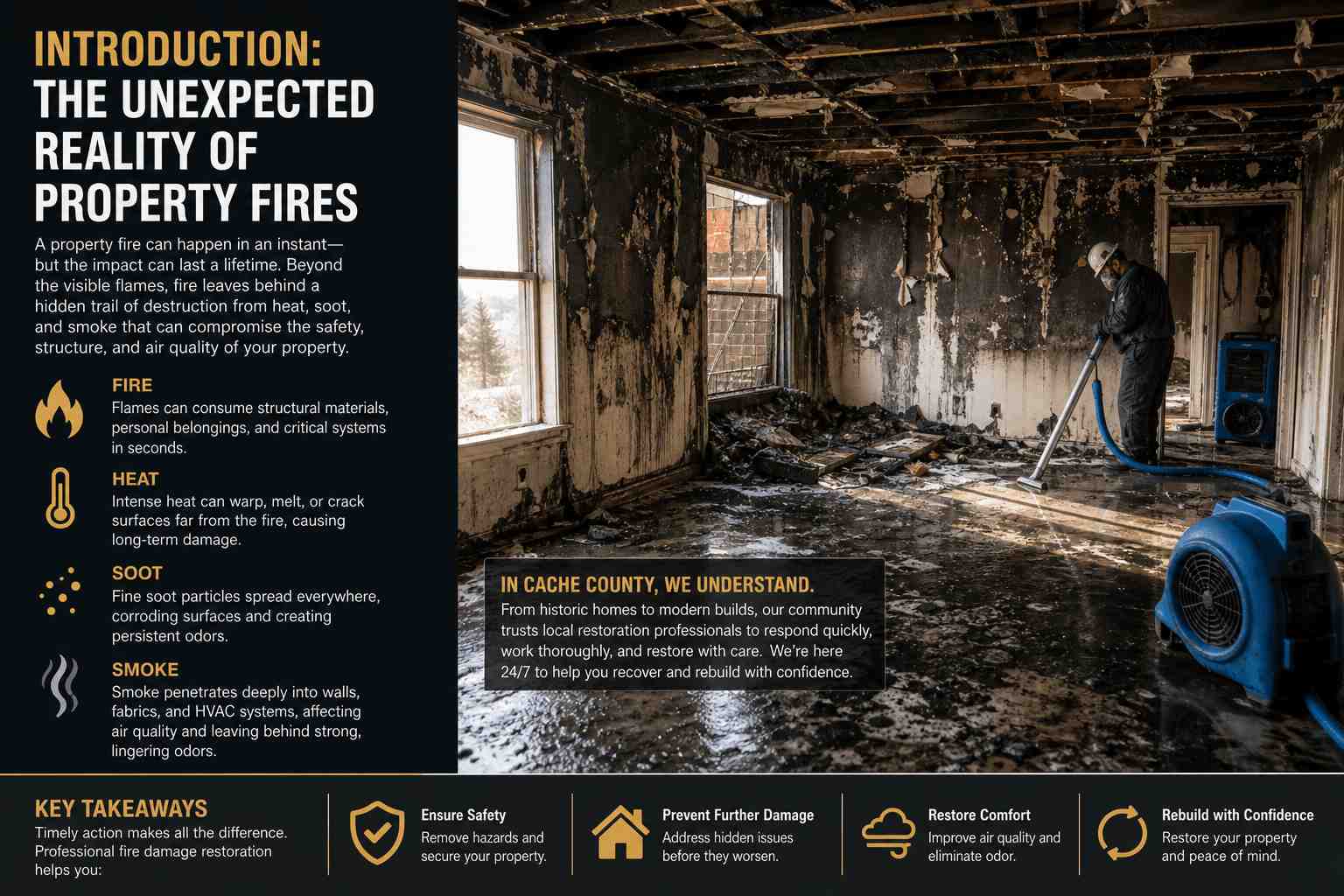
Experiencing a fire in your home or business is one of the most stressful events a property owner can face. In a matter of minutes, a familiar space can be transformed by heat, soot, and smoke. When the emergency response teams leave, the true weight of the situation often sets in.
For property owners throughout the Logan and Bear River Valley areas, understanding how to prevent these disasters and knowing exactly what to do if one occurs is vital. Acting quickly after a fire is put out determines how much of your structural framing, personal belongings, and inventory can actually be saved.
Understanding the Problem and Local Risks
Fires happen for a wide variety of reasons, ranging from simple human error to mechanical failure. In both residential and commercial settings, the underlying mechanics usually involve heat sources coming into contact with combustible materials. However, our local climate in northern Utah adds distinct seasonal layers to these risks.
Seasonal Factors Impacting Cache County
- Winter Electrical Loads: Sub-zero winter temperatures in places like Smithfield and Richmond lead to heavy reliance on space heaters and electric blankets. Plugging these high-draw devices into extension cords or overloaded power strips is a primary cause of winter house fires.
- Frozen Pipe Mitigation Mistakes: When pipes freeze in older homes in Logan or Hyde Park, some residents mistakenly use open flames or high-heat guns to thaw them out, accidentally igniting nearby insulation or dry wood.
- Dry Summer Conditions: Cache County’s low-humidity summers create prime conditions for rapid fire spread if an outdoor grill spark or faulty electrical landscaping component ignites dry brush close to a structure.
What is the 30/30/30 Rule for Fire?
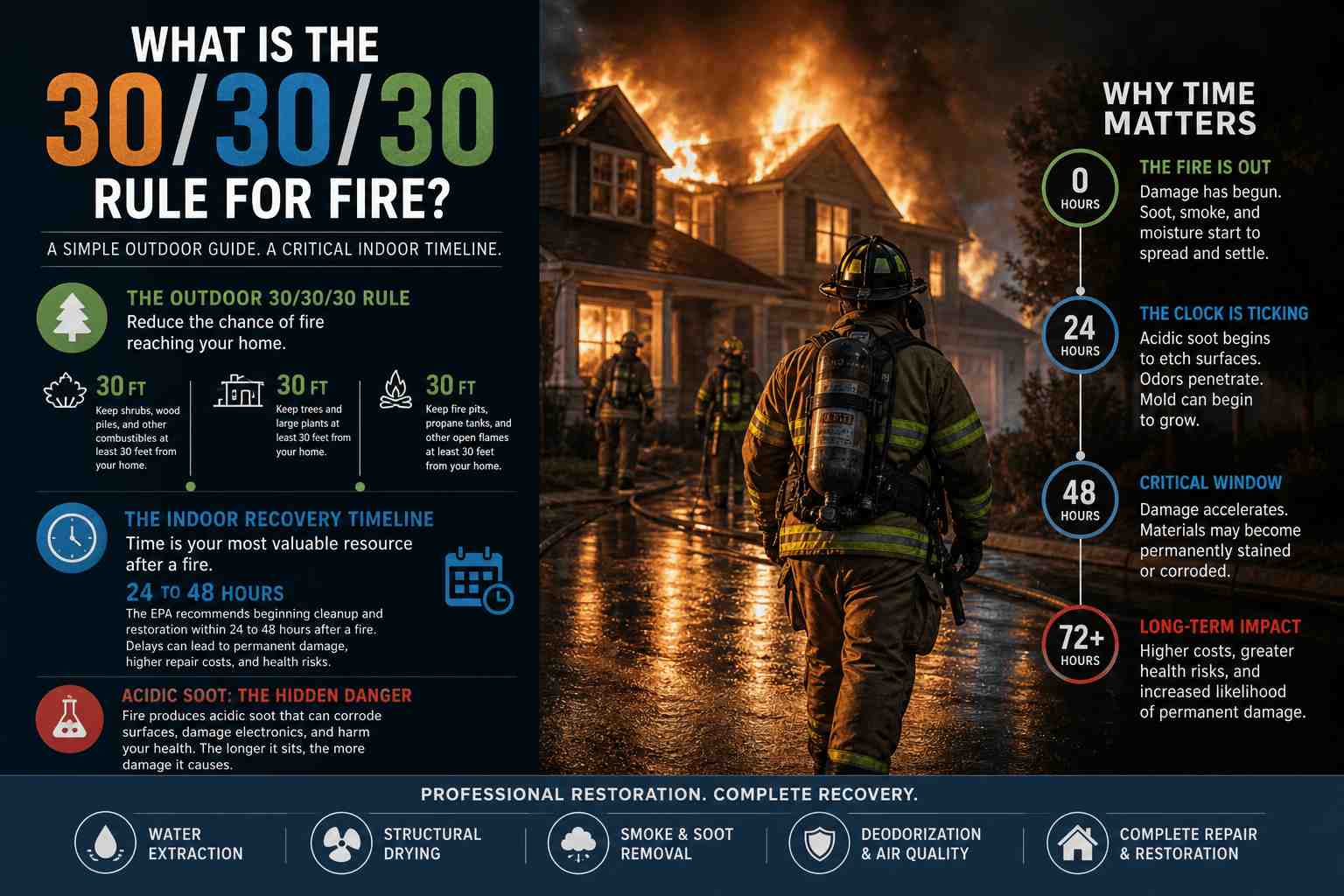
When assessing fire risks and fire behavior, professionals often reference baseline metrics to evaluate threats. In wildfire and outdoor safety contexts, the 30/30/30 rule states that if the temperature is above 30°C (86°F), the relative humidity is below 30%, and wind speeds exceed 30 km/h (about 18 mph), fire danger is extreme. Under these conditions, a spark from a lawnmower or a discarded cigarette can spark a fast-moving blaze that quickly threatens homes.
Inside the home, a different kind of timeline matters: the first 24 to 48 hours following a fire. Once the fire department clears the scene, the residual smoke, soot, and water used to extinguish the flames begin causing secondary damage.
Quick Fact: Acidic soot residue begins discoloring plastics within minutes, tarnishes metals within hours, and can permanently stain walls and flooring if left untreated for days.
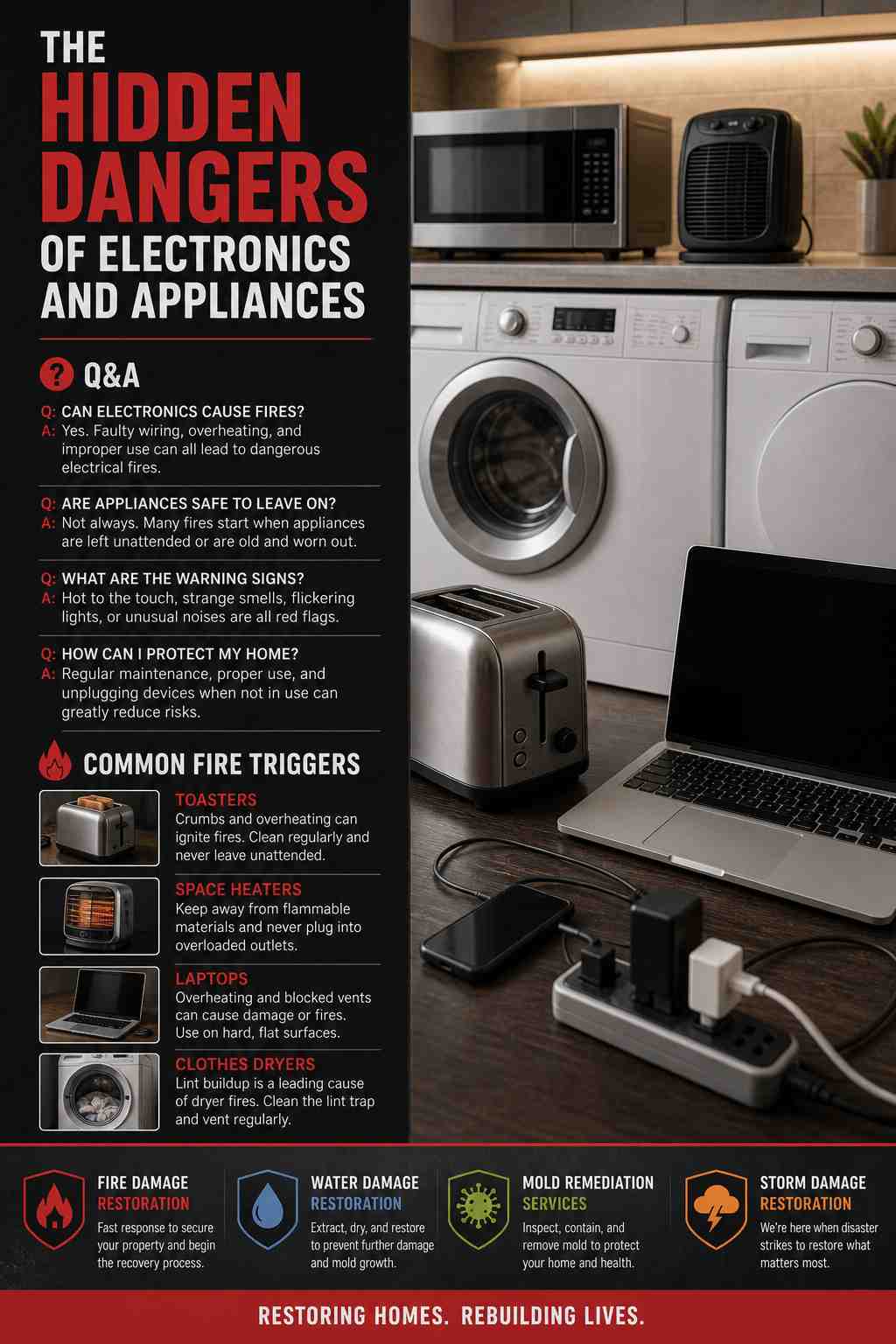
The Hidden Dangers of Electronics and Appliances
Many property owners wonder about everyday household items that pose unrecognized fire threats. Modern homes are packed with electronics and appliances that draw continuous power, creating potential failure points.
Can Electronics Catch on Fire?
Yes. Any device that channels electricity generates heat. If that heat cannot dissipate due to poor ventilation, internal components can melt and ignite surrounding plastics.
Is Leaving a Laptop Plugged In a Fire Hazard?
While modern laptops have built-in lithium-ion battery management systems to prevent overcharging, leaving a laptop plugged in indefinitely on a soft surface like a bed, couch, or carpet plugs up the cooling vents. The battery can overheat, experience a thermal runaway event, and catch fire.
What Happens If You Burn Electronics?
Burning electronics release highly toxic chemicals into the air, including heavy metals, dioxins, and hydrochloric acid. This is why smoke damage cleanup after an electronic fire requires certified, professional hazardous material handling to ensure the indoor air quality is safe again.
Common Fire Triggers
- Toasters / Toaster Ovens – Accumulated crumbs igniting near heating elements.
- Space Heaters – Placed too close to curtains, furniture, or bedding.
- Laptops / Cell Phones – Charging on soft surfaces that block ventilation and trap heat.
- Clothes Dryers – Lint buildup inside the exhaust duct or lint trap leading to overheating.
DIY vs. Professional Restoration
Attempting to clean up fire and smoke damage on your own can quickly worsen the property damage. Soot is incredibly fine and oily; wiping it without industrial vacuums and specialized chemical sponges drives the pigment deeper into drywall and paint.
Furthermore, national corporate restoration chains often deploy subcontractors who don’t know the unique construction styles of Cache Valley, leading to slow response times or cookie-cutter solutions. Choosing a localized professional provider ensures immediate, precise care.
“The sooner restoration begins, the more materials can usually be saved. Fast action often reduces both repair costs and long-term structural damage.”
– Cache Restoration Technician
Cache Restoration Solutions
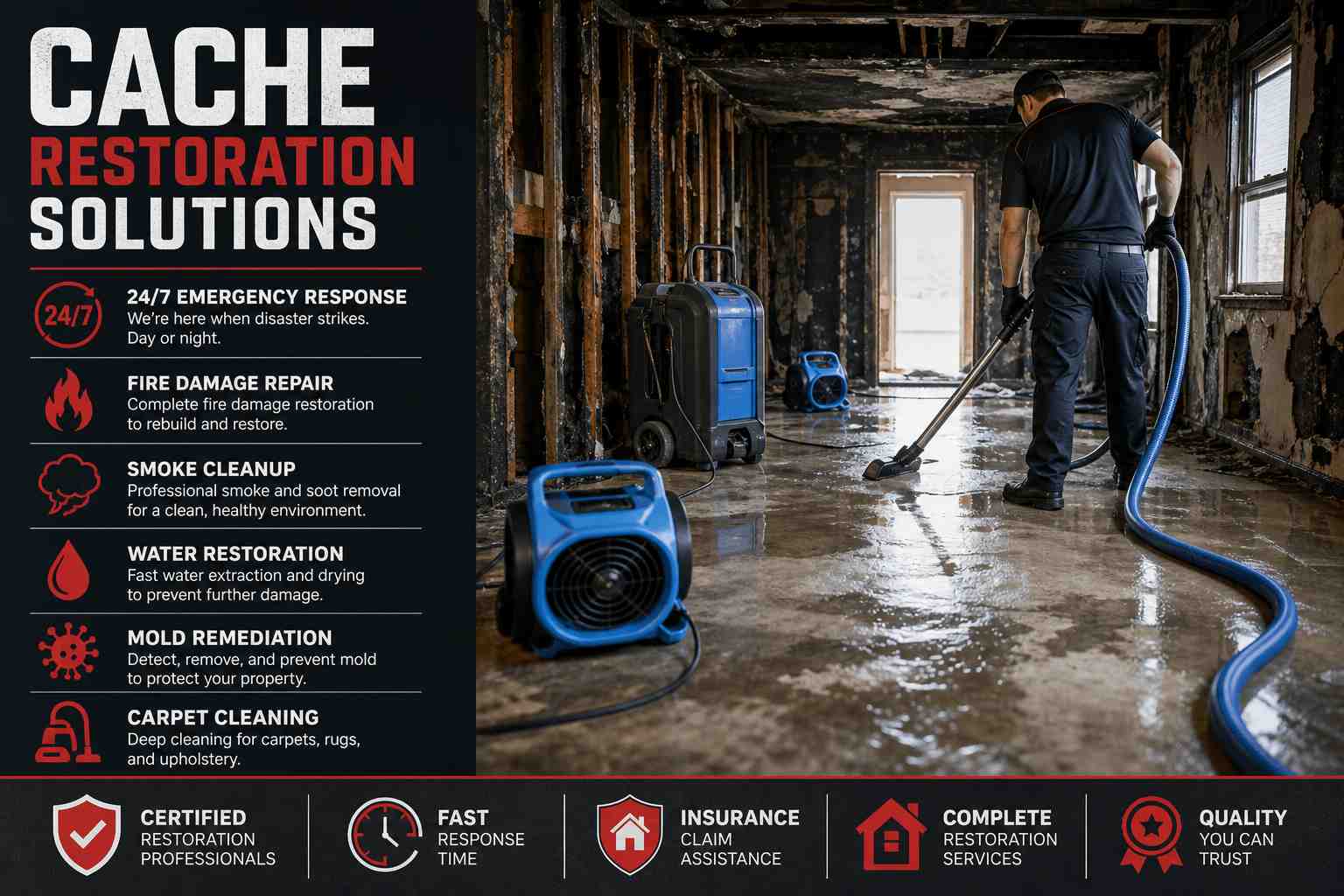
When disaster strikes, you need an experienced team that can handle the entire property recovery lifecycle. Cache Restoration provides a comprehensive suite of emergency restoration services designed to bring your property back to its pre-loss condition:
- 24/7 Emergency Restoration: Day or night, our team responds to limit secondary losses.
- Fire Damage Restoration & Smoke Damage Cleanup: We eliminate toxic soot, remove deep-set odors via ozone and hydroxyl generators, and rebuild damaged framing.
- Water Damage Restoration: Extinguishing a fire requires thousands of gallons of water. We dry out your structural cavities using advanced commercial air movers and dehumidifiers.
- Mold Remediation: If water sits inside drywall after a fire, mold can develop within 48 hours. We handle safe containment and removal.
- Carpet Cleaning Services: Removing ground-in soot and smoky residues from your textiles to save your floors.
Safety & Property Protection
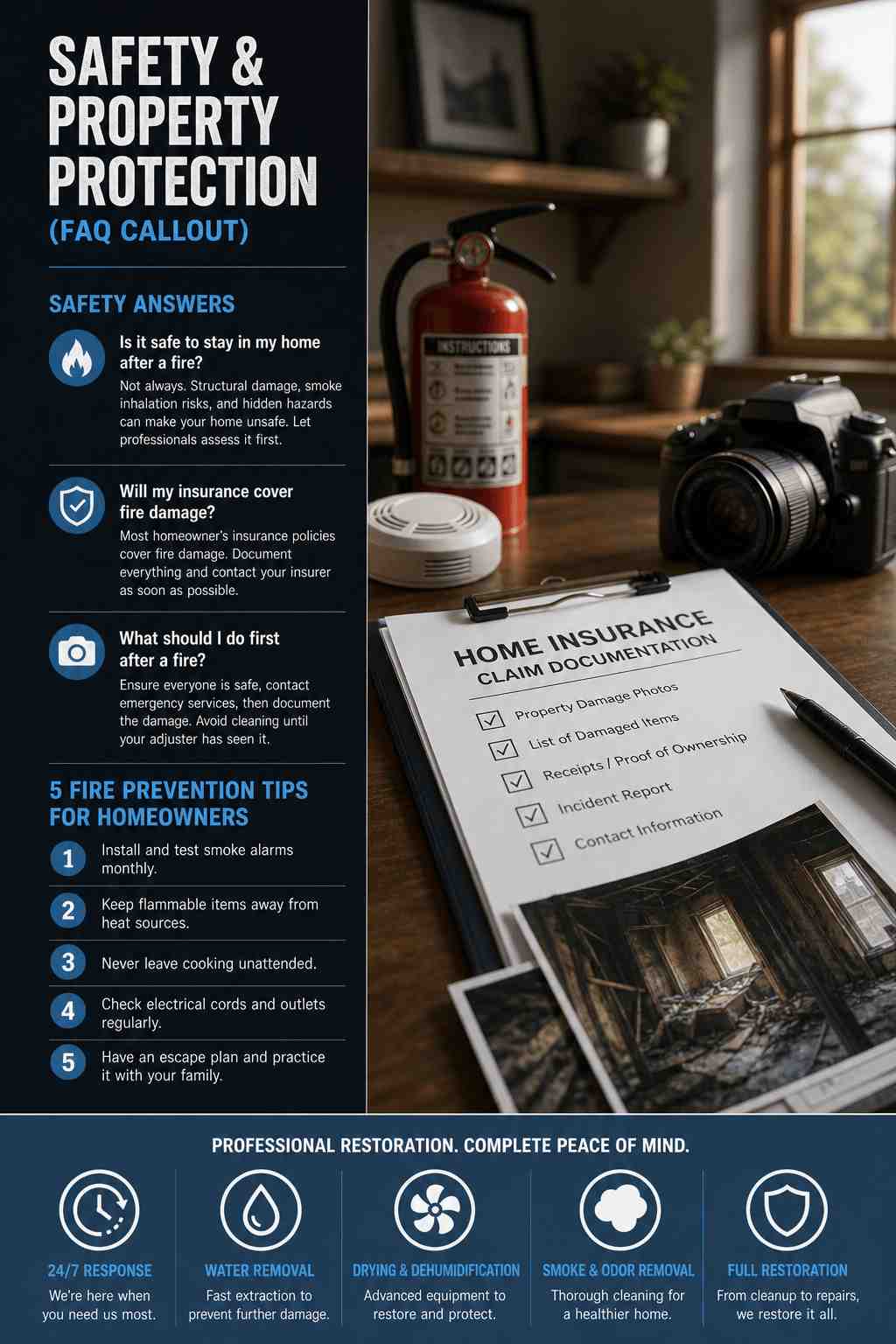
Is it safe to stay in my home immediately after a fire?
Unless the fire was completely isolated to a small exterior area and cleared by the fire department, it is generally unsafe to stay in the home before an air quality and structural assessment. Invisible structural weakening and toxic airborne soot particles pose serious health risks to your family and pets.
How does insurance work during this process?
Most homeowners and commercial property insurance policies cover fire damage restoration. Cache Restoration works directly with your insurance adjuster, documenting all damages with detailed photos and structural dry-out logs to streamline your claim and reduce out-of-pocket friction.
Fire Prevention Tips for Homeowners
Taking a few proactive steps can significantly lower the risk of experiencing a devastating residential or commercial fire:
- Clean the Toaster: Unplug your toaster regularly and empty the crumb tray. Crumbs at the bottom can ignite during prolonged use.
- Give Heaters Space: Keep all space heaters at least three feet away from combustible items like blankets, clothing, or furniture.
- Charge on Hard Surfaces: Always charge phones, laptops, and power tools on hard, flat surfaces like countertops or desks where heat can dissipate safely.
- Inspect Electrical Cords: Discard any appliance with a frayed cord or a loose plug connection.
- Check Smoke Alarms: Test your alarms monthly and replace the units every ten years, as recommended by the American Red Cross and FEMA.
Local Recovery You Can Rely On
A property fire is disruptive and overwhelming, but you do not have to rebuild alone. Taking immediate action by partnering with a trusted local expert preserves structural components, protects your long-term health, and saves irreplaceable belongings.
Cache Restoration proudly serves homeowners and businesses throughout Cache County, including Logan, North Logan, Smithfield, Hyde Park, Providence, Hyrum, Wellsville, Richmond, Mendon, Millville, Nibley, Paradise, and surrounding communities.
If you are dealing with the aftermath of a fire, contact Cache Restoration right away for immediate, reliable 24/7 emergency restoration services.
Frequently Asked Questions
Can a lithium battery catch fire if it has no charge?
While a completely discharged lithium-ion battery has much less stored energy, internal short circuits or exposure to high external heat can still cause the battery components to react chemically and ignite. It is always safest to handle damaged or swelling batteries with extreme caution.
What is the most common appliance to catch fire?
Cooking equipment, specifically stoves and cooktops, is statistically the most common type of appliance to cause a home fire. Unattended cooking remains the leading factor in residential kitchen fires nationwide.
What appliance is most likely to catch fire due to mechanical failure?
Clothes dryers and washing machines are among the top appliances to experience mechanical or electrical failures that lead to fires, often caused by lint buildup blocking the exhaust airflow.
Can leaving a toaster plugged in cause a fire?
Yes, if the internal heating elements malfunction or turn on unexpectedly due to an electrical surge, accumulated crumbs inside the bottom tray can catch fire. Unplugging small kitchen appliances when not in use is an excellent safety habit.
How hot is too hot for electronics?
Most consumer electronics are designed to operate safely below 95°F (35°C). Internal temperatures reaching above 140°F (60°C) can cause permanent battery degradation or circuit failures that increase fire risks.
Can soaked carpets be saved after a fire is put out?
If the water used to put out the fire was clean and the carpet is dried completely within 24 to 48 hours, it can often be saved. Cache Restoration uses specialized extraction and professional carpet cleaning services to evaluate and sanitize textiles.
How dangerous is mold after firefighting efforts?
Very dangerous. The high volume of water used to put out a fire creates a perfect breeding ground for mold within 24 to 48 hours. Prompt mold remediation is necessary to protect structural framing and indoor air quality.
Does homeowners insurance cover fire damage restoration?
Yes, standard homeowners and commercial property insurance policies typically cover fire damage restoration, smoke damage cleanup, and the water mitigation required to put the fire out.
How long does the restoration process usually take?
The timeline varies depending on the severity of the fire. Small kitchen smoke cleanups might take a few days, while comprehensive structural fire damage restoration and rebuilding can take several weeks.
Why should I choose a local restoration company over a national chain?
A local company like Cache Restoration understands the specific weather challenges of Cache County and can dispatch teams instantly. National chains often use out-of-state crews who don’t have deep ties to the local community or local code requirements.