
The Hidden Cost of a Slow Leak: How to Spot Water Damage Before It Spreads
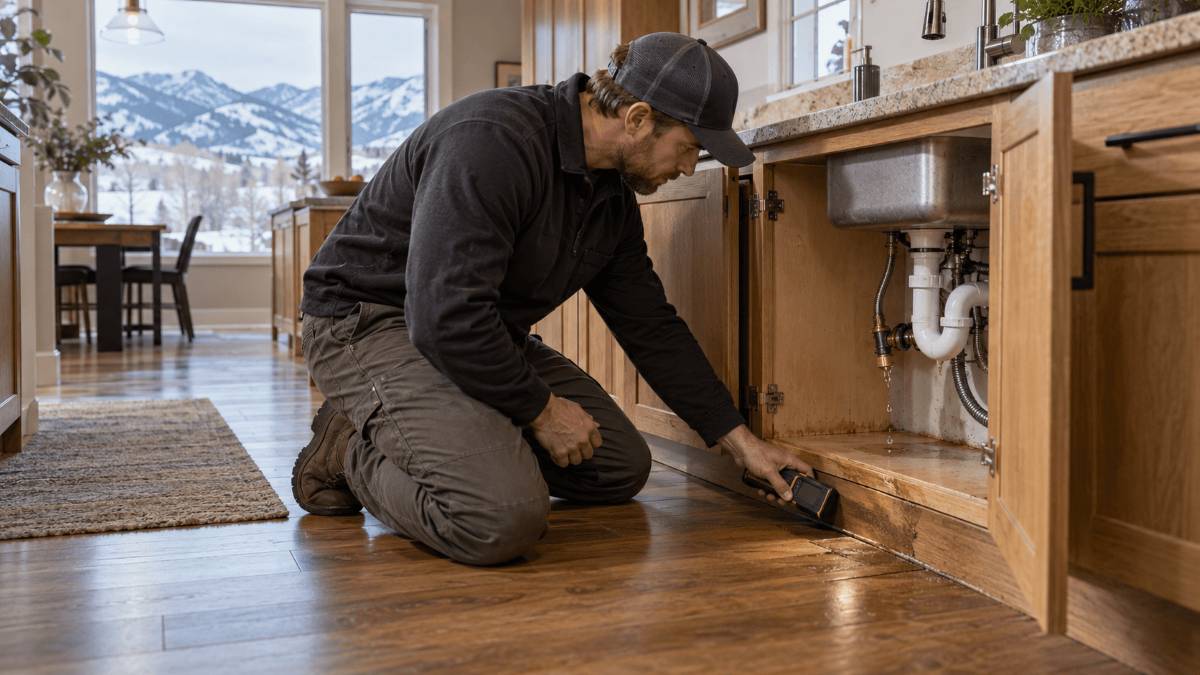
- A slow leak is a small, ongoing drip, not a sudden failure like a burst pipe, and it does damage precisely because nobody notices it right away.
- The Environmental Protection Agency notes that mold can begin growing within one to two days of sustained dampness, which is why hidden moisture rarely stays hidden for long without consequences.
- Watch for a rising water bill, musty odors, discoloration on walls or ceilings, and flooring that feels soft or warped underfoot.
- Checking under sinks, behind toilets, near appliance hoses, and in attics and crawl spaces on a regular basis catches most leaks early.
- Acting fast once you find a leak, and building a few preventive habits before one starts, is what keeps a minor repair from turning into a major one.
Ask most homeowners what water damage looks like, and they will picture something dramatic. A burst pipe. A flooded basement. A storm that tears through the neighborhood overnight. Understandable, since those are the events that make the news.
The leaks that end up costing the most, though, are usually nothing like that. A slow drip behind a wall or under a cabinet can run for weeks, sometimes months, without anyone noticing. By the time it finally becomes visible, the repair is often far bigger than it ever needed to be.
That is the real cost of a slow leak. It is not the water itself. It is the time the water spends hidden, doing damage no one can see. Learning how to spot water damage early, before a hidden leak has a chance to spread, is what separates a quick fix from a full renovation. Here is what actually causes these leaks, the warning signs to watch for, and what to do the moment you suspect one.
What Is a Slow Leak, and How Is It Different From a Burst Pipe
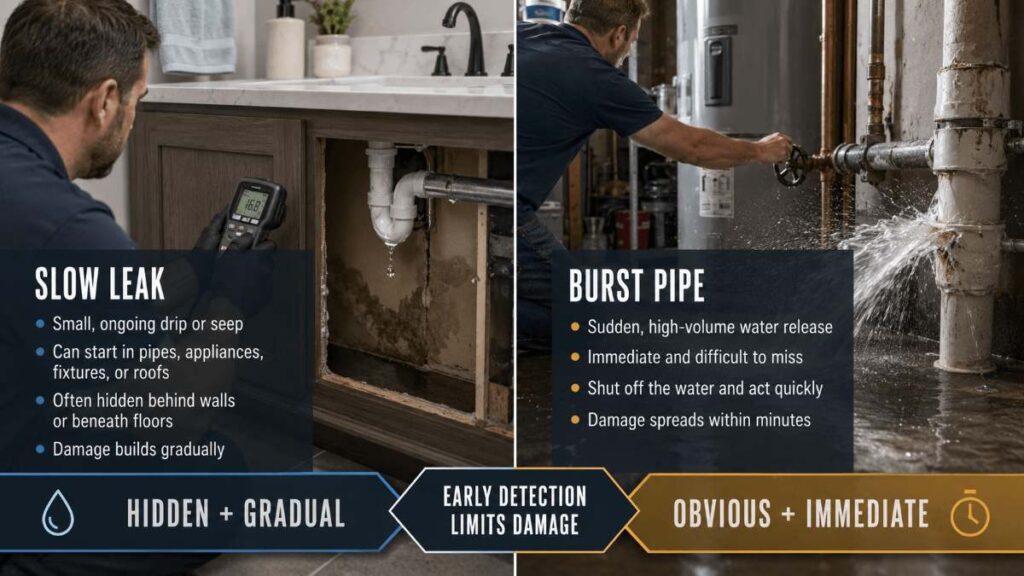
Not every leak looks the same, and that distinction matters. A slow leak is a small, ongoing drip or seep from a pipe, appliance, fixture, or roof, quite different from a sudden failure like a burst pipe or a storm flooding a basement in minutes. Sudden events are impossible to miss the moment they happen. A slow leak is the opposite. It hides in plain sight, which is exactly why it needs its own set of habits for catching it before it spreads.
Why a Slow Leak Causes More Water Damage Than You Think
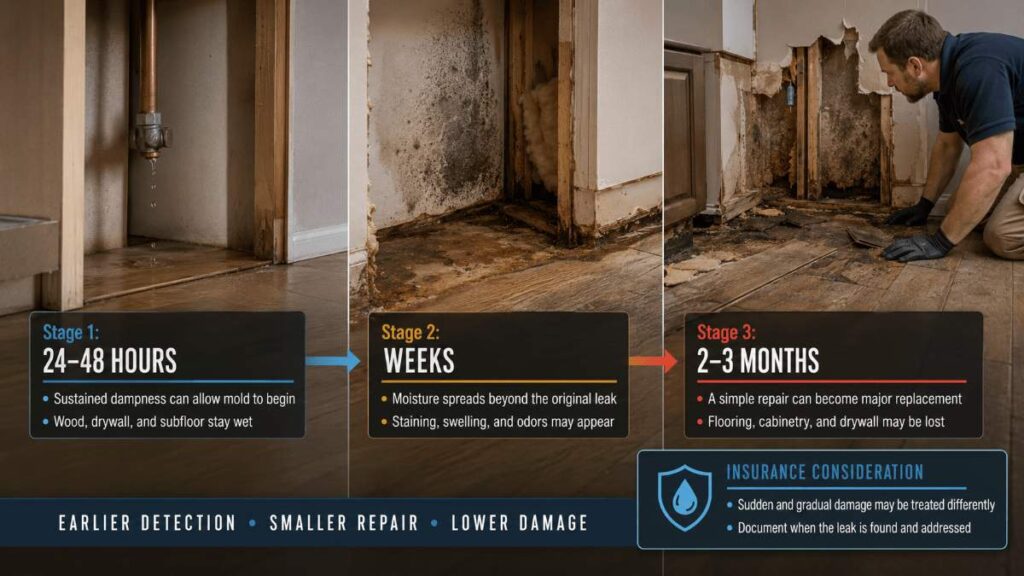
Water does not need to be dramatic to be destructive. It just needs time. According to the Environmental Protection Agency, mold can begin developing in as little as one to two days of sustained dampness, and wood, drywall, and subflooring lose their structural integrity the longer they sit wet. A leak running quietly for two or three months can turn what should have been a simple fix, replacing a hose or resealing a fixture, into a full replacement of flooring, cabinetry, or drywall.
There is a financial wrinkle here too, one many homeowners never see coming. The Insurance Information Institute notes that many policies treat sudden, accidental damage differently from damage that developed gradually over time, which means waiting does not just cost you a bigger repair. It can cost you coverage as well, since an insurer may ask when the damage began and how long it went unaddressed. The earlier a leak gets caught, the smaller that gap becomes.
What Causes a Slow Leak in a Home
After inspecting homes across Cache Valley, our technicians see the same handful of causes again and again:
- Aging or corroded supply lines that develop pinhole leaks and seep rather than spray.
- Appliance hoses, especially on washing machines, dishwashers, and refrigerator ice makers, which wear out from the inside and weep slowly before they fail completely.
- Toilets with a worn wax ring or a supply valve that no longer seals tightly.
- Roofs leaking slowly around flashing or vent penetrations, often long before a stain ever shows up on the ceiling below.
- Water heaters that seep gradually before a full tank failure finally gets anyone’s attention.
Older homes, and homes on well water systems common throughout the valley, tend to see these issues a bit more often, simply because the plumbing has had more time to wear.

Warning Signs of Water Damage You Shouldn’t Ignore
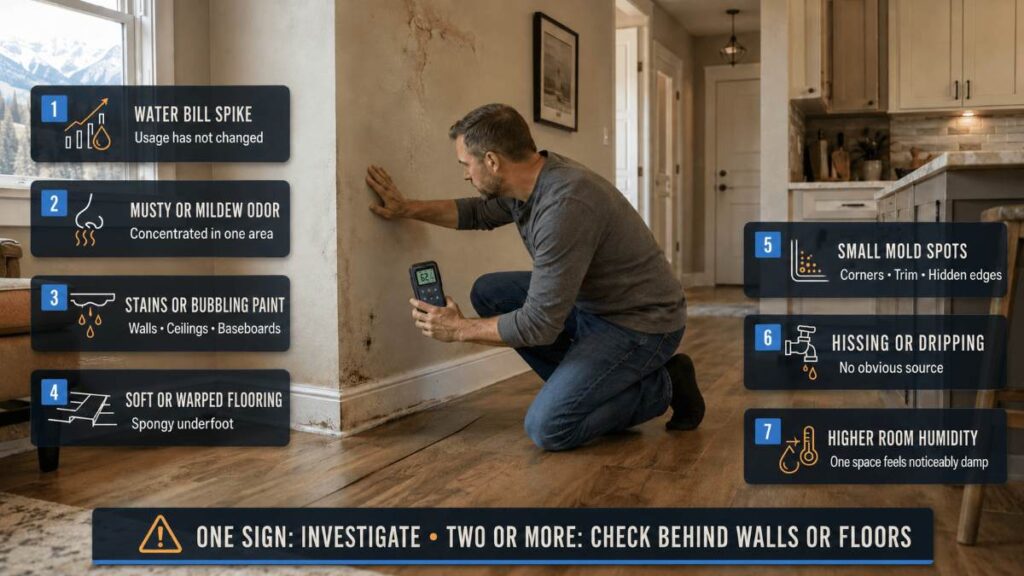
Most slow leaks announce themselves in small ways long before the damage becomes visible. Watch for:
- An unexplained increase in your water bill, even though your usage habits have not changed.
- A musty or mildew smell concentrated in one area of the home.
- Discoloration, staining, or bubbling paint on walls, ceilings, or baseboards.
- Flooring that feels soft, warped, or slightly spongy underfoot.
- Visible mold spots, even small ones, in corners or along trim.
- A hissing or dripping sound with no obvious source.
- A room that feels noticeably more humid than the rest of the house.
Any one of these on its own is worth a second look. Two or more together, and you are very likely dealing with something happening behind a wall or under a floor right now.
Where to Check for a Hidden Water Leak
Knowing the signs only helps if you also know where to look for them:
- Under kitchen and bathroom sinks
- Behind and around toilets
- At water heater connections
- At washing machine hoses and the refrigerator’s water line
- Along basement or crawl space walls and flooring
- In attics, especially near roof penetrations and vents
- Outdoors, at hose bibs and irrigation lines close to the foundation
None of these take more than a minute to glance at, and a quick seasonal walkthrough is often all it takes to catch a problem while it is still small.
How a Small Leak Turns Into Major Water Damage
Here is a pattern our technicians see often. A dishwasher supply line seeps just a little for a few months, and the subfloor underneath rots quietly, with the first sign usually a soft spot in the cabinet base rather than any water anyone actually sees. A toilet with a failed wax ring can leak slowly enough that nobody notices until mold shows up at the bathroom baseboards, long after the flooring underneath has already been ruined. A roof leak around a flashing seam behaves the same way, dripping into attic insulation for an entire season before a stain finally appears on a bedroom ceiling below.
Notice the pattern. In every case, the leak itself started small. The damage grew because it had time to.
How Professionals Detect Water Damage Homeowners Miss
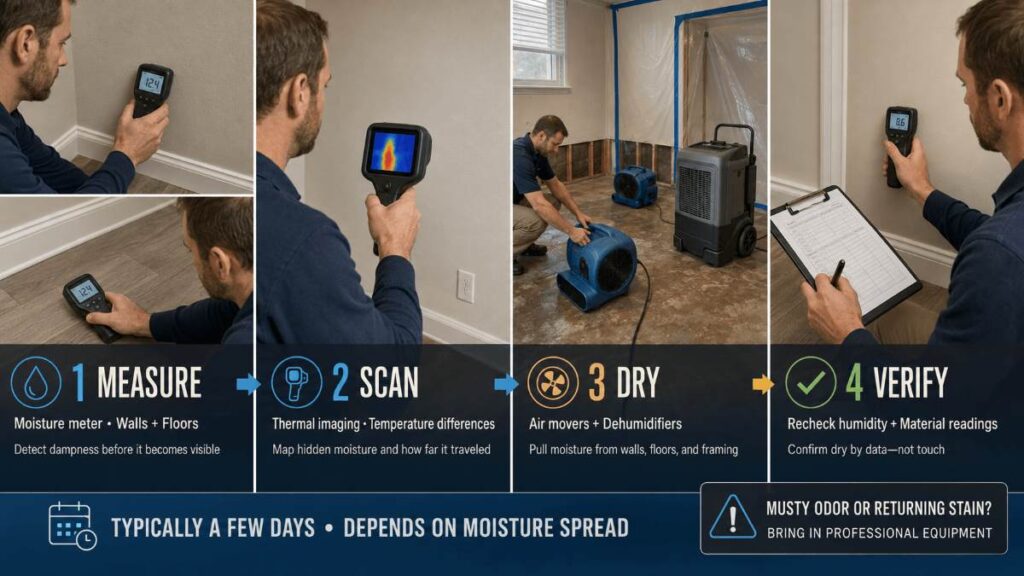
Trained technicians work with tools most homeowners simply do not have on hand. Moisture meters measure dampness inside walls and flooring before it ever becomes visible, giving a precise reading rather than a guess. Thermal imaging cameras reveal temperature differences caused by hidden water long before a stain appears anywhere on the surface. Technicians at Cache Restoration use both during an inspection to pinpoint exactly where moisture sits and how far it has traveled.
Once a leak is confirmed, drying the area properly means more than opening a window. It typically involves industrial-strength air movers and dehumidifiers set up to pull moisture out of walls, flooring, and framing, with humidity levels checked regularly until readings confirm the structure is actually dry rather than just dry to the touch. Depending on how far the moisture spread, that process usually takes a few days. If a musty smell keeps coming back without an obvious source, or a stain reappears no matter how many times you clean it, that is your cue to stop investigating alone and bring in a professional with the right equipment.
What to Do the Moment You Find a Water Leak
Shut off the water supply to the affected fixture first, or the main line if you cannot pin down the source. Take photos of the damage before you start any cleanup, and hold onto any receipts for repairs or replacement, since insurers typically want more than a description alone when a claim involves gradual damage. From there, a water damage restoration company like Cache Restoration can assess how far the moisture has actually spread and begin drying the area properly, rather than leaving it to dry on its own and risking mold taking hold somewhere you cannot see.
Once the emergency is handled, the better long-term move is making sure it does not happen again.
How to Prevent Water Damage From a Slow Leak
These are the same habits our technicians recommend to every homeowner who wants to avoid a repeat visit:
- Replace appliance supply hoses every five years or so, even if they still look fine, since wear tends to happen from the inside out.
- Schedule a plumbing check every couple of years, especially in an older home.
- Install water leak detection sensors near a water heater or washing machine. They are inexpensive and will flag moisture long before it becomes a visible problem.
- Take a quick look at your roof and gutters once a year, while small issues are still small.

Quick Reference: Cause, Sign, and Where to Look
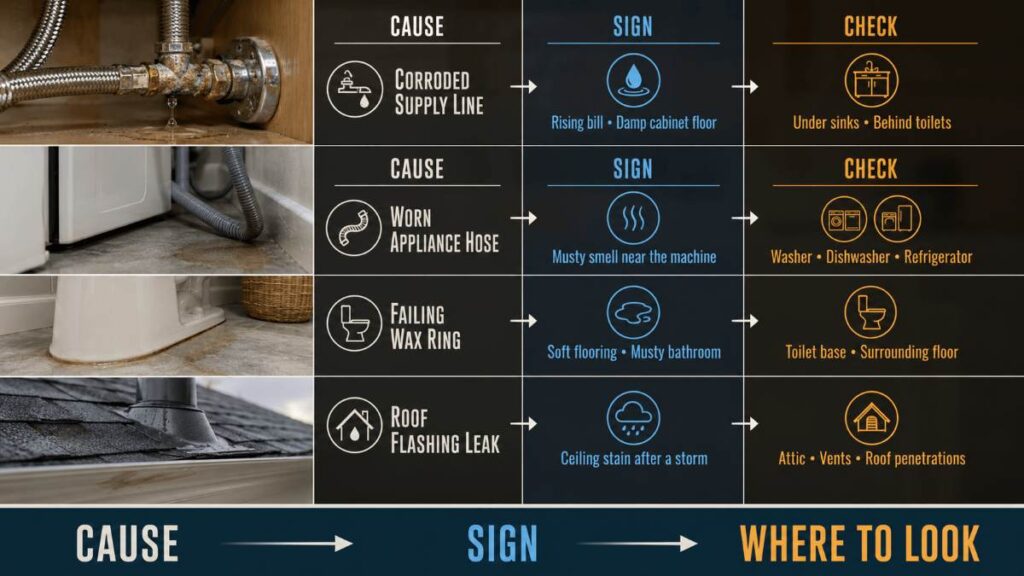
- Corroded supply line: often shows up as a rising water bill or a damp cabinet floor. Check under sinks and behind toilets.
- Worn appliance hose: often shows up as a musty smell near the machine. Check behind washers, dishwashers, and refrigerators.
- Failing wax ring: often shows up as soft flooring or a musty bathroom. Check the base of the toilet and the surrounding floor.
- Roof flashing leak: often shows up as a ceiling stain after a storm. Check the attic near vents and roof penetrations.
Conclusion
A slow leak rarely announces itself the way a flood does. That quiet, easy-to-miss nature is exactly what makes it worth paying attention to. Catching one early, whether through a noticed smell, a rising water bill, or a two-minute check under a sink, is almost always simpler and cheaper than waiting for it to turn into damage you can actually see.
If you suspect a hidden leak in your home or business, do not wait to find out how far it has spread. Cache Restoration is a locally owned disaster restoration company serving Cache Valley, offering free estimates and a 100 percent satisfaction guarantee on every job. Reach out today for a free inspection and get ahead of the problem before it grows.
Frequently Asked Questions
How much water can a slow, hidden leak waste over a year?
Even a small, steady drip can waste thousands of gallons over a year, often without any obvious change in daily water use. That waste usually shows up gradually on the water bill rather than all at once, which is part of why it goes unnoticed for so long.
Will homeowners insurance cover damage from a slow leak?
It depends on the policy and the circumstances. Many insurers treat sudden, accidental damage differently than damage caused by a leak that went on for weeks or months, so it is worth reviewing your policy or asking your insurer directly before assuming coverage.
How quickly can mold start growing after a leak begins?
Mold can begin developing in as little as one to two days once an area stays consistently damp, according to the Environmental Protection Agency. That short timeline is a big part of why addressing a leak quickly matters so much.
Can a slow leak damage a home's foundation over time?
Yes, if the leak sits near the foundation or pools in a basement or crawl space for an extended period. Persistent moisture can weaken soil support and contribute to cracking or shifting over time.
What does it typically cost to repair water damage from a long-term leak?
Cost varies widely depending on how long the leak went unnoticed and which materials were affected, ranging from a simple drywall patch to a full replacement of flooring or cabinetry. A professional inspection is the most reliable way to get an accurate estimate for a specific situation.
Should I turn off my water if I only suspect a leak but haven't confirmed it?
If you notice signs like an unexplained wet spot or a spike in your water bill, it is reasonable to shut off the water to the suspected fixture while you investigate further. Shutting off the main valve is a good precaution if you cannot immediately identify the source.
How can I tell the difference between a slow leak and normal condensation?
Condensation usually shows up in predictable spots, like around a cold pipe or a window in humid weather, and tends to dry up on its own. A leak tends to reappear in the same spot again and again, spread over time, or come with a musty smell that condensation alone rarely produces.
What tools do professionals use to find leaks I can't see?
Moisture meters give a precise numeric reading of dampness inside a wall or floor, while thermal imaging cameras show temperature differences that reveal where water is traveling even before any visible sign appears. Together, they let a technician confirm the full extent of a leak instead of guessing from what is visible on the surface.
Is a slow leak considered an emergency, or can it wait?
A slow leak is rarely as urgent as a burst pipe, but that does not mean it should sit on the back burner either, since the damage compounds the longer it continues. Treating it as a priority, rather than a full-blown emergency, is usually the right call.
Can I fix a slow leak myself, or should I call a professional?
Simple fixes, like tightening a fitting or swapping out a worn hose, are often manageable on your own. Once moisture has spread into walls, flooring, or insulation, a professional assessment is worth it to make sure the area is fully dried and nothing is left behind to grow into a bigger problem.