The Science of Dry: Professional Water Damage Restoration Equipment Explained
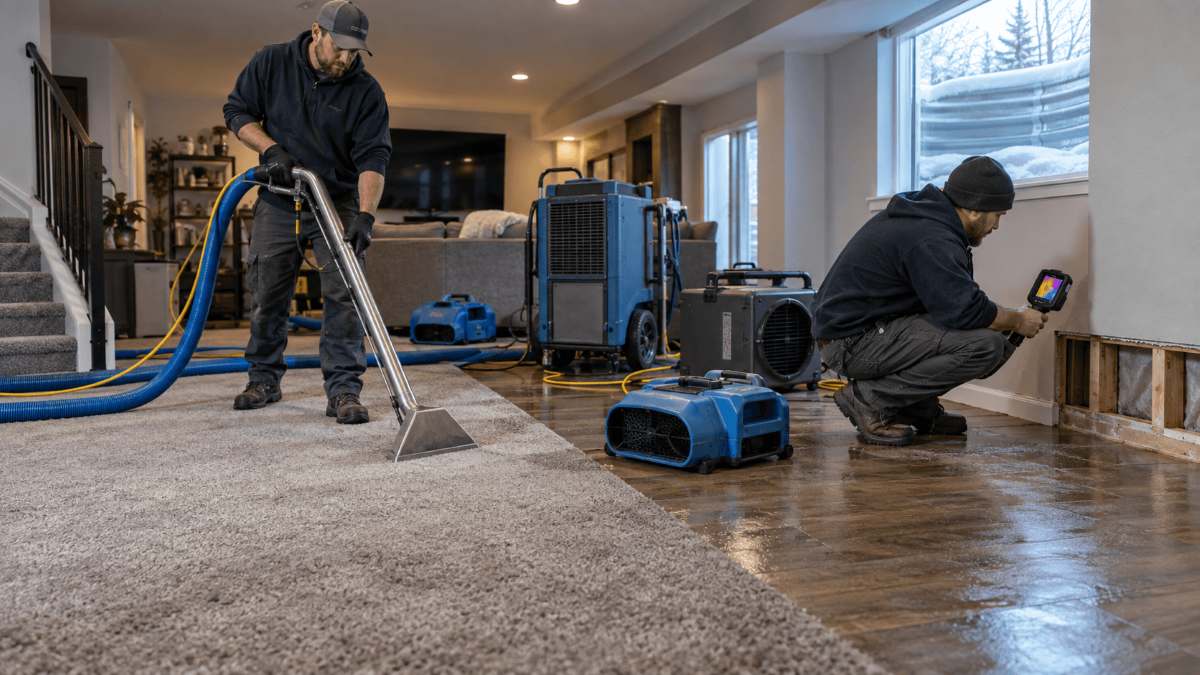
- Rapid extraction is critical: Removing standing water quickly prevents long-term structural weakness and mold growth.
- More than just fans: True structural drying requires a scientific balance of airflow, dehumidification, and temperature control.
- Hidden moisture is the real enemy: Professional-grade detection tools find pocketed water behind drywall and under floorboards that retail meters miss.
- Local expertise matters: Cache County’s cold winters and high spring snowmelt create unique indoor environmental challenges requiring specialized drying strategies.
The Panic After the Pour
Discovering water pooling across your living room or commercial warehouse floor is an incredibly stressful experience. Whether it is from a burst frozen pipe in the dead of a cold Northern Utah winter or a sudden spring snowmelt flood, your immediate instinct is probably to grab every towel, bucket, and household fan you own.
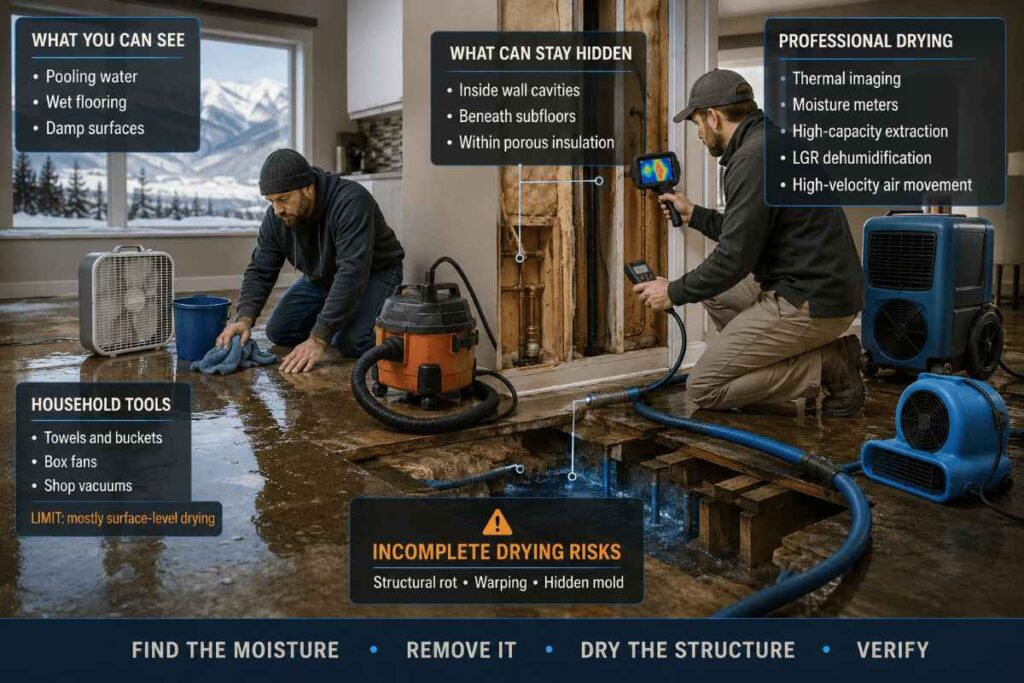
While quick action is highly commendable, household fans and shop-vacs only scratch the surface of a true water disaster. Deep within your walls, beneath subfloors, and inside porous insulation, moisture lingers out of sight.
When dealing with property damage restoration, professional-grade equipment is the difference between a fully recovered home and a continuous battle against structural rot and toxic mold.
Using specialized technology, Cache Restoration provides fast, efficient, and precise drying solutions designed to save your property and restore your peace of mind.
Understanding Water Behavior & Seasonal Threats
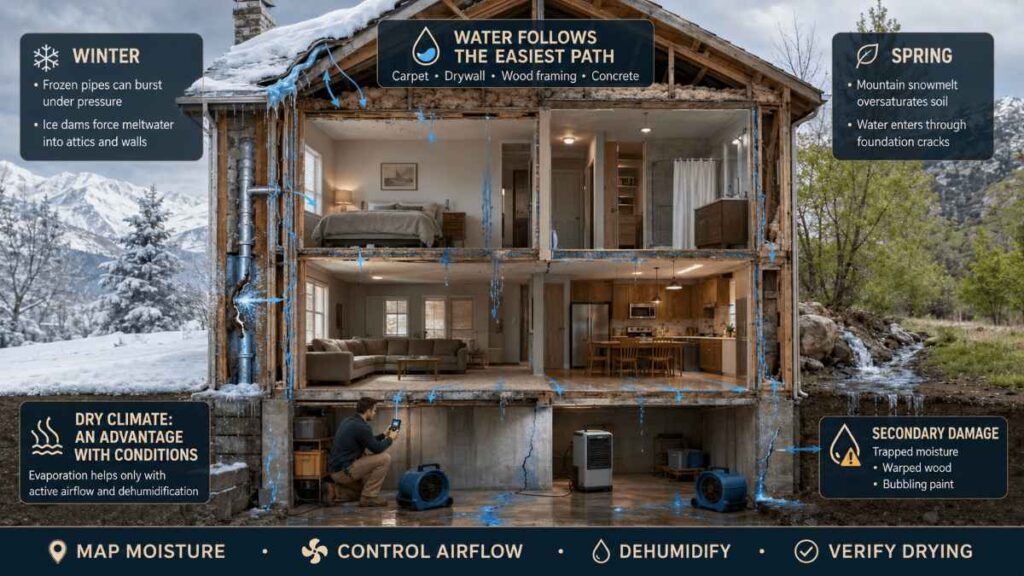
Water is a highly intrusive element. When it enters an indoor environment, it immediately seeks out porous materials, flowing along paths of least resistance to saturate carpet, drywall, wood framing, and concrete.
In Cache County, seasonal factors directly influence how water behaves inside residential and commercial structures:
- Frozen Pipes & Ice Dams (Winter): Sub-zero temperatures can freeze interior plumbing, leading to pressurized pipe bursts. Externally, heavy snow accumulation on roofs melts and refreezes, forming ice dams that back up water directly into attic spaces and walls.
- Spring Snowmelt (Spring): Rapidly rising temperatures in the spring cause heavy mountain snowpacks to melt, oversaturating the soil and forcing water through basement foundation cracks.
- High-Volume Humidity Shifts: Utah’s dry climate actually aids the evaporation process, but only if indoor air is actively circulated and dehumidified to prevent secondary damage (such as warped wood floorboards and bubbling paint).
How Professional Restoration Works
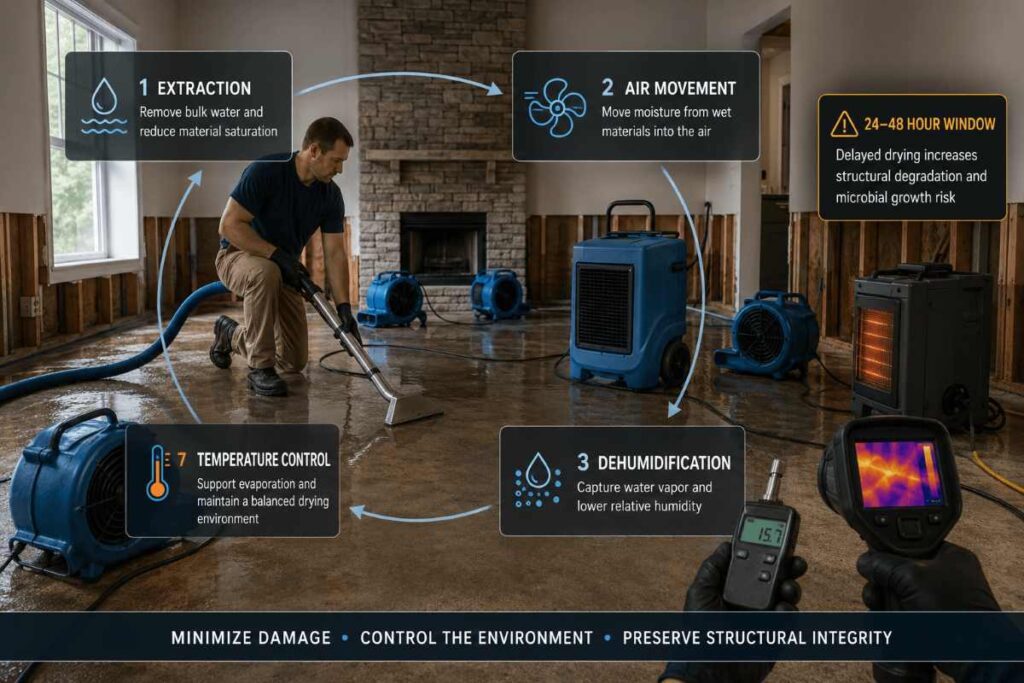
Leaving water saturated in building materials for more than 24 to 48 hours dramatically increases the risk of severe structural degradation and microbial growth, as noted by the CDC.
Relying on standard household drying methods often falls short because they lack the power to remove deep moisture, frequently leaving pockets of dampness that foster mold.
Professional water damage restoration operates on a strategic system designed to minimize damage, control drying environments, and preserve structural integrity. Utilizing advanced systems, Cache Restoration carefully manages structural drying by utilizing the four pillars of science-based drying: Extraction, Air Movement, Dehumidification, and Temperature Control.
DIY vs. Professional Restoration
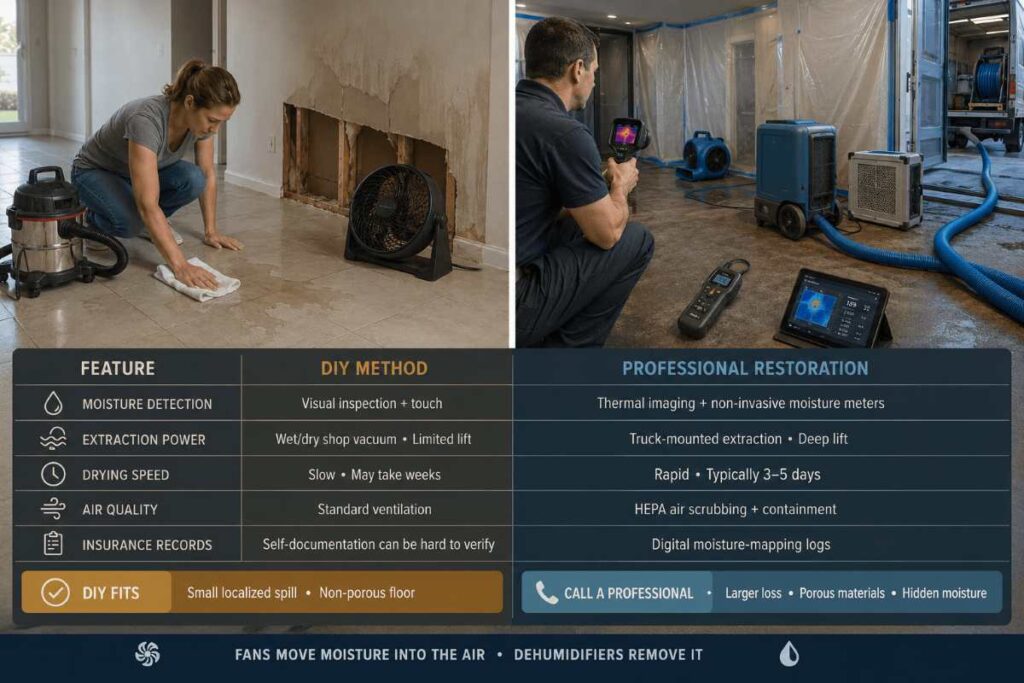
Many property owners wonder if they can manage water damage cleanup on their own. While a small, localized spill on a non-porous floor is easily manageable, larger events carry hidden risks.
|
Feature |
DIY Method |
Cache Restoration |
|
Moisture Detection |
Visual inspection and touch |
Thermal imaging & non-invasive moisture meters |
|
Extraction Power |
Wet/Dry Shop-Vac (limited lift) |
Truck-mounted extraction units (deep lift) |
|
Drying Speed |
Slow (weeks, leading to mold) |
Rapid (typically 3–5 days) |
|
Air Quality Protection |
Standard ventilation |
HEPA air scrubbers and containment setups |
|
Insurance Compliance |
Hard-to-verify self-documentation |
Comprehensive, digital moisture-mapping logs |
Expert Quote: “Using retail-grade fans to dry wet drywall often does more harm than good. Without heavy-duty dehumidifiers to pull the evaporated moisture out of the air, you are simply turning your home into a warm, humid greenhouse, the perfect breeding ground for mold.” – Certified Restoration Specialist
Cache Restoration Services
- 24/7 Emergency Restoration: Disasters don’t wait for business hours. Our local dispatch teams are ready to deploy at a moment’s notice to stop water in its tracks.
- Water Damage Restoration: Comprehensive water extraction, structural drying, and sanitization for residential and commercial spaces.
- Fire & Smoke Damage Restoration: Comprehensive soot removal, structural cleaning, and advanced deodorization to erase the signs of fire damage.
- Mold Remediation: Safe containment, air filtration, and source removal of mold colonies following guidelines set by the EPA.
- Carpet Cleaning Services: High-heat extraction and deep cleaning to restore flooring and improve indoor air quality.
Safety, Health, and Structural Integrity
Water damage is more than an aesthetic issue; it is a serious threat to indoor health and safety. Saturated drywall loses up to 90% of its structural strength, posing collapse hazards.
Additionally, stagnant water can quickly turn into a biological hazard. We prioritize your family’s safety by utilizing certified antimicrobial treatments to sanitize affected surfaces and operating industrial air scrubbers to capture airborne mold spores, dust, and debris throughout the drying cycle.
Proactive Prevention Tips for Cache County Homeowners
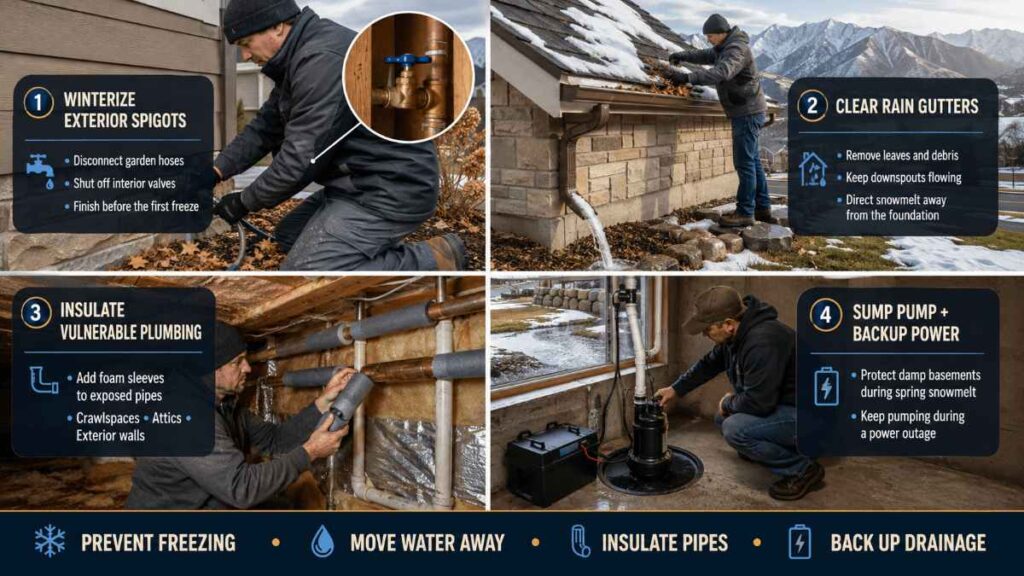
Tip: Preventing property damage is always easier than restoring it. Keep your property safe year-round with these key maintenance tips:
- Winterize Exterior Spigots: Disconnect garden hoses and shut off interior valves to outdoor spigots before the first freeze in late autumn.
- Clear Rain Gutters: Keep downspouts free of debris so melting roof snow can flow away from your home’s foundation rather than pooling around basement walls.
- Insulate Vulnerable Plumbing: Add foam sleeves to pipes running through unheated crawlspaces, attics, and exterior walls.
- Install a Sump Pump with Backup Power: If your basement is prone to dampness during the spring snowmelt, a reliable sump pump with a battery backup is your best line of defense.
Reliable Local Restoration You Can Trust
When disaster strikes your property, relying on a distant national franchise can mean waiting hours for a response while water continues to seep deeper into your structure.
As a locally owned and operated business, Cache Restoration responds instantly. We know Cache County, we understand our unique seasonal weather patterns, and we treat our clients like the neighbors they are.
Our team proudly serves homeowners and businesses throughout Cache County, including Logan, North Logan, Smithfield, Hyde Park, Providence, Hyrum, Wellsville, Richmond, Mendon, Millville, Nibley, Paradise, and surrounding communities.
If you are facing water, fire, or mold damage, don’t wait for structural rot to set in. Contact Cache Restoration today for immediate, 24/7 emergency assistance.
Frequently Asked Questions
Does homeowners insurance cover professional water damage restoration?
In most cases, yes. Homeowners and commercial property insurance policies typically cover sudden and accidental water damage, such as a burst pipe or appliance failure. Cache Restoration works directly with your insurance provider, documenting every step of the process to ensure your claim is processed smoothly.
Can soaked carpet and pad be salvaged?
It depends entirely on the category of the water. According to IICRC standards, carpet saturated by “Category 1” (clean water from a broken supply line) can often be dried and saved if action is taken immediately. However, water from “Category 3” sources (sewage or outdoor floodwaters) contains harmful pathogens, requiring both the carpet and pad to be safely removed and disposed of to protect your health.
How long does the structural drying process usually take?
A typical residential or commercial drying project takes between 3 to 5 days. Factors that influence this timeline include the density of the wet materials (hardwood and concrete take longer to dry than drywall) and how quickly professional restoration began after the initial spill.
What equipment is used for water restoration?
Professional water restoration utilizes moisture meters and thermal cameras to locate hidden water, truck-mounted extraction units to pull standing water from carpet and floors, industrial-grade centrifugal air movers to evaporate moisture from walls and subfloors, and high-capacity LGR (low-grain refrigerant) dehumidifiers to remove water vapor from the indoor air.
What are the main steps in water damage restoration?
The main steps are: 1) Emergency inspection and water source shutdown, 2) Water extraction and debris removal, 3) Anti-microbial application to prevent mold, 4) Structural drying and dehumidification using commercial equipment, and 5) Monitoring and final reconstruction/restoration of damaged materials.
What does a water damage restoration technician do?
A restoration technician assesses property damage, identifies the category of water loss, sets up structural extraction and drying equipment, monitors moisture levels daily using specialized meters, sanitizes affected areas, and works to restore the property to its pre-loss condition safely and efficiently.
Can I DIY water damage restoration?
Small surface-level spills can be managed yourself, but major water damage (such as flooded basements, sewage back-ups, or leaks that have penetrated walls and ceilings) should always be handled by professionals like Cache Restoration who possess the thermal imaging tools and commercial drying equipment required to prevent hidden mold and structural decay.
What is structural drying and dehumidification?
Structural drying is the systematic process of removing trapped moisture from wet building materials (such as wood framing, drywall, and concrete) back into the air through evaporation, while dehumidification is the simultaneous process of pulling that evaporated moisture out of the air to maintain low relative humidity and accelerate overall drying times.
What are the three types of drying?
The three primary types of drying methods categorized by structural restoration professionals are:
- Air movement drying (utilizing high-velocity fans to evaporate surface moisture),
- Dehumidification drying (utilizing LGR or desiccant dehumidifiers to extract water vapor from the air), and
- Temperature-controlled drying (raising the surface temperature of wet materials to speed up the molecular movement of moisture).
What are the two types of drying?
In simplified drying contexts, professionals focus on two main drying systems: Refrigerant Dehumidification (cooling air to condense and drain water, ideal for standard restoration) and Desiccant Dehumidification (using chemical absorbents to dry air in exceptionally low temperatures or commercial buildings with deep wood structures).
What does drying in a house mean?
In property restoration, drying in a house means returning the structural framing, flooring, drywall, and subfloors to their natural, pre-damage “dry standard” moisture content level (usually under 12-15% for wood) so that building materials are safe from mold development and rot.
What is the best method for drying?
The best drying method is a balanced combination of high-speed air movement to sweep moisture off material surfaces and high-capacity dehumidification to pull that evaporated moisture out of the room, supplemented by controlled heat to maximize evaporation rates.
What is drying in engineering?
In an engineering context, drying is a mass transfer process consisting of the removal of water or another solvent by evaporation from a solid, semi-solid, or liquid, where energy is applied to break the physical bonds holding water molecules within the pore structures of a material.